A pool can look finished on installation day and still feel incomplete once you start using the space. The usual reason is the area around it. If you are figuring out how to plan pool landscaping, the goal is not to add random plants and patio furniture. It is to shape the yard so the pool feels natural, easy to use, and worth stepping out to every day.
Good pool landscaping does two jobs at once. It creates the look people want – clean, private, polished, resort-like – and it solves practical problems before they show up. Shade, drainage, slipping, debris, privacy, and maintenance all start at the planning stage. Get those pieces right, and the space feels effortless.
Start with how the pool will actually be used
Before you choose a single plant or paver, look at the habits that will define the yard. A family pool needs room for movement, towels, wet feet, and supervision. A pool built for entertaining needs stronger sightlines, flexible seating, and enough hardscape for people to gather without trampling planting beds. A smaller backyard might need the landscaping to create calm and privacy rather than visual abundance.
This is where many homeowners go too decorative too early. A row of tropical plants might look great in a photo, but if they block circulation, drop leaves into the water, or crowd the deck, they create work instead of comfort. Planning starts with movement. Think about where people enter the yard, where they dry off, where they sit, and where they want sun or shade at different times of day.
The best layouts usually have a clear zone around the water, then softer transitions beyond it. That means keeping the immediate pool edge more open and using planting, screens, or accent features farther out to shape the atmosphere.
How to plan pool landscaping around layout first
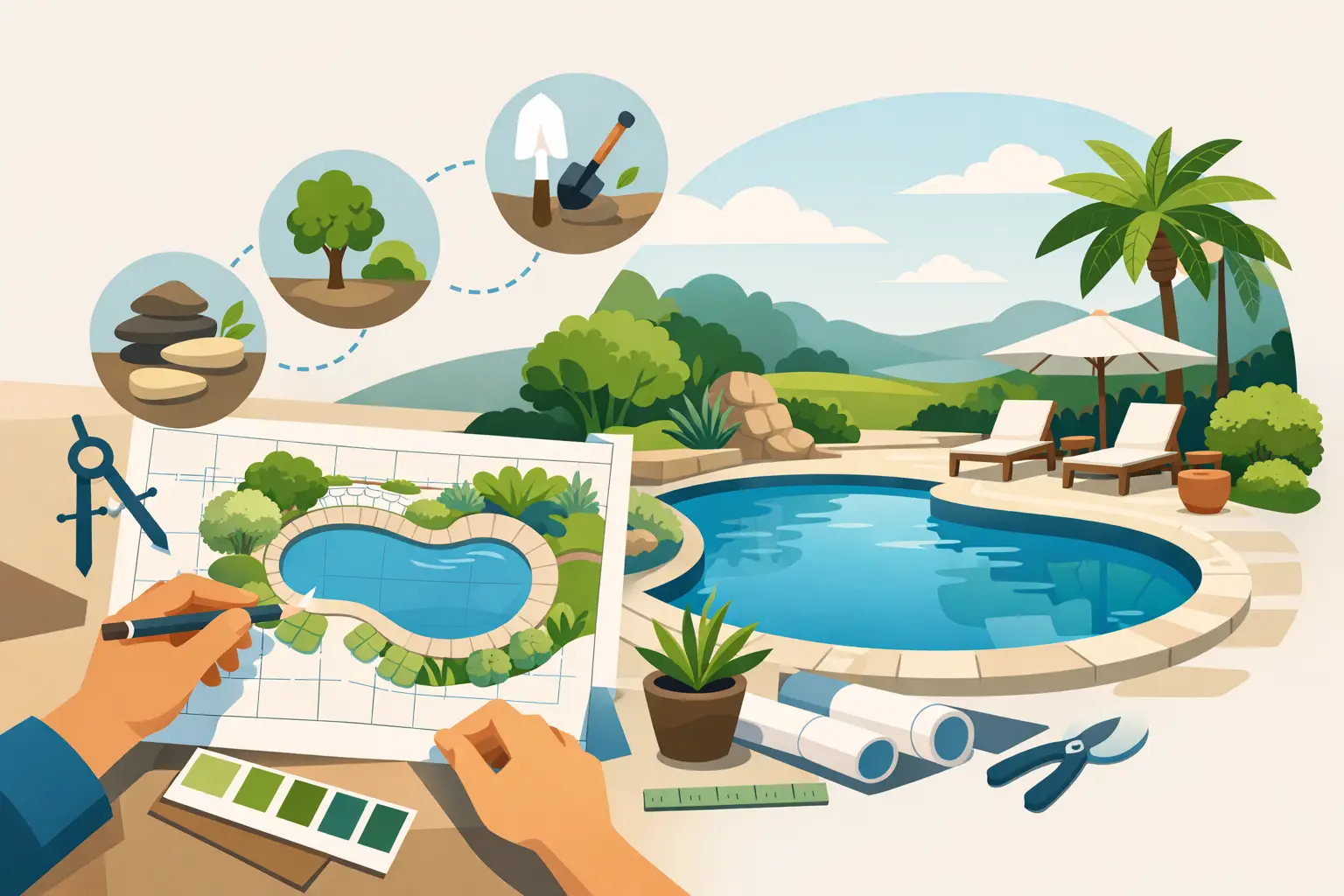
Pool landscaping works best when you think in layers. The first layer is the deck and coping area. This is the highest-traffic space, so materials matter more than decoration here. Surfaces should stay comfortable underfoot, provide traction, and handle splashing without becoming a maintenance issue. This area should feel clean and intentional, not crowded.
The second layer is the furnishing and living zone. This might include lounge chairs, a dining area, a fire feature, or an outdoor kitchen. These elements need enough space to breathe. If the deck is too tight, the whole yard feels cramped, even with expensive finishes.
The third layer is the planted perimeter. This is where landscaping can create privacy, soften fencing, block neighboring views, and give the space a finished feel. It is also where homeowners can overdo it. Too much plant mass too close to the water makes the pool feel smaller and can increase cleanup. A lighter hand often looks more upscale.
When you plan by layers, the yard feels balanced. The pool remains the center of the space, while landscaping supports it instead of competing with it.
Choose plants for behavior, not just appearance
A beautiful plant that sheds constantly is a poor match for a pool. So is anything with aggressive roots, thorns, messy fruit, or a tendency to attract too many insects near seating areas. Around water, appearance matters, but plant behavior matters more.
Evergreen structure usually gives the best return because it keeps the space looking finished year-round. Ornamental grasses, hardy shrubs, and architectural plants can add movement and texture without creating heavy cleanup. In warmer regions, tropical-style selections can create the right mood, but they should still be chosen for manageable growth and debris control.
It also helps to think about mature size, not nursery size. Plants that seem small during installation can quickly block views, crowd fencing, or push into walkways. Leaving enough room at the start saves pruning later and keeps the design cleaner over time.
If your priority is privacy, use layers instead of one dense wall of green. A mix of screening plants, lower foundation plantings, and open space often feels more refined than a solid hedge. It creates depth, and it avoids the boxed-in effect that can make a backyard pool feel smaller.
Shade, sun, and privacy should be planned together
Most homeowners ask for all three, but they can work against each other if handled casually. Too much shade near the pool can make the water feel cooler and reduce deck comfort in certain seasons. Too little shade leaves lounging areas exposed and limits how long people actually want to stay outside.
The answer usually is not a single large tree next to the water. Trees can be useful in the right position, especially farther from the pool, but close placement often leads to leaves, roots, and constant skimming. Structured shade is often the cleaner option. Pergolas, umbrellas, cabanas, and covered seating areas can place shade exactly where it helps most without creating debris problems.
Privacy follows the same logic. Some yards need screening from second-story views. Others only need to soften a fence line and create a sense of separation. This is why a site-specific plan matters. Privacy should feel intentional, not defensive. The right mix of planting, fencing, and vertical features can make the yard feel tucked away without closing it off completely.
Drainage and irrigation are not optional details
A polished poolscape can fail fast if water moves the wrong way. Drainage is one of the least visible parts of planning and one of the most important. Water should move away from the pool, away from the house, and away from any area where standing moisture could damage hardscape or create slippery conditions.
This affects grading, drain placement, soil management, and material choices. It also affects planting beds. Beds that hold too much water can decline quickly near pool areas where splash-out already changes the moisture balance. On the other hand, beds that dry out too fast may struggle under reflected heat from decking and surrounding hardscape.
Irrigation needs the same level of discipline. Sprinklers that throw water into the pool create chemical imbalance, waste water, and spot up nearby surfaces. Drip irrigation or carefully zoned systems usually make more sense around pools because they keep water where it belongs.
Materials should match the lifestyle, not just the look
The best pool landscaping plans are built around maintenance tolerance. Some homeowners want a crisp, highly designed yard and are willing to keep up with it. Others want a premium look with minimal weekly effort. Neither is wrong, but the design should reflect the reality.
Natural stone, porcelain pavers, decorative concrete, gravel accents, and wood-look materials all have different performance profiles. Some stay cooler under sun. Some show dirt more easily. Some need sealing. Some are better around saltwater pools than others. The right choice depends on climate, exposure, budget, and how often the space will be used.
The same goes for decorative features. Water bowls, fire elements, raised planters, and lighting can all elevate the space, but too many focal points can make the yard feel busy. A cleaner plan often looks more expensive because it gives each element room to matter.
Lighting is part of the landscape plan
If you only think about the pool during the day, you miss half its value. A well-lit backyard extends the use of the space and changes how the landscape reads at night. But lighting should be selective. Too much brightness flattens the mood and can make the yard feel harsh.
Good pool lighting usually combines safety and atmosphere. Path lighting should guide movement without glare. Accent lighting can highlight a palm, textured wall, or specimen planting. Seating areas benefit from soft, usable light rather than flood-style illumination. The goal is to make the yard feel calm, not commercial.
This is also where wiring and fixture placement matter. Lighting should be coordinated early, before planting and hardscape are final, so the finished yard does not need to be reopened later.
Budget for the full space, not just the pool edge
One of the most common planning mistakes is spending heavily on the pool and leaving too little for the surrounding environment. Then the water looks great, but the yard still feels unfinished. Landscaping should not be treated like an afterthought if the goal is a complete backyard experience.
That does not mean everything must be built at once. Phasing can work well if it is planned from the beginning. You might install core hardscape, drainage, privacy screening, and essential lighting first, then layer in additional planting or feature elements later. The key is having one clear plan so future additions feel connected.
This approach also helps avoid expensive rework. It is far easier to reserve space for a pergola, outdoor kitchen, or expanded planting bed now than to retrofit the yard after the fact.
When professional planning makes the difference
Pool landscaping looks simple from a distance. In practice, it sits at the intersection of design, construction, grading, safety, and long-term upkeep. That is why early coordination matters. The pool, deck, planting, drainage, and outdoor-living features need to work as one system.
For homeowners who want a backyard that feels polished and easy to live with, the best results come from planning the entire environment together. That is where a specialist can save time and prevent expensive missteps. Coastal Cove Pools understands that the pool itself is only part of the experience. The space around it is what turns a backyard into a place people use.
The right landscape plan does not need to be oversized or overloaded. It just needs to fit the home, the climate, and the way you want to spend your time outside. When that happens, the yard stops feeling like a project and starts feeling like the part of the house you were looking forward to all along.