
A pool that looks perfect in July but feels too cold in April or October gets used less than most homeowners expect. That is why the best pool heating options for homeowners are not just about raising water temperature. They are about extending the season, making evenings comfortable, and getting more value from the backyard you already invested in.
The right heater depends on how you use the pool. Some households want warm water fast for weekend swimming and last-minute gatherings. Others want steady, efficient heat for a long season without watching utility costs climb. There is no single winner for every property, but there is usually a clear best fit once you look at climate, pool size, usage habits, and operating cost.
Best pool heating options for homeowners by need
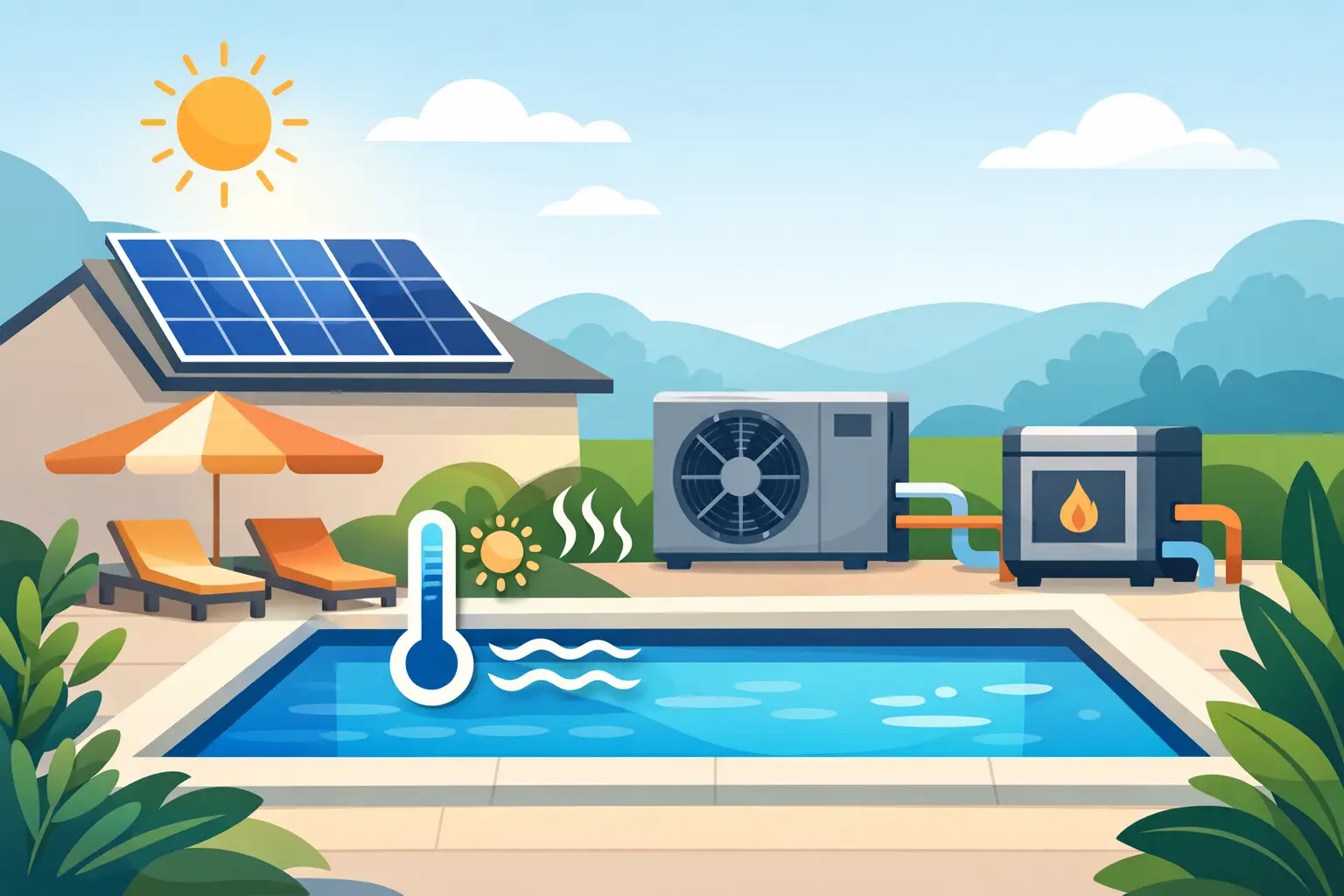
Most residential pools are heated with one of three systems: gas heaters, electric heat pumps, or solar pool heating. Each works well in the right setting. Each also comes with trade-offs that matter more in real life than they do in a product brochure.
A fourth piece of the conversation is the pool cover. It is not a heater, but it changes how well any heating system performs. Without one, a large share of heat escapes overnight, especially when temperatures drop or wind picks up.
Gas pool heaters
Gas heaters are the fast answer. They use natural gas or propane to heat water quickly, which makes them attractive for homeowners who do not swim every day but want the pool ready on demand. If your family uses the pool on weekends, for holidays, or when guests are over, gas can make a lot of sense.
Their biggest strength is recovery time. A gas heater can raise water temperature much faster than other options, which is useful when the weather changes suddenly or the pool has cooled off after a few unused days. That speed also makes gas a common choice for attached spas, where quick heat is part of the experience.
The trade-off is operating cost. Gas heaters usually cost more to run than heat pumps or solar, especially if you keep the pool warm all season. They can be an excellent fit for occasional use, but they are often expensive for homeowners who want constant temperature day after day. Installation details matter too. Fuel availability, gas line capacity, and equipment placement all affect the final project cost.
Electric heat pumps
Heat pumps are often the most balanced choice for homeowners who want efficient, steady heating. Instead of creating heat directly, they pull warmth from the air and transfer it into the pool water. In many climates, that makes them far more efficient than gas for routine use.
This is where the best pool heating options for homeowners start to separate by region. In warmer areas and shoulder seasons with moderate air temperatures, a heat pump can be a very strong long-term value. It costs more upfront than some systems, but operating costs are usually lower than gas when used consistently.
The trade-off is speed. Heat pumps do not heat as quickly as gas, so they are better for maintaining temperature than for sudden, same-day heating. They also become less effective as outdoor air gets colder. If you want reliable swimming in very cool weather, performance can drop enough that gas becomes the more practical choice.
For many residential pools, though, heat pumps land in the sweet spot. They suit families who swim regularly, prefer predictable warmth, and want a cleaner equipment setup with no combustion involved.
Solar pool heating
Solar pool heating appeals to homeowners who think long term. These systems circulate pool water through solar collectors, usually mounted where they can receive strong sun exposure. Once installed, solar has the lowest operating cost of the main heating options because it relies on sunlight rather than purchased fuel.
In the right home, that can be a smart move. If you live in a sunny climate, have good roof or ground space, and use the pool across a longer warm-weather season, solar can deliver dependable comfort with very little ongoing expense.
The trade-off is control. Solar is weather dependent and generally slower than gas. It works best when the sun is doing its part, which means cloudy stretches and cooler periods can limit performance. It is also more installation-sensitive than some homeowners expect. Roof orientation, shading, available area, and plumbing layout all affect results.
Solar is less about instant heat and more about season extension. For homeowners who want low operating cost and have the right site conditions, it is one of the strongest long-view options available.
What matters more than the brochure
Pool heating decisions look simple until real usage enters the picture. A homeowner in a warm coastal climate with frequent pool use has different priorities than a homeowner who wants to heat a pool only for occasional spring weekends. The equipment should match the pattern, not just the product category.
Pool size matters first. Larger pools need more energy to raise and hold temperature, so heater sizing is not something to guess at. An undersized system may run constantly and still disappoint. An oversized one can increase upfront cost without solving the wrong problem.
Climate matters just as much. Heat pumps perform best when there is enough warmth in the air to draw from. Gas works across a wider range of conditions, which is why it remains popular in areas with cooler mornings, chilly shoulder seasons, or homeowners who want hotter water on short notice. Solar depends heavily on local sun exposure and seasonal weather patterns.
Usage pattern is often the deciding factor. If the goal is to keep the pool at a comfortable temperature most days, efficiency matters more than speed. If the goal is to heat only when needed, fast response may be worth higher fuel cost. Many homeowners overpay because they choose a system that sounds powerful rather than one that fits how they actually live.
The role of pool covers and heat retention
A heating system works harder when heat escapes every night. That is why a pool cover belongs in this conversation. Evaporation is a major source of heat loss, and a good cover helps reduce it significantly.
For homeowners comparing the best pool heating options for homeowners, this is one of the easiest ways to improve results without changing the heater itself. A cover helps gas heaters recover faster, helps heat pumps maintain temperature more efficiently, and helps solar systems hold onto the heat they gain during the day.
It also changes monthly cost. A more efficient heating setup is not always the one with the most advanced equipment. Sometimes it is the system paired with smart heat retention.
Upfront cost versus long-term cost
Homeowners often ask which option is cheapest, but there are really two answers. One is installation cost. The other is cost to operate over several seasons.
Gas heaters are often attractive because the equipment decision feels straightforward and the heat is immediate. But fuel bills can add up quickly if the pool stays heated regularly. Heat pumps usually require a bigger upfront investment, yet they often make more financial sense over time for pools that are used often in suitable climates. Solar can have the highest installation complexity depending on the property, but the lowest ongoing energy cost once running.
The better question is not which heater is cheapest. It is which cost structure matches your ownership style. A homeowner who wants occasional use may be happy paying more per heated day for the convenience of gas. A homeowner who swims four or five days a week may see better value from a heat pump or solar-supported setup.
Which pool heater is best for most homeowners?
If there were one broad answer, it would be this: heat pumps are often the best all-around choice for homeowners who want efficient, regular pool heating in a moderate or warm climate. They offer the best balance of comfort and operating cost for many residential pools.
Gas heaters are often best for homeowners who want speed, flexibility, and strong performance in cooler conditions, especially if the pool is not heated every day. Solar is often best for sunny properties where long-term savings matter more than instant temperature control.
That is why the best decision is rarely about the heater alone. It is about the property, the climate, the pool design, and how the household plans to use the water from month to month.
A clean pool is easy to admire. A warm pool is the one people actually step into. Choose the heating system that fits your season, your habits, and the kind of backyard life you want to enjoy more often.