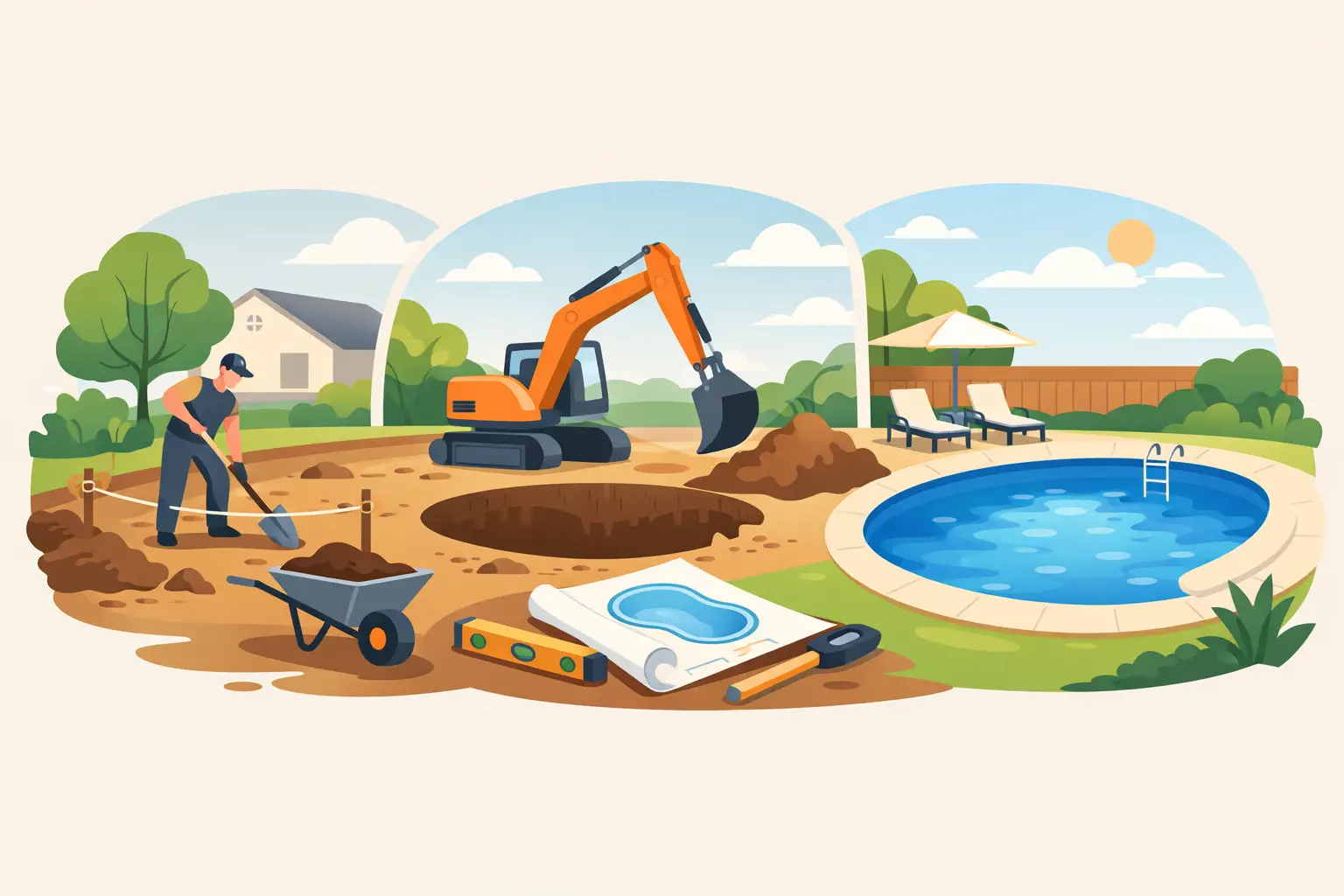
The expensive mistakes usually happen before the pool shell ever arrives. If you’re figuring out how to prepare yard for pool installation, the real work starts with access, grading, drainage, and knowing what has to move before construction begins. A beautiful pool depends on more than the pool itself. It depends on what the yard can support.
A lot of homeowners picture shape, tile, and water color first. That makes sense. But the yard decides how smooth the project feels, how long it takes, and how many avoidable costs show up along the way. A clean plan at the beginning protects the finish at the end.
Start with the space you actually have
Pool planning looks simple on paper. In the yard, setbacks, easements, slopes, trees, and utility lines can change the layout fast. Before anything else, look at the usable build area, not just the total lot size.
Property lines matter. So do local setback rules, HOA restrictions, septic systems, wells, and drainage easements. If your backyard feels large but the legal buildable area is tight, the pool size or position may need to shift. This is one of the first places where expectations and site conditions need to meet.
It also helps to think beyond the pool itself. Most homeowners want more than water in a hole. They want decking, furniture space, safe walking paths, equipment placement, and a yard that still feels open. The pool may be the focal point, but the surrounding layout is what makes it comfortable to use.
How to prepare yard for pool access and equipment
One of the least glamorous parts of pool prep is access. It is also one of the most important. Crews and machinery need a clear route into the backyard, and many properties are tighter than they first appear.
Side-yard access is often the deciding factor. A narrow gate, low roofline, fence sections, HVAC placement, or mature landscaping can limit what equipment can pass through. If access is restricted, construction may require smaller equipment, more labor, or in some cases a crane. That changes both timing and budget.
Look at the full path from the street to the pool site. That includes gates, driveways, side yards, and any surfaces that heavy equipment will cross. Pavers, irrigation lines, decorative concrete, and delicate plantings may need protection or temporary removal. It is better to plan for some disruption than to act surprised by it later.
Pool equipment needs its own space too. Pumps, filters, heaters, and sanitation systems should sit in an area that is functional, code-compliant, and not awkwardly dropped into the yard as an afterthought. The equipment pad should be accessible for service without dominating the outdoor living space. Quiet matters, but practical access matters more.
Grading and drainage come before looks
If the yard does not handle water well now, adding a pool will not improve it. In many cases, it makes existing drainage issues more obvious. That is why grading deserves serious attention early.
A relatively flat yard is usually easier and more cost-effective to build on, but flat does not always mean properly drained. Water should move away from the pool, the home, and hardscape areas in a controlled way. If you already see standing water after rain, soft spots in the lawn, or runoff moving toward the foundation, deal with that before construction starts.
Some yards need only minor regrading. Others need swales, drains, retaining features, or a broader site plan. Sloped lots can create dramatic pool designs, but they often require more engineering and more budget. This is where the answer to how to prepare yard for pool work becomes highly site-specific. The right solution depends on how your lot moves water, not just how it looks on a sunny day.
Drainage should also account for the surrounding deck and outdoor living area. A great pool with poor runoff around the coping or patio will never feel finished. Water management is not a background detail. It affects safety, durability, and maintenance over time.
Clear what needs to go
Most backyards need some level of demolition or clearing before pool work starts. That can include fencing, sheds, old patios, tree roots, landscape beds, play sets, or unused utility features. The goal is not to strip the yard bare without a plan. The goal is to remove what interferes with construction and preserve what still works.
Trees deserve careful thought. Mature trees provide privacy and shade, but roots can complicate excavation and future debris can increase maintenance. A tree that looks harmless at the edge of the project can become a problem if root zones overlap with the dig area, plumbing runs, or deck structure. At the same time, removing every tree for a cleaner build is not always the right move if privacy and comfort matter to you.
This is a good place to be realistic about your landscaping priorities. If the pool is the centerpiece of a new outdoor living space, some existing features may no longer fit the plan. That is normal. A yard built around a pool should feel intentional, not crowded.
Check utilities before the first dig
Underground and overhead utilities can affect pool placement, safety, and scheduling. Gas, electric, water, sewer, septic, irrigation, and communication lines all need to be identified before excavation. This is not just a formality. It can reshape the project.
Overhead power lines matter too, especially if large equipment or cranes may be involved. Clearance requirements are strict for good reason. If your yard has limited access and overhead obstacles, the construction approach may need to change.
You should also think ahead about service demands. A new pool may require electrical upgrades, a gas line for a heater, or plumbing coordination depending on the design. Planning these pieces early is cleaner than retrofitting them late. For homeowners focused on a polished result, this is where good preparation pays off.
Think through the mess before it starts
Pool construction is a major exterior project. Even when managed well, it is disruptive. Soil piles, noise, crew access, dust, and temporary loss of parts of the yard are all part of the process. The smoother projects usually happen when homeowners prepare for that reality instead of expecting a light-touch install.
Move outdoor furniture, planters, grills, toys, and anything fragile away from work zones. If you have pets or children, think about safety and temporary boundaries before crews arrive. If your driveway will be used for staging or deliveries, make a plan for vehicles and daily routines.
This is also the time to talk with neighbors if homes are close together. You do not need a big announcement. Just a straightforward heads-up. It goes a long way when trucks, noise, and activity increase for a stretch of time.
Plan the yard around the pool, not after it
A pool works best when the whole yard is considered as one environment. That means sun exposure, privacy, traffic flow, seating areas, outdoor dining, and visual balance all deserve attention before the build is underway.
Sun patterns affect comfort more than many homeowners expect. Full sun can be ideal for water temperature and open views, but some shade near seating areas may matter more during peak summer use. Privacy matters too. A pool placed for code compliance but exposed to every neighboring window may not feel relaxing once it is finished.
Think about where people will enter the pool area, where wet feet will travel, and where furniture will sit without making the space feel cramped. A strong layout makes the yard easier to use on an ordinary Tuesday, not just when guests come over.
This is often where working with an experienced pool specialist makes the process simpler. Coastal Cove Pools approaches site planning with the full outdoor experience in mind, not just the excavation footprint.
Budget for site prep, not just pool features
Homeowners often build a budget around visible upgrades like finishes, lighting, water features, and automation. Those are exciting choices. But site prep has real cost, and it should be part of the financial plan from day one.
Grading, drainage corrections, demolition, utility work, tree removal, fencing adjustments, access solutions, and soil-related issues can all affect the final number. None of these are glamorous, but all of them matter. Ignoring them early usually leads to harder decisions later.
That does not mean every yard becomes a complicated project. Some are straightforward and build-friendly. Others need more groundwork. The point is to price the real conditions, not an idealized version of the property.
A better build starts before construction
When homeowners ask how to prepare yard for pool installation, they are usually asking how to avoid headaches. The answer is simple, even if the details are not. Know your site, clear the path, solve drainage, verify utilities, and plan the full yard with the pool in mind.
A pool should feel like it belongs there. The best ones do not just fill space. They fit the property, the home, and the way you want to live outside. Start there, and the rest of the project has a much better chance of feeling right from the first dig onward.