
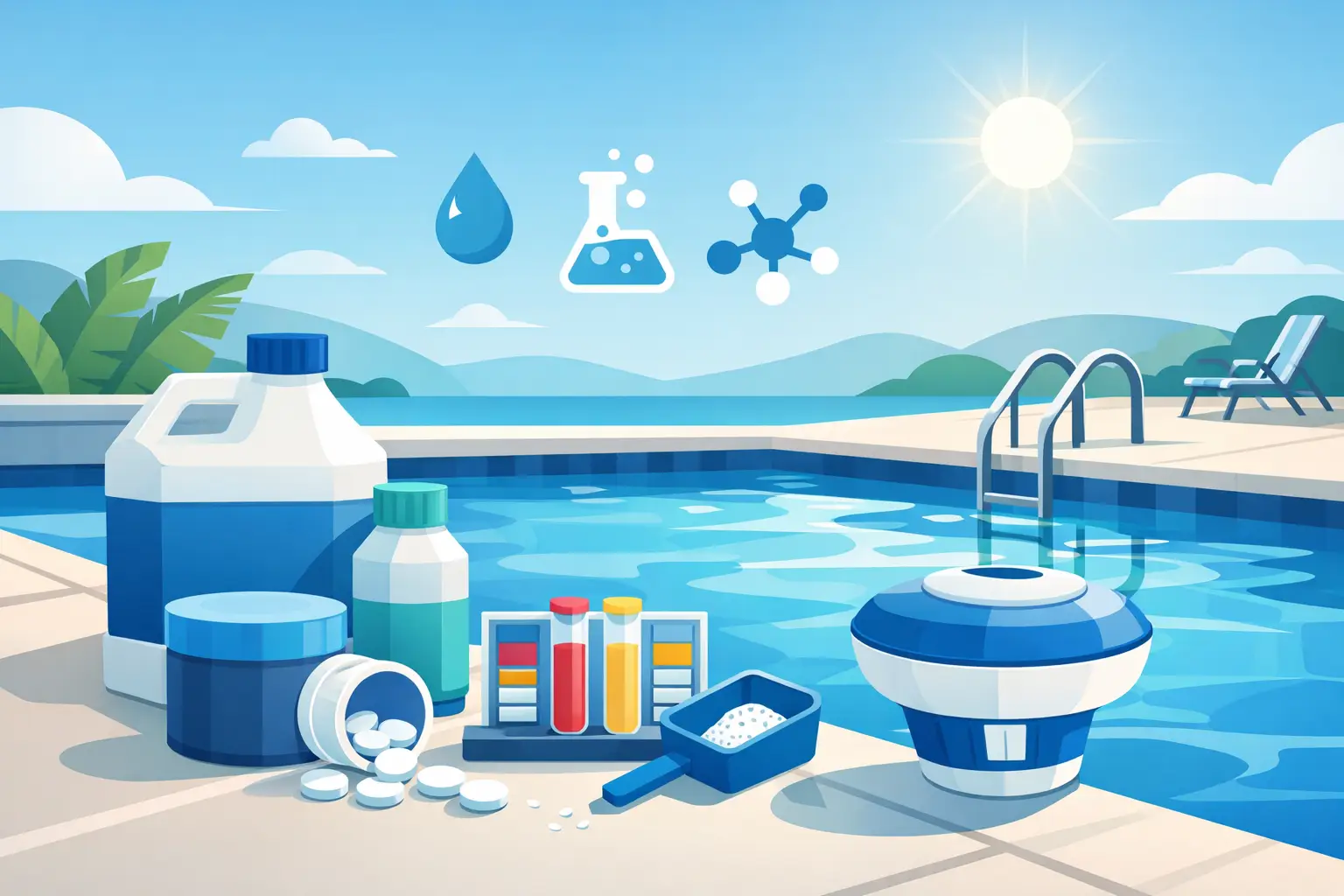
Clear pool water is not a mystery, but it does punish guesswork. If you are asking what chemicals are needed for a pool, the short answer is this: you need a sanitizer, a way to control pH and alkalinity, and a few support chemicals used only when your water calls for them.
That matters because pool care is less about adding everything on the shelf and more about keeping a few numbers in range. Homeowners often spend too much on products they do not need, then miss the basics that actually protect swimmers, finishes, and equipment. A good pool feels easy. The chemistry behind it should be handled the same way.
What chemicals are needed for a pool day to day?
For most residential pools, the core chemical lineup is fairly simple. Chlorine is the main sanitizer in many backyard pools because it kills bacteria, controls algae, and oxidizes contaminants left behind by swimmers, weather, and organic debris. Without a sanitizer, even beautiful water can turn unsafe quickly.
Next is pH control. Pool water that is too acidic can irritate skin and eyes, corrode metal parts, and wear on surfaces. Water that is too high in pH can make chlorine less effective and leave the water cloudy or prone to scale. That is why pH increaser and pH decreaser are common staples in a pool care setup.
Total alkalinity also needs attention because it acts like a buffer for pH. When alkalinity is too low, pH tends to swing around and becomes harder to manage. When it is too high, pH can become stubborn and drift upward. In practical terms, homeowners often use sodium bicarbonate to raise alkalinity and, in some cases, acid to help bring it down.
Then there is calcium hardness. This is the amount of dissolved calcium in the water. If it is too low, the water can become aggressive and pull minerals from plaster or grout. If it is too high, scale can form on tile, heaters, and salt cells. Not every pool needs calcium added often, but it is one of the core balance readings you should monitor.
If you have an outdoor chlorine pool, stabilizer matters too. Also called cyanuric acid, it helps protect chlorine from being burned off by sunlight. Without enough stabilizer, a sunny afternoon can wipe out your chlorine level faster than most homeowners expect. Too much stabilizer, though, can reduce chlorine efficiency, so more is not better.
The main pool chemicals and what they do
Sanitizer
Chlorine is the standard choice for most residential pools. It may be added through tablets, liquid chlorine, granular shock, or generated by a salt system. Bromine exists too, but it is more common in spas than swimming pools.
The form of chlorine you use depends on your pool setup and how hands-on you want maintenance to be. Tablets are convenient but can add stabilizer over time, which becomes a problem in some pools. Liquid chlorine is direct and effective, but it needs regular dosing. Salt pools still use chlorine – they just create it on site through a salt chlorine generator.
pH adjusters
When pH runs low, soda ash is commonly used to raise it. When pH runs high, muriatic acid or dry acid is used to lower it. This part of pool care is routine, not optional. Swimmer comfort, water clarity, and sanitizer performance all depend on it.
Alkalinity increaser
In most cases, alkalinity increaser is sodium bicarbonate. It helps keep pH from bouncing around. If your pool always seems to need pH correction, low alkalinity may be part of the reason.
Calcium hardness increaser
Calcium chloride is often used to raise calcium hardness. This is especially relevant for plaster pools, where water balance affects the life of the finish. Vinyl liner and fiberglass pools still need hardness checked, but the risk profile is a little different.
Stabilizer
Cyanuric acid helps outdoor pools hold chlorine in the sun. This is useful, but only to a point. High stabilizer is one of the more common chemistry problems in tablet-fed pools because trichlor tablets add chlorine and stabilizer at the same time.
Chemicals you may need sometimes, not all the time
This is where pool care gets overcomplicated for a lot of homeowners. Not every pool needs every specialty product. Some are situational.
Shock is one example. Pool shock is a high dose of oxidizer used to break down contaminants and restore water quality. You may shock after heavy use, a storm, visible dullness, or an algae issue. Some pools need it more often in peak swim season. Others need it only occasionally because the routine chemistry is well managed.
Algaecide is another product that can help, but it should not replace proper chlorine levels. Used correctly, it can support algae prevention, especially in warm weather or problem-prone pools. Used as a shortcut, it usually disappoints.
Clarifiers and flocculants are designed to improve cloudy water by helping tiny particles clump together so the filter can remove them. They can help in the right situation, but cloudy water usually starts with an underlying issue such as poor filtration, low chlorine, bad pH, or heavy debris load. Fix the cause first.
Metal sequestrants are useful when your fill water contains iron or copper. These products help keep metals suspended so they do not stain surfaces or discolor water. If your pool has recurring staining or greenish water that is not algae, metals may be the real issue.
Enzyme products are sometimes used to break down oils, lotions, and organic residue. They can be helpful in heavily used pools, but they are support products, not foundation products.
What changes based on your pool type
The answer to what chemicals are needed for a pool depends partly on the pool itself.
A traditional chlorine pool usually needs direct sanitizer additions along with pH, alkalinity, calcium, and stabilizer management. A salt pool still needs pH and alkalinity control, and it still produces chlorine, so the chemistry categories stay mostly the same. The difference is how chlorine gets into the water.
Plaster pools usually demand closer attention to calcium hardness because the surface interacts more directly with water balance. Fiberglass pools tend to be a little more forgiving, though scale and sanitizer issues still matter. Vinyl liner pools are less vulnerable to calcium-related surface damage, but they are not exempt from water balance problems.
Indoor pools often need little or no stabilizer because there is no sun exposure burning off chlorine. Outdoor pools in warm, sunny climates almost always need to watch stabilizer closely.
What you do not need to do
You do not need to buy chemicals because the label sounds impressive. Pool care works best when each chemical solves a specific tested problem. If the water is balanced, sanitized, and filtering properly, adding extra products can create more issues than it solves.
You also do not want to treat strips, pool store printouts, and water appearance as interchangeable. Test strips are convenient, but they can be less precise than a reliable liquid test kit. Water can also look clear and still be out of balance. Good pool care is based on readings, not assumptions.
And you should never mix pool chemicals together before adding them. Store them carefully, add them separately, and follow product directions. Even routine pool products can become dangerous when handled carelessly.
A simpler way to think about pool chemistry
If you want pool chemistry to feel manageable, think in three layers. First, sanitize the water. Second, balance the water so the sanitizer works and the pool stays comfortable. Third, use specialty chemicals only when testing or a visible issue tells you they are needed.
That mindset helps cut through a lot of noise. Most pools do not fail because an owner forgot some obscure specialty product. They fail because chlorine dropped, pH drifted, alkalinity was ignored, or stabilizer crept too high over time.
For homeowners who want the backyard to feel polished, not high-maintenance, that distinction matters. A pool should support the way you live at home – quiet mornings, family weekends, evenings outside – not turn into a chemistry project every time the weather changes.
Coastal Cove Pools sees that balance as part of good pool ownership. The right chemicals matter, but using the right amount at the right time matters more.
If you are ever unsure what your pool needs, start with accurate testing and resist the urge to overcorrect. Clear water comes from consistency, not from chasing every bottle on the shelf.