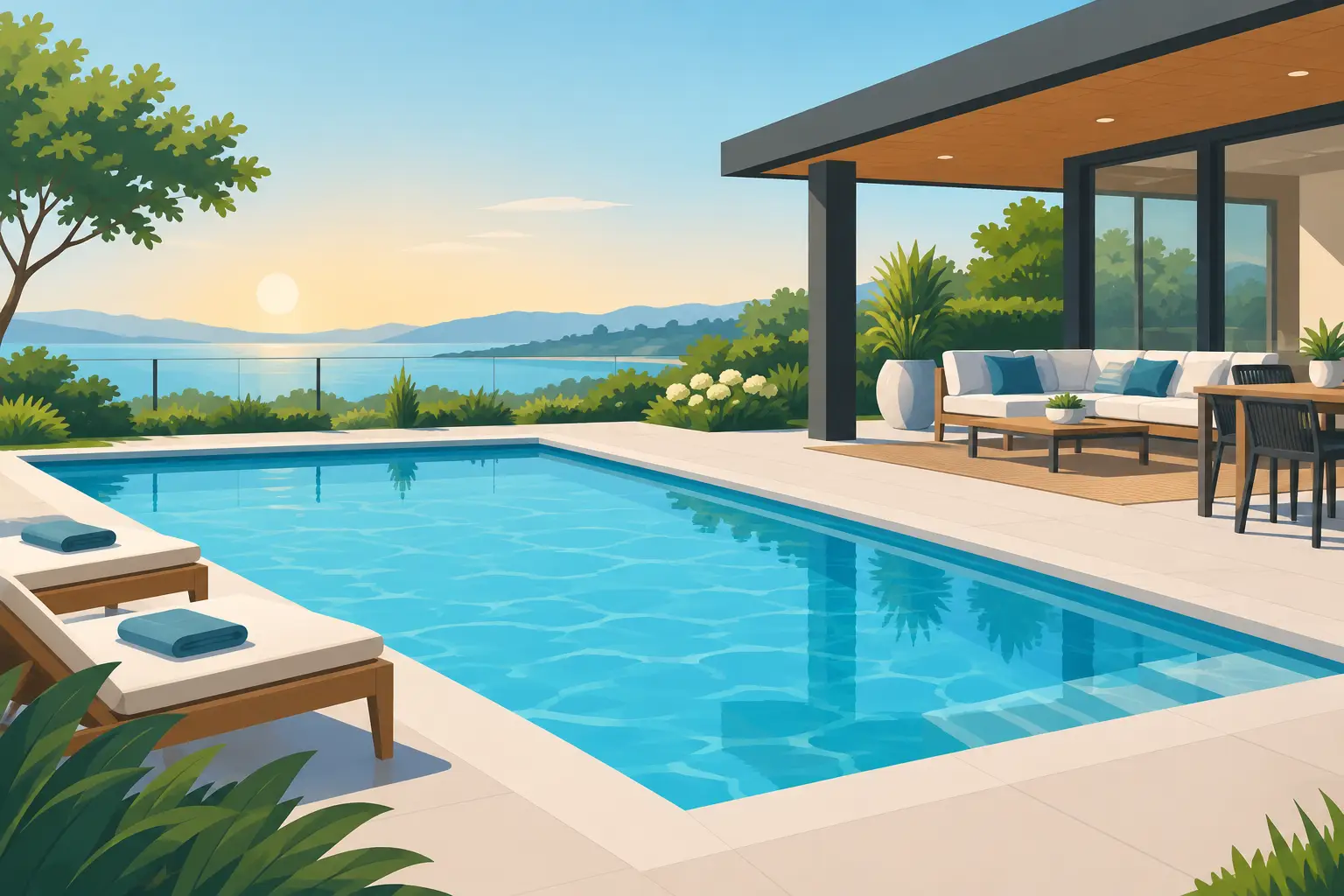
A backyard pool used to be the destination. Now, it is the center of a larger space built for the way people actually live at home. The strongest outdoor living trends with pools and patios are not about adding every possible feature. They are about making the pool, patio, shade, seating, and landscaping feel like one considered setting.
For homeowners, that shift matters. A pool that looks beautiful from the kitchen but has nowhere comfortable to sit, dine, dry off, or store towels will not get the use it deserves. The best projects balance the resort feeling people want with the practical decisions that make ownership easier season after season.
Outdoor Living Trends With Pools and Patios That Last
The most enduring trend is cohesion. Rather than treating the pool as one project and the patio as another, homeowners are planning the whole backyard around movement, sightlines, and daily routines. Where do guests enter? Where will children leave wet towels? Is there room for quiet morning coffee as well as a full Saturday gathering? Those questions shape a better layout than a wish list ever could.
A clean, coastal-inspired palette remains popular because it feels relaxed without becoming dated. Light stone, warm-toned pavers, soft grays, natural wood accents, and deep blue water create contrast without visual clutter. Material selection should still respond to the local climate, sun exposure, and maintenance expectations. A pale patio may feel cooler underfoot in full sun, for example, but some finishes show leaves, dirt, or outdoor cooking spills more readily than others.
The goal is not to make a backyard look like a hotel. It is to create the feeling of an everyday escape while keeping the space personal and functional.
The Pool Is Becoming Part of the Patio Plan
More useful water features
Water features are moving away from oversized statements and toward quieter details that add atmosphere. A simple sheer descent, a raised spa spillway, or a modest bubbler shelf can create movement and sound without dominating the yard. These features work especially well when they are visible from indoor living areas, giving the backyard presence even when nobody is swimming.
There is a trade-off. Every added feature introduces equipment, plumbing, controls, and maintenance considerations. A homeowner who wants a calm visual focal point may be better served by one well-designed feature than several water elements competing for attention. Choosing the right pump capacity and planning for access to equipment keeps the finished look from becoming a service headache later.
Tanning ledges with a purpose
Tanning ledges continue to earn their place because they serve more than one type of pool user. Young children can play under close supervision, adults can relax in a few inches of water, and lounge chairs can sit partially submerged for a resort-style feel. They also make a pool inviting for guests who want to cool off without fully swimming.
A ledge needs enough depth and width to be useful, not just photogenic. Its location matters as well. A shelf in direct afternoon sun may be perfect for lounging, while a shaded shelf can be more comfortable in hot climates. Families should talk through how the pool will be used before settling on its size.
Integrated steps and clean edges
Wide entry steps, corner entries, and benches built into the pool are replacing add-on features that interrupt the waterline. The result is a simpler visual profile and more natural places to pause, talk, or help children enter the pool. Straight lines remain popular, but softened corners and gently curved elements can make a compact backyard feel less rigid.
This is one area where the property should lead the design. A geometric pool can reinforce a modern home and create efficient patio zones. A freeform pool may better suit a landscaped yard with mature trees or an informal coastal feel. Neither is automatically better. The right choice is the one that belongs with the home.
Patios Are Shifting From Surface to Living Space
A patio is no longer just the strip of hardscape surrounding the water. Homeowners are giving it distinct zones, with enough space for circulation between them. The dining area, lounge area, grilling station, and pool-entry path should not all fight for the same few feet.
The practical rule is simple: plan furniture first. A table may fit on paper but still feel cramped once chairs are pulled out. Lounge chairs need room to recline without blocking a walkway. Pool gates, doors, and equipment access need to remain clear. Designing around real dimensions protects the investment and makes entertaining feel effortless.
Large-format pavers and textured porcelain are common choices for their crisp look and broad range of colors. Natural stone remains a premium option with a character that manufactured materials cannot fully copy. The best selection depends on traction, heat retention, drainage, budget, and how much natural variation a homeowner wants to see. Around a pool, safety and comfort under bare feet should carry as much weight as appearance.
Shade Is No Longer an Afterthought
A beautiful patio that cannot be used between noon and late afternoon is incomplete. Shade structures have become central to outdoor living plans, especially for homeowners who want to use the backyard throughout the day.
Pergolas, covered patios, cabanas, and large cantilever umbrellas all have a role. A fixed roof provides the most dependable coverage and can support lighting, fans, and outdoor media. A pergola offers a lighter, more open look, though it may need a retractable canopy or planted cover for meaningful sun relief. Umbrellas are flexible and cost-conscious, but they require secure bases and careful positioning in windy areas.
Shade also affects water temperature, plant choices, and furniture durability. Planning it early prevents the common mistake of trying to solve intense sun exposure after the patio has already been installed.
Outdoor Kitchens, Kept Focused
Cooking and gathering spaces remain a major priority, but the strongest designs avoid turning the patio into a commercial kitchen. For many households, a built-in grill, counter space, small refrigerator, and storage are enough. The setup should be close enough to the house for convenience but positioned so smoke, heat, and foot traffic do not disrupt pool time.
A larger kitchen can make sense for homeowners who regularly host family and friends. It should earn its footprint, though. More appliances mean more utility planning, cleaning, weather protection, and potential repairs. A focused space that gets used every weekend delivers more value than an elaborate one that sits idle.
Lighting deserves the same restraint. Layered lighting works best: low path lights for safety, soft pool illumination, and warm overhead or wall lighting around dining and seating. Bright floodlights can make a yard feel exposed rather than inviting. The aim is to extend the evening, not turn the patio into a stadium.
Landscaping That Frames Rather Than Fills
Landscaping is returning to a more edited approach. Instead of planting every open edge, homeowners are using layered greenery to frame views, create privacy, and soften hardscape. Ornamental grasses, palms suited to the region, evergreen screening, and low-maintenance flowering plants can make a pool area feel established without closing it in.
Privacy is particularly valuable in neighborhoods where homes sit close together. A thoughtful planting plan can screen sightlines more gracefully than a tall fence alone. It takes patience, however. Plants need time to mature, and their root systems, leaf drop, irrigation needs, and eventual size should be considered before installation near the pool.
Low-maintenance does not mean no-maintenance. The better approach is to choose plants that fit local conditions and keep messy varieties away from the water when possible. That reduces debris, simplifies cleaning, and helps the pool remain the focal point.
Smart Controls, Quietly Used
Pool technology is increasingly expected, but it should make ownership simpler rather than more complicated. App-based controls can help homeowners manage lighting, heating, pumps, and water features from one place. Variable-speed equipment can support efficient operation, while automated systems can make routine settings more consistent.
Technology does not replace water testing, equipment inspections, or professional care. It gives owners better visibility and control, especially when paired with a service plan that catches small issues before they become expensive interruptions. The right system is one the homeowner will actually understand and use.
The best backyard trend is still the one that fits your home, your routine, and the way you want to spend time outside. A well-planned pool and patio should feel easy on a quiet weeknight and ready when the people you love show up. Coastal Cove Pools approaches that kind of space as a long-term part of home life, not a one-season project.