
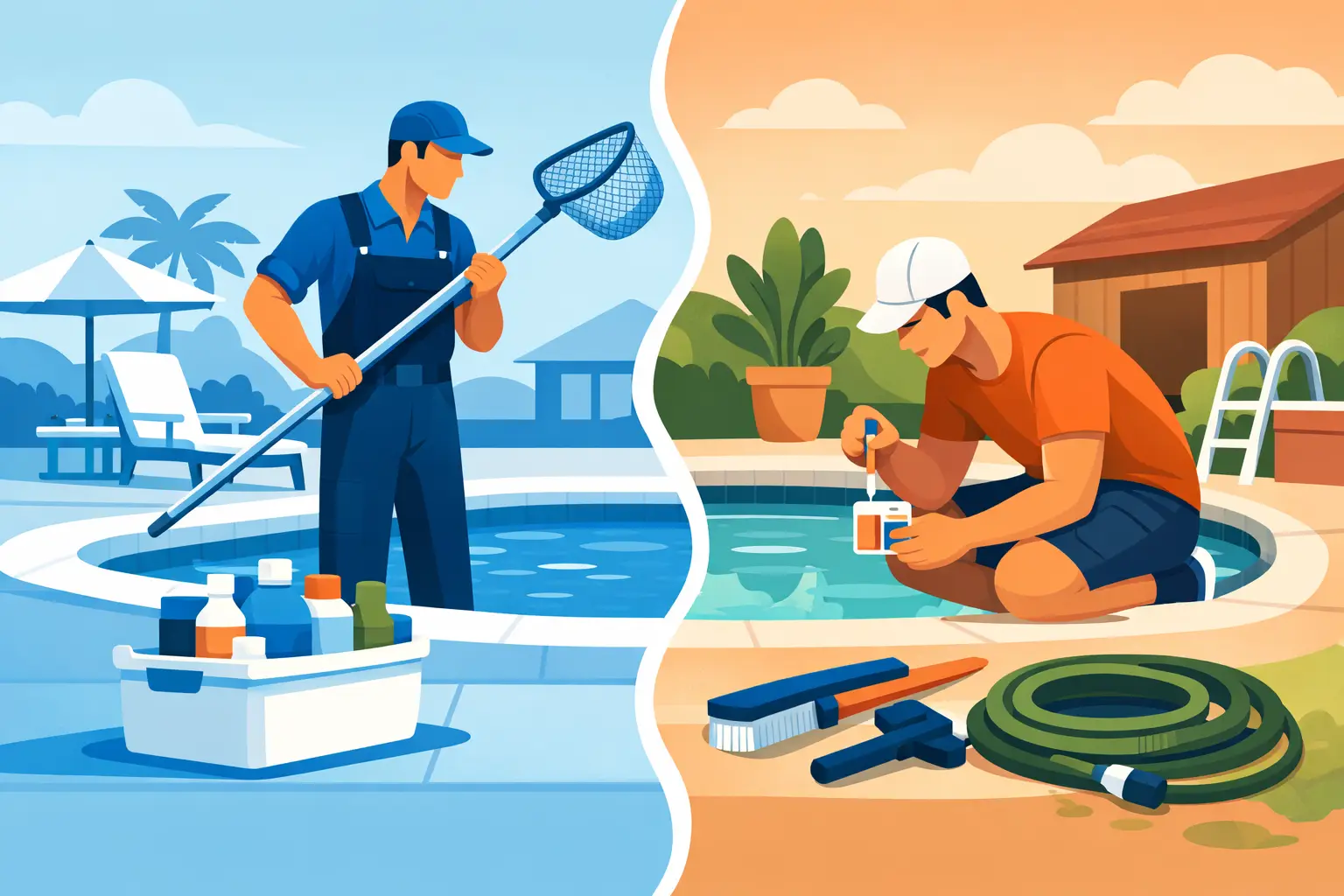
A pool looks effortless when everything is working. The water stays clear, the tile stays clean, and the equipment hums along in the background. What most homeowners learn quickly is that the easy, resort-style feel depends on consistent work. That is where pool service vs DIY maintenance becomes a real decision, not just a budget line.
For some homeowners, handling the pool themselves makes sense. They like knowing the system, checking chemistry, and staying hands-on with the backyard. For others, the value is in not having to think about filter pressure, chlorine demand, algae risk, or whether the pump is sounding a little off. The right choice depends on how you use your pool, how much time you want to give it, and how much room you have for mistakes.
Pool service vs DIY maintenance: what changes in real life
On paper, DIY pool care can look simple. Test the water, add chemicals, skim the surface, brush the walls, empty baskets, and clean the filter when needed. Many pool owners start there. The routine seems manageable, especially during mild weather when the water looks stable.
Real life is less predictable. A stretch of heavy rain can throw off chemistry fast. A heat wave can raise chlorine demand. A weekend party can leave behind sunscreen, debris, and cloudy water by Monday. If you travel often or own a second home, even one missed week can start a chain of problems that costs more than expected.
Professional service changes the equation by turning pool care into a set schedule with trained eyes on the system. That includes the tasks you can see, like vacuuming and balancing water, and the ones you may not catch early, like an undersized chlorine feed, a dirty cartridge reducing circulation, or calcium scale starting to build where it should not.
The difference is not just who adds chemicals. It is who is responsible for consistency.
The case for DIY maintenance
DIY works best for homeowners who want involvement and have enough time to stay disciplined. If you enjoy understanding your equipment, keeping a routine, and learning water chemistry, pool care can be satisfying. It gives you direct control over what is added to the water and when maintenance gets done.
There can also be savings, especially if the pool is straightforward and the owner is attentive. A small, lightly used residential pool with reliable equipment is easier to manage than a large pool with water features, a spa, automation, and heavy bather load. In the simpler setup, a homeowner may handle weekly upkeep without much trouble.
That said, DIY savings are rarely as clean as they appear at first. Testing kits, chemicals, replacement parts, cleaning tools, and time all count. So does the learning curve. Water can look clear and still be out of balance. A filter can be running and still not be doing enough. Homeowners often find that the biggest DIY cost is not routine care. It is correcting the problems that routine care missed.
Where DIY usually gets harder than expected
Water chemistry is the most common pressure point. Many owners focus on chlorine and pH, but those are only part of the picture. Total alkalinity, calcium hardness, cyanuric acid, phosphates in some cases, and water temperature all affect how the pool behaves. A pool can be overtreated just as easily as undertreated.
Then there is equipment awareness. Pumps, filters, heaters, salt systems, timers, lights, valves, and automation all need occasional attention. When something drifts out of normal operation, the signs can be subtle. Circulation weakens. Pressure rises. Water clarity drops slowly. By the time the issue becomes obvious, it may already be expensive.
Seasonality matters too. Spring opening, peak summer use, storms, and fall debris each bring different demands. Homeowners who do fine in calm months sometimes struggle during the periods when pools need the most attention.
Why professional pool service appeals to busy homeowners
Professional service is not just about convenience, though convenience is a major reason people choose it. It is about protecting a lifestyle upgrade so it keeps feeling like one. If the pool is part of how you relax, entertain, and enjoy your home, handing off the technical upkeep can be the most practical move.
A good service routine creates consistency. Water gets tested and adjusted on schedule. Surfaces are inspected. Equipment performance is noticed before a small issue becomes a shutdown. That consistency matters more than occasional deep effort. Pools respond better to steady care than catch-up care.
For families, professionals, and homeowners who travel, service also reduces the mental load. You are not trying to squeeze in brushing and testing before work or after a long weekend away. You are not guessing whether cloudy water will clear on its own. You are not spending your Saturday searching for the reason the skimmer suddenly has weak suction.
That kind of reliability has value, especially when the goal is a polished outdoor space that is ready to use.
Pool service vs DIY maintenance on cost
Cost is usually the first question, and it should be. But the better question is what kind of cost you are comparing.
DIY usually lowers monthly out-of-pocket spending if you stay ahead of the work and avoid mistakes. If your time is flexible and you are comfortable learning the system, that can be worthwhile. For some owners, it is the right fit.
Professional service raises the monthly maintenance budget, but it can reduce surprise costs tied to neglected chemistry, preventable equipment strain, or delayed problem detection. Poorly balanced water can shorten the life of plaster, liners, heaters, and salt cells. Dirty filters and circulation issues can force equipment to work harder. Algae treatment is almost always more expensive than prevention.
So the financial answer depends on your margin for error. If you are consistent and detail-oriented, DIY may save money. If you are likely to miss weeks, guess on chemistry, or postpone repairs, service can be the less expensive path over time.
When DIY makes sense
DIY maintenance makes the most sense when the pool is relatively simple, the owner is present, and the schedule is realistic. It also helps when the owner actually wants the responsibility. That part matters more than people think.
If pool care feels like part of enjoying the home, not another chore to avoid, DIY can be a good match. The same is true for owners who like understanding systems and prefer direct oversight. In those cases, the pool becomes one more part of home management.
It is less ideal when the pool is used heavily, the property is a second home, the backyard is meant to stay guest-ready, or the owner wants low involvement. In those settings, DIY often starts with good intentions and ends with inconsistency.
When professional service is the better fit
Professional service is usually the stronger choice when the pool supports a polished lifestyle and regular use. If your backyard is an extension of the home, and you want it to stay clean, clear, and ready without constant attention, service fits naturally.
It also makes sense for newer pool owners. There is a lot to learn in the first year, and mistakes can be frustrating. Starting with service can help protect the investment while you get familiar with how your specific pool behaves through different seasons.
Complex pools benefit even more. Spas, water features, automation, heaters, salt systems, and custom finishes all raise the stakes. The more expensive the pool environment, the more costly poor maintenance becomes.
For many homeowners, this is the practical middle ground: the pool stays in professional hands, and the owner gets the part they wanted in the first place – the comfort, recreation, and everyday escape.
A hybrid approach can work too
Not every decision has to be all or nothing. Some homeowners prefer a hybrid setup. They handle light weekly tasks like skimming and basket cleaning, while a professional manages chemistry checks, filter service, and periodic inspections. Others use service during the busiest or hottest months and take over when conditions are easier.
That approach works best when responsibilities are clear. Problems tend to happen when everyone assumes someone else already handled the water or equipment check. If you choose a split model, keep it simple and consistent.
There is also value in professional backup even for committed DIY owners. Having a trusted pool specialist available for troubleshooting, seasonal transitions, or equipment concerns can save time and prevent guesswork.
A pool should feel like part of home, not another system you are chasing every weekend. If you have the time and interest, DIY can be a solid path. If you want cleaner results, fewer surprises, and more room to simply enjoy the water, service earns its place. The better choice is the one that keeps your pool ready when you actually want to use it.