
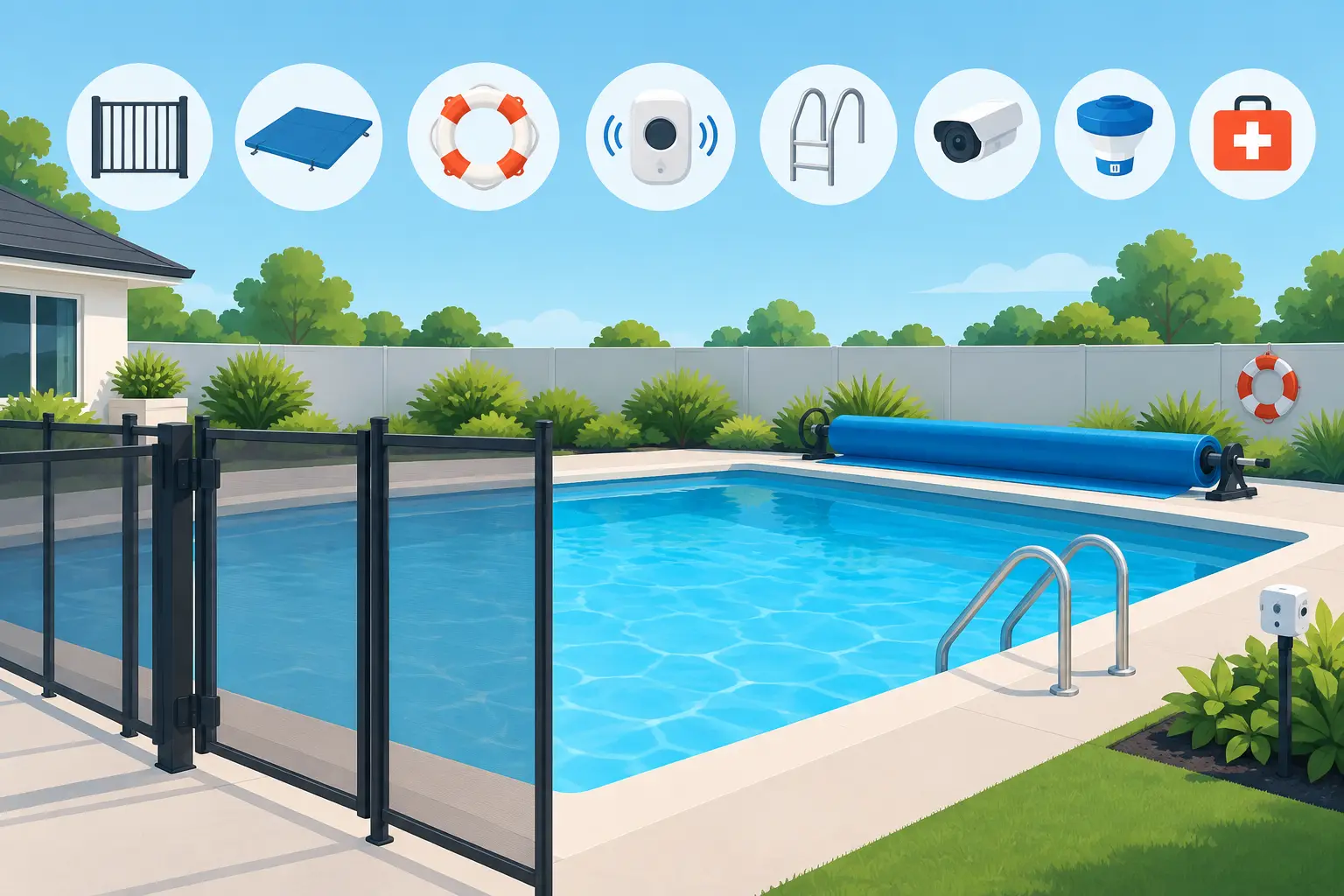
A beautiful pool should feel like the easiest part of your backyard, not the part that demands constant worry. The best pool safety upgrades create layers of protection around the water while preserving the clean, relaxed setting homeowners want for family time, entertaining, and quiet evenings outside.
No single product makes a pool safe on its own. A cover can be left open. A gate can be propped ajar. An alarm can be missed. The strongest approach combines physical barriers, active alerts, reliable equipment, and household routines. The right mix depends on who uses the pool, how the yard is laid out, and local requirements.
Start With a True Pool Barrier
A code-compliant pool barrier is the foundation of residential pool safety. It separates the pool from the home, the street, neighboring properties, and unsupervised access. For many households, this means a dedicated fence around the pool area with a self-closing, self-latching gate.
The details matter. Fence height, gate swing direction, latch placement, spacing between pickets, and clearance at the bottom can all be regulated locally. A barrier that looks substantial may still have a gap large enough for a small child or pet to enter. Before choosing a style, confirm the requirements that apply to your property and permit history.
Glass fencing is a natural choice when you want a premium, open view of the water. Aluminum fencing provides a more traditional look with excellent durability and airflow. Mesh systems can work well where flexibility is needed, especially around existing hardscapes. The best material is the one that meets code, resists your climate, and will stay closed and maintained over time.
Choose a Self-Closing, Self-Latching Gate
The gate is the most used part of a barrier and often its weakest point. Upgrade to hardware that closes the gate fully from any open position and latches without someone needing to remember. A latch placed high on the pool side of the gate adds another layer of protection from young children.
Check the gate regularly. Hinges can sag, springs can lose tension, and latches can stick after exposure to sun, salt air, rain, or landscaping debris. A gate that does not close every time is not a minor maintenance issue. It needs attention immediately.
Add a Safety Cover That Fits How You Live
A properly installed safety cover creates a physical barrier over the water when the pool is not in use. It can reduce accidental entry, keep debris out, and make off-season ownership easier. For a household with children, pets, frequent guests, or a second home that sits vacant at times, a cover can be one of the most meaningful upgrades available.
Solid and mesh safety covers are commonly used for seasonal protection. Each comes with trade-offs. Solid covers block sunlight and keep more debris out, but water needs to be managed on top of them. Mesh covers allow rainwater to pass through and are generally easier to handle, though fine debris and some sunlight may reach the pool.
Automatic safety covers offer daily convenience. With a key-operated or controlled system, the cover can be opened for swimming and closed again shortly afterward. That convenience matters because safety equipment only helps when it is consistently used. Automatic covers do require planning, professional installation, routine service, and a realistic budget. They also must be rated and installed for safety, not treated as a substitute for supervision.
Use Alarms as a Backup, Not a Standalone Plan
Alarms help alert adults when a layer of protection has been breached. They are particularly useful in homes where children may be inside while the pool is outside, or where the pool is near a side gate or less visible section of the yard.
Door and window alarms notify you when a route from the house to the pool area is opened. Gate alarms can signal when a pool gate is accessed. Water or surface-wave alarms detect disturbance in the pool. Wearable alarms are another option for young children, although they rely on consistent use and proper fit.
Every alarm type has limitations. Wind, toys, automatic cleaners, and pets can cause false alerts in some systems. A device can also be turned off, have a weak battery, or become background noise if it sounds too often. Select alarms with clear alerts, test them on schedule, and treat every alarm as a prompt to check the pool area right away.
Upgrade Lighting Around Water, Steps, and Paths
Good lighting prevents a different kind of pool accident: slips, missteps, and poor visibility after sunset. It also makes the backyard more enjoyable, which means you are more likely to notice and address hazards before guests arrive.
Start with the routes people actually use. The path from the house to the pool, changes in elevation, deck edges, gates, outdoor kitchens, and equipment areas should be visible without harsh glare. Low-voltage path lights, step lights, and carefully placed landscape lighting can define these areas without turning the yard into a stadium.
Inside the pool, functioning underwater lights make depth changes, benches, steps, and ledges easier to see. Replace damaged fixtures and address water intrusion or flickering promptly. Electrical work around a pool is never a casual do-it-yourself project. A qualified pool professional and licensed electrician can determine whether older equipment needs upgrading to current safety standards.
Make the Deck More Slip Resistant
Pool decks get wet. Sunscreen, spilled drinks, leaves, and algae can make smooth surfaces more hazardous than they appear. A slip-resistant finish is one of the best pool safety upgrades for households that use the pool often or host gatherings where people move between the water, patio, and home.
The right solution depends on the surface. Textured concrete, quality coatings, pavers with appropriate traction, and professionally applied treatments may all be options. The goal is not an aggressively rough deck that is uncomfortable barefoot. It is dependable traction under wet conditions.
Drainage deserves equal attention. Water that repeatedly puddles near steps, gates, or outdoor seating creates a recurring hazard and can signal a larger grading or deck issue. Keep drains clear, repair settled areas, and make sure splash-out water has somewhere to go.
Keep Drains and Suction Points Current
Pool suction hazards are uncommon, but the consequences can be severe. Drain covers and circulation equipment should be inspected as part of regular pool care, particularly in older pools with unknown equipment history. Never swim with a broken, missing, loose, or improperly fitted drain cover.
Modern safety measures may include compliant drain covers, multiple suction outlets, safety vacuum-release systems, or other engineered solutions based on the pool’s design. This is not a place to guess. A pool professional can evaluate the plumbing configuration and recommend updates that suit the system.
At the same time, keep skimmer lids, equipment panels, and electrical enclosures secure. A polished backyard still needs its mechanical areas treated with respect. Clear labeling and controlled access are especially helpful when service providers, guests, or older children are around the property.
Add Clear Rules Without Making the Yard Feel Restrictive
The best equipment works better with simple expectations. Establish rules that match your household: no swimming alone, no running on the deck, no glass near the water, and no diving unless the pool was designed for it. If alcohol is served during gatherings, designate a sober adult to keep an eye on swimmers and make closing time clear.
For families with young children, assign water supervision directly. “Everyone is watching” often means no one is watching closely enough. One attentive adult should be responsible, without a phone, book, cooking task, or conversation competing for attention.
Keep basic rescue equipment visible and in good condition. A reaching pole and life ring should be easy for adults to access, not buried behind furniture or stored in a locked shed. CPR training is also a practical investment for pool-owning households and anyone who regularly watches children in the yard.
Choose Upgrades as a System
The most effective safety plan is usually not the longest shopping list. It is a coordinated setup that fits the home. A family with toddlers may prioritize a four-sided barrier, self-latching gate, door alarms, and a safety cover. A household with teenagers may focus more on lighting, slip resistance, depth markers, drain compliance, and clear guest rules. Pet owners may need a barrier and cover strategy that accounts for animals as well as children.
If you are renovating a pool or refreshing the surrounding outdoor space, safety is easiest to integrate before finishes are selected and hardscapes are finalized. Coastal Cove Pools can help homeowners consider barrier placement, equipment condition, deck flow, and everyday use as part of one backyard plan.
The goal is not to make your pool area feel guarded or complicated. It is to make safety part of the design, so the backyard remains what it should be: a place where people can relax, gather, and enjoy the water with greater confidence.