
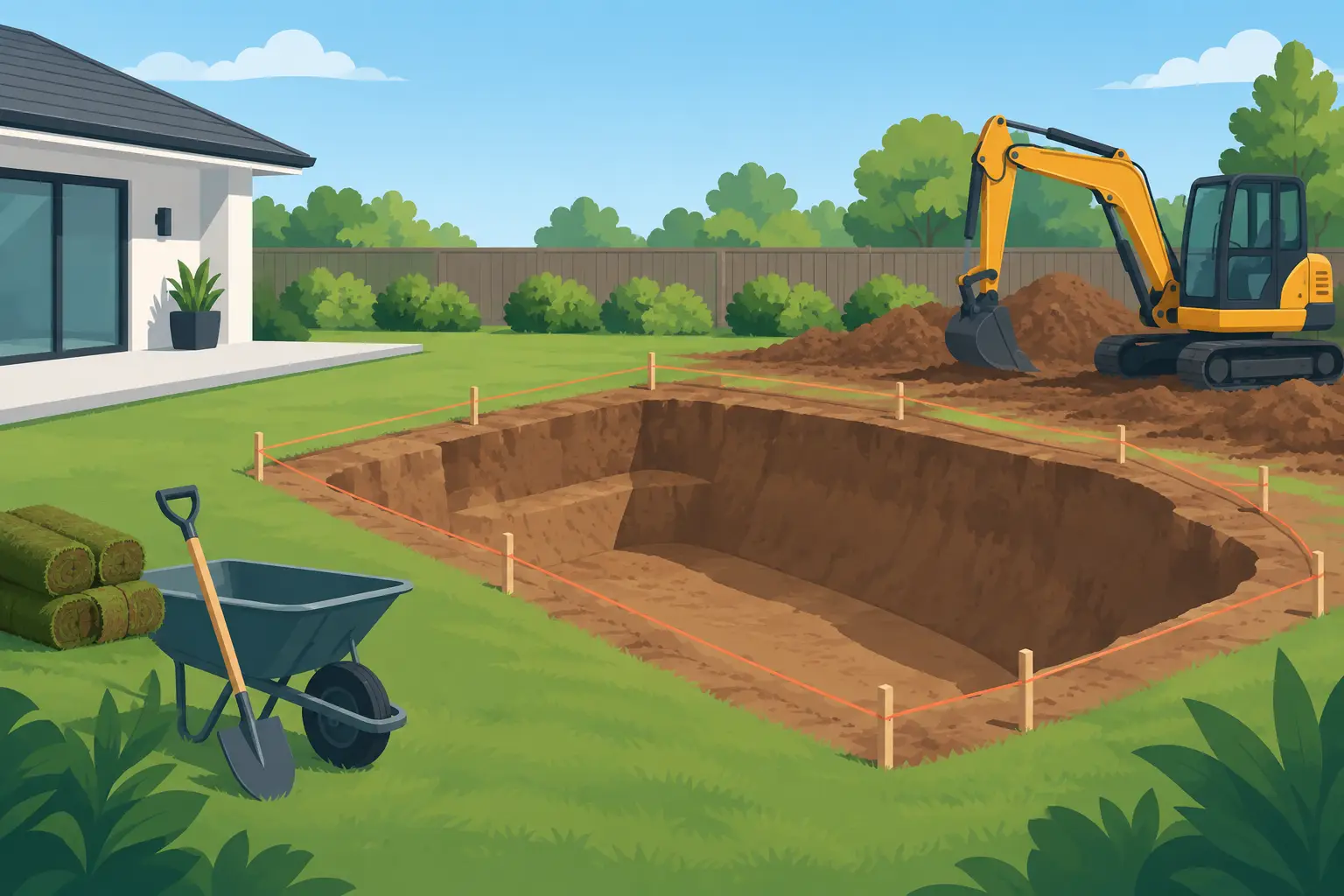
The first day of pool excavation changes a backyard quickly. Equipment needs room, soil has to go somewhere, and the site must be safe before a bucket ever touches the ground. To prepare your yard for excavation, focus on access, approvals, underground conditions, and the parts of the landscape you want to protect.
A well-prepared site helps the project move with fewer surprises. It also gives your pool team a clearer path to build the outdoor space you pictured – a place for quiet afternoons, family time, and easy entertaining.
Start With the Plan, Not the Clearing
Excavation should follow an approved pool layout, not a rough idea of where the pool might look best. Confirm the pool location, decking area, equipment pad, drainage approach, and any features such as a spa, tanning ledge, retaining wall, or outdoor kitchen. These details affect how much space the crew needs and where soil, materials, and machinery will travel.
Review property lines, easements, setbacks, and local requirements before work begins. A pool may fit comfortably in the open part of the yard but still conflict with a utility easement, septic system, well, drainage swale, or required distance from the house and fence. If your neighborhood has a homeowners association, allow time for its review as well. HOA approval and municipal permits are separate issues, and one does not replace the other.
It is also wise to photograph the yard, fence, driveway, landscaping, and nearby exterior surfaces before construction. Clear photos create a useful record of existing conditions and help everyone communicate clearly if a question comes up later.
Mark Utilities and Private Lines
Never assume that a clear patch of grass is clear underground. Public utility locating services can identify many utility lines, but they may not mark every private line on the property. Irrigation piping, landscape lighting, pool electrical lines, propane lines, invisible pet fences, drainage piping, and private water or sewer connections may require separate attention.
Arrange for utility marking before excavation and share all known site information with the project team. If you have plans from prior landscaping, fencing, drainage, or renovation work, keep them available. A marked line is not a reason to work carelessly. It is a reason for the excavation crew to understand where machine digging must stop and more careful methods may be needed.
This is one area where guessing can become expensive. Replacing a damaged irrigation line is inconvenient. Damaging a gas, electrical, water, or communications line can create a serious safety issue and delay the build.
Create a Real Equipment Access Route
A pool excavation is not a landscaping project completed with a wheelbarrow and hand tools. Depending on the pool design and site conditions, the crew may need excavators, skid steers, dump trucks, concrete deliveries, and other heavy equipment to reach the backyard.
Walk the access route from the street to the dig area with your builder. Measure gate openings, side-yard clearances, turns around the house, overhead branches, roof lines, and low utility wires. A narrow side yard may still be workable, but it can change the equipment used, the pace of the work, and sometimes the cost. In tight spaces, crews may need to remove fence sections or use smaller machines that require more time.
Protect surfaces that equipment must cross. Driveways, sidewalks, curbs, turf, and paver areas can be vulnerable under heavy loads, especially after rain. Your project plan should identify what will be protected, what may be temporarily removed, and what restoration is expected after construction. Do not promise a contractor that they can use a neighbor’s drive, vacant lot, or shared access lane without written permission.
Clear the Dig Area With Intention
Remove movable furniture, grills, planters, play equipment, yard décor, and portable fire pits from the work zone before the crew arrives. Keep a wider buffer than the exact outline of the pool. Excavation requires room for operators to work safely and for soil to be loaded, moved, or staged.
Trees and shrubs deserve a more thoughtful decision. A mature tree can make a backyard feel established and private, but its root system may extend far beyond the canopy. Excavation near large roots can weaken the tree, while a tree close to the future pool may create years of leaf cleanup, shade, and root-related concerns. Ask early whether a tree can realistically be protected or whether removal is the better long-term choice.
If you plan to save plants, relocate them before equipment arrives. Mark shrubs, specimen trees, irrigation heads, decorative boulders, and landscape elements that should remain. Bright marking and direct communication are better than assuming a crew will recognize what matters to you.
Plan for Soil, Water, and Weather
Excavating a pool produces a significant amount of soil. Some properties can use portions of that soil for grading, berms, or other landscape work. Others need it hauled away. The right answer depends on your lot, drainage plan, soil type, local restrictions, and the final elevation of the deck and yard.
Do not treat excess soil as free fill for every low spot. Raising grades in the wrong place can direct water toward your home, your neighbor’s property, or the pool deck. The finished yard should move water away from the house and avoid creating standing-water areas around the pool. If the property has existing drainage problems, address them in the overall site plan rather than hoping new decking will solve them.
Weather matters, too. Heavy rain can soften access routes, turn stockpiled soil into mud, and slow excavation. Coastal and low-lying properties may also have high groundwater or sandy conditions that require additional planning. These conditions do not necessarily prevent a pool build, but they can affect scheduling, dewatering needs, structural requirements, and how the site is managed.
Get the House Ready for Construction Days
Pool work is temporary, but it will affect the daily rhythm of your home. Keep children and pets away from the work area, and make sure gates remain closed when crews are not present. If the backyard is the usual pet space, arrange another routine before the dig begins.
Move vehicles from the driveway or street areas identified for deliveries. Ask your project contact where crews will park, where material trucks will enter, and whether trash or recycling pickup could be affected. If you work from home, plan for periods of equipment noise during excavation and material deliveries.
A brief conversation with immediate neighbors is also a good courtesy. Let them know the expected start date, typical work hours, and that there may be temporary noise, truck activity, or dust. You do not need to overexplain the project. A straightforward heads-up often prevents avoidable frustration.
Confirm What Stays and What Gets Restored
Before the first machine arrives, make sure you understand the construction limits. Identify fence panels that may be removed, sod or landscaping that will be disturbed, and surfaces that need protection. Ask how the access route will be restored and which items fall outside the pool contract, such as new landscaping, irrigation repairs, or repainting a fence.
This is not about expecting a perfect yard during construction. A pool build is a major home improvement, and a certain amount of disruption is normal. The goal is to have clear expectations about temporary impacts and the final handoff. Good preparation lets the team focus on building the pool rather than solving preventable site issues.
A Better Start to Your Backyard Project
The simplest way to prepare yard for excavation is to think beyond the hole itself. The route in, the utilities below, the water moving across the lot, and the landscape worth saving all shape the job. At Coastal Cove Pools, those early details are part of creating a backyard that feels considered long after construction equipment is gone.
Before excavation day, take one more walk through the yard with your plan in hand. Remove what can be moved, point out what must be protected, and ask questions while every decision is still easy to make. A calm, clear start gives your future pool space room to take shape.