
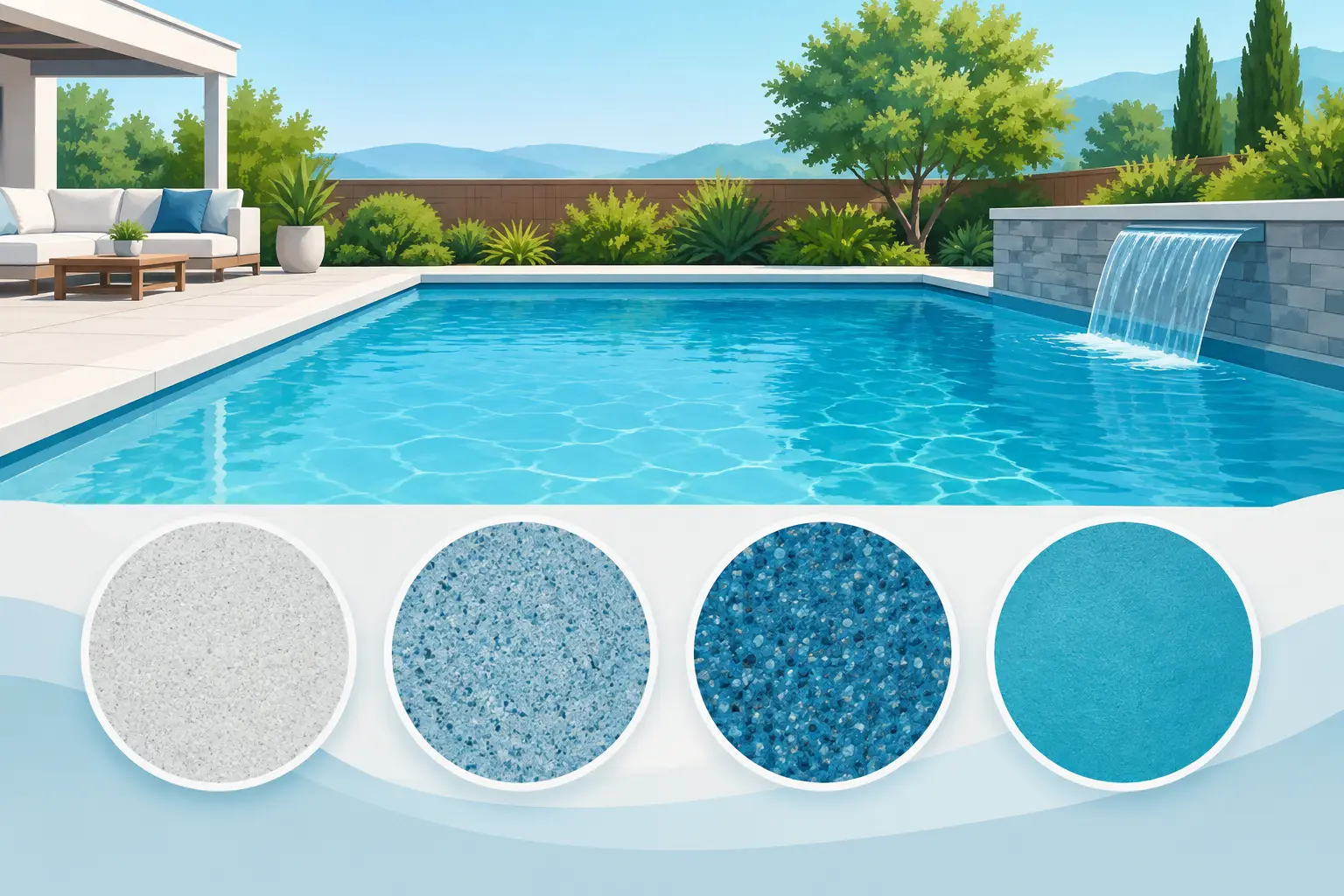
A pool finish changes more than the color of the water. It affects how the surface feels underfoot, how the pool reflects afternoon light, how visible everyday wear becomes, and how the entire backyard reads from the patio. The right pool plaster options should fit the way you use the space – quiet mornings, family swim days, or long evenings with guests gathered outside.
For most homeowners, the choice comes down to a balance of appearance, comfort, budget, and long-term care. There is no universal best finish. A bright, classic surface may be exactly right for one pool, while another calls for the depth and texture of exposed aggregate.
Understanding Pool Plaster Options
“Plaster” is often used as a catch-all term for an interior pool finish, but the materials and final appearance can vary considerably. Traditional plaster uses a cement-based mixture, typically with white marble aggregate. Upgraded finishes may add quartz, colored aggregates, or exposed pebbles for more durability and visual variation.
The finish is applied over the pool shell, then carefully cured and supported with proper water chemistry during its early life. That last part matters. Even a premium finish can show problems when startup care, circulation, brushing, or chemistry are neglected.
Standard white plaster
White plaster remains a popular choice for a reason. It is clean, familiar, and often the most budget-conscious finish. In sunlight, it creates the crisp blue water color many homeowners picture when they imagine a traditional residential pool.
It also provides a smooth surface that is comfortable for swimmers. For a simple, bright pool design with light coping and a relaxed coastal feel, white plaster can be a strong fit.
The trade-off is that standard plaster is less forgiving visually than some aggregate finishes. Staining, mottling, mineral scale, and small surface variations may be more noticeable over time, especially when water chemistry is inconsistent. It generally has a shorter service life than upgraded finishes, although workmanship and maintenance play a major role in how it performs.
Colored plaster
Colored plaster offers a different water appearance without moving into a higher-end aggregate finish. Gray, blue, tan, and darker tones can create water that looks deeper, cooler, or more lagoon-like. A medium gray finish, for example, can give a pool a modern blue-green character that pairs well with natural stone and darker decking.
Color selection deserves more care than many homeowners expect. The water does not look exactly like the finish sample. Pool depth, sun exposure, surrounding landscaping, tile, and even the color of the sky all influence the final result. Darker finishes may make leaves, dust, and calcium deposits more visible. They can also feel warmer in intense sun.
Ask to see finished pools, not only small samples. A sample helps narrow the direction, but a full pool shows how color behaves across shallow steps, deep water, and changing light.
Quartz finishes
Quartz finishes blend plaster materials with quartz aggregate. They are generally harder and more durable than standard plaster, while still offering a relatively smooth feel. This makes quartz a practical middle ground for homeowners who want improved longevity and more color variation without the pronounced texture of a pebble surface.
Quartz can produce subtle movement in the water and works well with both classic and contemporary pool designs. It is available in light and dark palettes, so it can support a bright resort-style backyard or a more dramatic, architectural look.
Its higher upfront cost is often justified by durability, but it still requires attentive water care. A quartz finish is not maintenance-free. Balanced chemistry, regular brushing, and appropriate calcium management protect the surface and help preserve its intended color.
Pebble and exposed aggregate finishes
Pebble finishes use small, rounded stones that are exposed after application. They create a richly textured surface with natural color variation, depth, and durability. For homeowners planning a premium outdoor-living space, pebble is often the finish that gives the water its most distinctive character.
This finish is especially appealing when the goal is a natural, resort-inspired pool. Depending on the blend, pebble can create water ranging from soft Caribbean blue to deep slate or green-blue. It also tends to hide minor surface variation better than a single-color plaster finish.
Texture is the main consideration. Pebble is not usually uncomfortable, but it feels more textured than plaster or quartz under bare feet. Some products use smaller or polished aggregates for a smoother result. If young children, frequent swimmers, or sensitive feet are part of the household picture, compare surface samples in person and discuss the available pebble sizes.
How to Choose Between Pool Plaster Options
Start with the water color you want, then work backward to the material. A finish that looks beautiful in a brochure but clashes with the home’s exterior, decking, and tile will not feel settled once the project is complete.
Light finishes usually create brighter blue water and make the pool look open and inviting. Medium finishes add depth without going too dark. Dark finishes can be striking and sophisticated, but they tend to reveal debris and mineral deposits more readily. They may also create a stronger visual contrast around shallow areas and steps.
Next, consider how the pool will be used. A family pool with constant activity may benefit from a durable quartz or pebble finish. A smaller, straightforward pool where smoothness and initial cost are the priorities may be well served by traditional plaster. If the pool is the centerpiece of a larger patio, kitchen, and entertaining area, the visual complexity of pebble or premium quartz may be worth the investment.
Budget should be considered over the full life of the finish, not only at installation. Standard plaster can have the lowest initial price, while quartz and pebble typically cost more upfront. In return, upgraded materials may offer longer wear and a more customized appearance. The right decision depends on your timeline, your design goals, and how long you expect to enjoy the pool.
The Details That Protect a New Finish
A beautiful pool finish depends on more than the selected material. Surface preparation, application conditions, installation skill, and startup procedures all shape the result. Pool finishes are hand-applied materials, so slight tonal variation is normal. Expecting a perfectly uniform, factory-made appearance can lead to disappointment.
The first few weeks are particularly important. New plaster-based finishes need careful brushing and tightly managed water chemistry while they cure. This helps remove plaster dust, supports an even surface, and reduces the risk of scaling or staining. Skipping early care to save effort can create issues that are difficult to reverse later.
Long term, keep pH, alkalinity, calcium hardness, and sanitizer levels in the proper range. Avoid allowing leaves, metal objects, or organic debris to sit on the surface. Address visible scale or staining early rather than using aggressive treatments that may damage the finish.
For saltwater pools, the finish choice should also be part of a broader conversation about water balance. Salt systems can work well with many plaster and aggregate finishes, but they do not eliminate the need for regular testing and calcium control.
Match the Finish to the Backyard You Want
The best finish is not necessarily the most expensive one. It is the one that gives your pool the right water color, holds up to your household’s use, and fits the care you are prepared to provide. A simple white surface can look exceptional in the right setting. A pebble finish can turn an ordinary pool into the visual center of the property.
At Coastal Cove Pools, finish decisions are best made alongside tile, coping, decking, and the overall outdoor plan. Those elements work together, and the pool interior is often the detail that ties them into one finished space.
Before making a final selection, look at real installations in daylight, stand on surface samples with bare feet, and picture the pool at the times you will use it most. The finish you choose should make the backyard feel like the place you want to stay a little longer.