
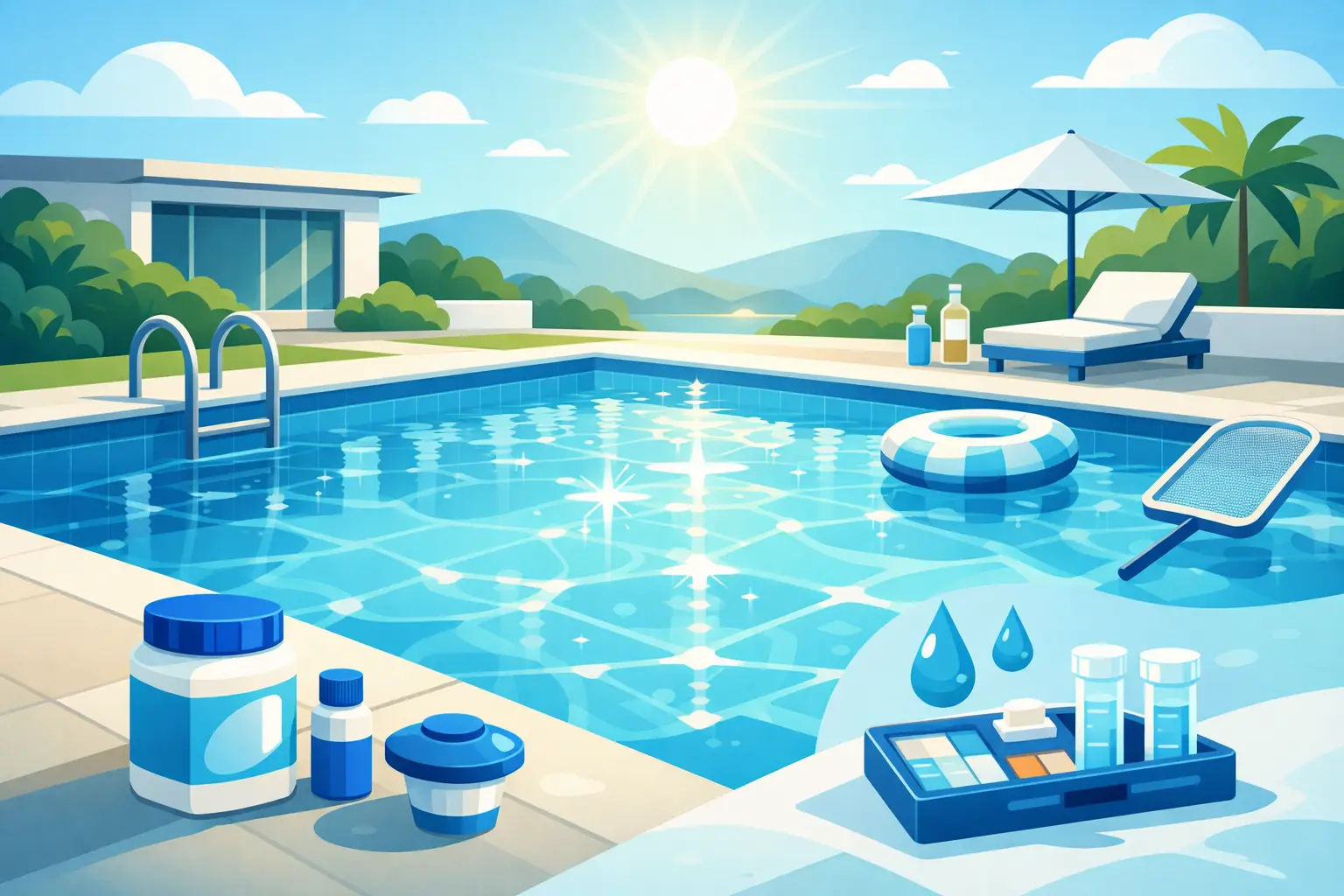
Clear pool water usually does not go cloudy all at once. It slips. A little dullness after a hot weekend. A green tint after rain. A film on the steps that was not there a few days ago. If you are wondering how to keep pool water crystal clear, the answer is not one magic product. It is a small set of habits that keep water balanced, moving, filtered, and clean.
That matters because clear water is not just about looks. It is how a backyard pool stays inviting, easier to manage, and less expensive to correct. When water gets away from you, the fix is usually more chemicals, more time, and more frustration than simple prevention would have required.
How to keep pool water crystal clear starts with balance
Most water clarity problems begin with chemistry that drifted out of range. Chlorine may be present, but if pH is off or stabilizer is too high, the water can still turn cloudy or allow algae to take hold. Homeowners often test for one thing, adjust one thing, and assume the problem is solved. Pool water does not work that way.
The main readings need to work together. Free chlorine should stay in the proper range for your pool type and stabilizer level. pH should typically sit between 7.4 and 7.6 for comfort and sanitizer efficiency. Total alkalinity helps keep pH stable, while calcium hardness matters for plaster surfaces and scale control. Cyanuric acid, or stabilizer, protects chlorine from sunlight, but too much can make chlorine less effective.
This is where people often overcorrect. If the water looks slightly cloudy, they shock it repeatedly without checking pH or filtration. If chlorine keeps disappearing, they add more tabs without realizing stabilizer is climbing too high. Clear water comes from measured corrections, not guesswork.
Testing should be consistent, especially during swim season. A basic strip can give a quick snapshot, but a quality liquid test kit gives more reliable results when you are trying to solve a recurring issue. If your pool sees heavy use, intense heat, or frequent storms, test more often. Water responds to weather and bather load faster than most people expect.
Circulation is what keeps good chemistry working
Even perfectly balanced water can turn dull if it does not circulate well. Sanitizer has to move through the pool. Debris has to reach the skimmer. Fine particles have to make their way to the filter. Dead spots near steps, tanning ledges, corners, and attached spas are common trouble areas.
Your pump run time matters here. Many residential pools need enough daily circulation to turn over the water effectively, but the exact schedule depends on pool size, filter condition, weather, and how often the pool is used. Running the pump too little can leave the water stagnant. Running it constantly is not always necessary and can raise operating costs.
Return jets should also help push water in a consistent pattern, not just blast one section of the pool. If you notice debris collecting in the same place day after day, circulation may need adjustment. That is especially true in pools with custom shapes or features that interrupt flow.
Brushing plays a bigger role than many homeowners realize. Walls, steps, benches, and tile lines can hold early algae growth or fine dirt even when the water still looks mostly clean. Brushing loosens that material so chlorine can work on it and the filter can remove it. Without that step, a pool can stay one step away from cloudy water all season.
A clean filter makes clear water possible
A pool filter does not improve water on its own. It removes what the rest of the system has already gathered. If the filter is dirty, overloaded, or neglected, water clarity suffers fast.
Sand, cartridge, and DE filters all have their own maintenance needs. Sand filters need periodic backwashing, but not so often that they lose filtering efficiency. Cartridge filters need to be removed and cleaned thoroughly, not just sprayed for a minute and put back. DE filters require backwashing and fresh DE recharge. If you are not following the right service routine for your filter type, the pool may never stay as clear as it should.
Pressure readings are a useful early warning. When filter pressure rises above the clean starting level, flow drops and filtration weakens. Many homeowners wait until the water looks bad before checking the system. By then, the filter has likely been struggling for days.
It also helps to remember that filters remove particles, not dissolved problems. If the water is cloudy because of poor chemistry, high phosphates, or early algae bloom, cleaning the filter alone will not fix it. But if your chemistry is correct and the water is still hazy, filtration is often the next place to look.
Debris control is where clarity gets protected
Leaves, pollen, sunscreen, body oils, dirt, and grass clippings all add load to the water. Some of that is visible. Much of it is not. Every bit of it asks more from your sanitizer and filter.
Skimming the surface regularly keeps debris from sinking and breaking down. Vacuuming or using a pool cleaner helps remove what settles to the bottom before it becomes a water-quality issue. Emptying skimmer and pump baskets keeps circulation from slowing down. These are simple tasks, but they are often the difference between easy weekly care and a larger cleanup later.
Weather changes the equation. After wind or rain, a pool may need extra attention even if it looked perfect the day before. Rain can dilute chemistry. Wind can load the water with organics. Hot stretches can burn through chlorine faster. Heavy pool use over a holiday weekend can do the same.
This is why routine matters more than reaction. If you only address the pool when it visibly looks off, you are usually already behind.
How to keep pool water crystal clear in peak season
Summer puts the most pressure on a backyard pool. Water warms up, swimmers use it more, storms roll through, and sunlight works against chlorine all day. The same care routine that felt adequate in spring can start falling short by July.
During peak season, test more often and expect to make smaller, more frequent adjustments. Keep chlorine from drifting too low. Watch pH, because it often rises faster in warm weather. Clean baskets and check filter pressure regularly. Brush and vacuum before you think you need to.
Shock treatment can help after unusually heavy use, a storm, or the first sign of dull water, but it should be used with purpose. More is not always better. The right treatment depends on what is causing the issue. Combined chlorine, algae, fine debris, and high stabilizer levels do not all respond the same way.
If your pool uses tablets, pay attention to cumulative stabilizer levels over time. Tablets are convenient, but they can slowly create a different problem if they are your only chlorine source all season. That is one of the more common reasons a pool stops holding clarity even when the owner feels like they are adding enough sanitizer.
When clear water gets tricky
Some pools are simply harder to keep perfect than others. Trees nearby, shallow sun shelves, high swimmer load, older equipment, or undersized filtration can all make water clarity more demanding. Hard fill water can add minerals. Coastal environments can introduce windborne debris and salt exposure around equipment. A pool with water features may need longer run times than a basic rectangular pool.
That does not mean the pool is a problem. It means the care plan has to fit the pool.
If cloudiness keeps returning, look for patterns instead of isolated fixes. Does it happen after rain, after parties, or every time temperatures spike? Does chlorine test fine in the evening but disappear by the next day? Does the filter pressure climb unusually fast? Those clues usually point to the real issue faster than adding another bottle of clarifier.
Clarifiers and flocculants have their place, but they are support products, not a foundation. Used well, they can help polish water. Used too often, they can mask the underlying cause or create extra cleanup. Clear water that lasts comes from system health, not cosmetic shortcuts.
The standard that keeps a pool looking like part of the home
A clear pool changes the whole backyard. It looks finished. It feels ready. It supports the reason most homeowners invest in a pool in the first place – more time outside, less friction, and a space that feels good to walk into any day of the week.
For many homeowners, the challenge is not knowing that chemistry, cleaning, and circulation matter. It is keeping up with all of them consistently enough to avoid trouble. That is where experienced service makes a difference. Coastal Cove Pools helps homeowners protect that clean, resort-like look with practical pool care built around real residential use.
The best pool water is not the result of constant fixing. It is the result of staying a step ahead, so clear water feels normal instead of lucky.