
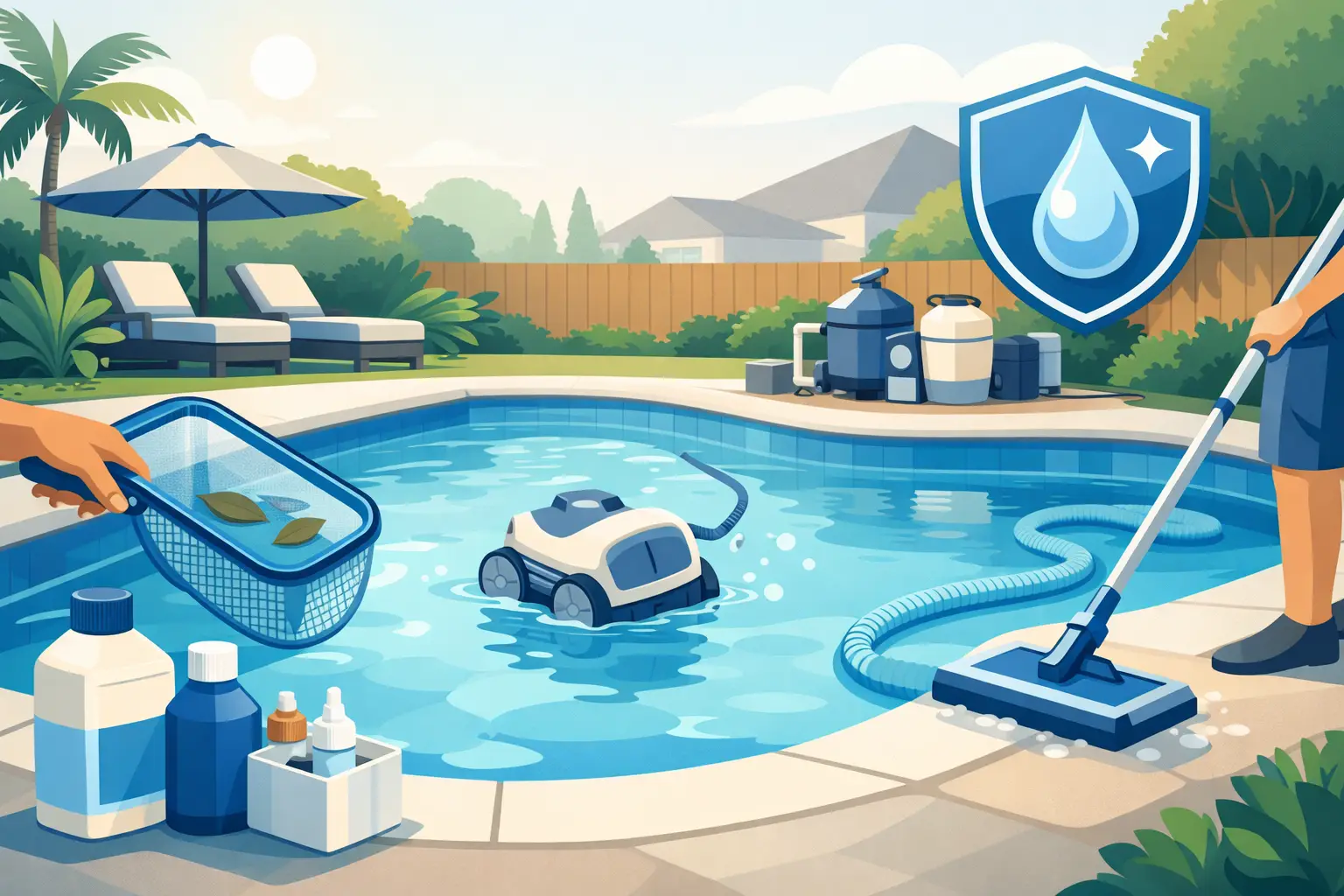
A pool usually tells on itself before a real problem shows up. The water loses its sparkle. The steps feel a little slick. The pump starts sounding rough. What looks minor on a Saturday can turn into stained surfaces, cloudy water, or equipment wear if pool maintenance slips for even a short stretch.
For homeowners, that is the real point of good care. Pool maintenance is not just about keeping water blue. It protects the finish, supports swimmer comfort, extends equipment life, and keeps the backyard feeling like the place you wanted when you added a pool in the first place – clean, calm, and ready to use.
What pool maintenance really covers
Most people think of chemicals first, but water chemistry is only one part of the job. A well-kept pool depends on circulation, filtration, surface cleaning, and regular inspection. If one part falls behind, the rest has to work harder.
A balanced pool should look clear, feel comfortable, and run quietly in the background. That takes routine attention to sanitizer levels, pH, total alkalinity, calcium hardness, and stabilizer, but it also takes skimming, brushing, vacuuming, emptying baskets, and checking that the pump and filter are doing their jobs.
There is also a timing issue that many homeowners underestimate. Pool care is easier when it is consistent. It gets more expensive when it is reactive. Waiting until water turns green or equipment stops working is usually the costliest version of maintenance.
The weekly rhythm that keeps problems small
Good pool maintenance follows a simple rhythm. Water should be tested regularly, debris should be removed before it sinks or breaks down, and the circulation system should be checked before reduced flow creates bigger issues.
In practical terms, that means skimming the surface, brushing walls and steps, and keeping baskets clear enough for solid circulation. It also means paying attention to the waterline, where oils, sunscreen, and airborne debris tend to build up. Small buildup is easy to remove. Heavy buildup takes more effort and often signals that the water balance or filtration schedule needs adjustment.
Testing matters most when weather changes fast. A stretch of heat, heavy rain, high pool use, or a windy week can throw off chemistry quickly. Sanitizer gets consumed faster in strong sun and under heavier swimmer load. Rain can dilute the balance. Debris adds demand to the system. The right response depends on what changed, not just on a fixed routine.
Water chemistry is simple until it is ignored
Clear water can still be unbalanced. That is where many costly mistakes begin. A pool may look fine for a few days while pH drifts high, sanitizer drops low, or calcium falls out of range. By the time the water visibly changes, the issue may already be affecting comfort, surfaces, or equipment.
The core chemistry targets work together. Sanitizer keeps water safe and clean. pH affects both swimmer comfort and sanitizer performance. Total alkalinity helps stabilize pH. Calcium hardness matters for plaster, tile, and equipment. Stabilizer helps outdoor pools hold sanitizer in sunlight.
There is no perfect number that fits every pool in every season. It depends on the surface type, local water conditions, weather, and how often the pool gets used. That is why homeowners who rely only on occasional testing often end up chasing the water instead of controlling it.
Overcorrecting is just as common as under-treating. Add too much of one product too quickly and you can create a second problem while trying to solve the first. The better approach is measured, informed adjustment based on reliable testing and a clear read on what the pool is doing.
Filtration and circulation do more than most people realize
If chemistry is the balance point, circulation is the engine. Water has to move well for sanitizer to distribute, debris to reach the filter, and dead spots to stay from forming along walls, steps, and corners.
When circulation weakens, the pool often starts showing uneven signs. One area clouds up first. Another collects debris. Algae may begin in low-flow spots. Homeowners sometimes treat those symptoms as chemical problems when the real issue is poor movement through the system.
The filter also needs the right kind of attention. A dirty filter reduces performance, but cleaning it too often can be counterproductive in some cases because a slightly loaded filter can trap fine particles more effectively. The right cleaning schedule depends on the filter type, pool usage, and pressure readings.
Pump run time is another place where it depends. More is not always better. Too little run time can leave water dull and under-filtered, while excessive run time increases energy use without solving an underlying chemistry or debris issue. The goal is efficient turnover and stable water, not just hours on the clock.
Seasonal changes affect pool maintenance more than people expect
Summer gets the attention, but shoulder seasons often create the most confusion. In spring, pollen, rain, and rising temperatures can change water demand quickly. In fall, leaves and cooler nights shift the workload in a different direction. Even in milder climates where pools stay active longer, the maintenance plan should still adapt with the season.
Heat increases evaporation and chemical demand. Storms bring runoff, debris, and dilution. Cooler weather can reduce chlorine demand, but it does not eliminate the need for circulation, testing, and surface cleaning. Pools do not stop needing care just because they are being used less often.
That seasonal shift also affects equipment. A system that handled peak summer well may reveal pressure, flow, or wear issues once conditions change. Catching those changes early is part of smart pool maintenance. It keeps a small service visit from becoming a major repair.
The most common mistakes homeowners make
The first mistake is inconsistency. Missing a few days can become missing a few weeks, especially when the water still looks usable. Pool problems often build quietly.
The second is relying on appearance alone. Water can be clear and still be out of balance. It can also be slightly dull because of filtration or circulation, not because it needs more chemicals. Treating every problem with shock or algaecide usually creates more confusion than clarity.
The third is neglecting the equipment pad. Homeowners often focus on the pool they can see and overlook the system that keeps it functioning. A small leak, dirty basket, failing seal, or clogged filter can affect the entire pool.
The fourth is waiting too long to ask for help. There is a point where professional service saves money, even for owners who prefer to handle routine care themselves. Water that repeatedly falls out of balance, unexplained cloudiness, algae recurrence, rising pressure, weak return flow, or unusual pump noise all deserve a closer look.
When professional pool maintenance makes sense
Some homeowners enjoy handling basic care. Others want the pool ready without giving up part of every weekend. Both approaches can work, but the right choice usually comes down to time, confidence, and tolerance for risk.
Professional pool maintenance makes the biggest difference when a homeowner wants consistency and fewer surprises. It helps when the pool has more advanced equipment, when the finish needs careful water balance, or when recurring issues suggest the problem is not obvious. Service also matters for households that use the pool often for entertaining, family time, or simply maintaining a polished outdoor space.
A good service relationship is not just about chemicals. It is about pattern recognition. Experienced pool professionals notice the early signs of trouble, adjust for weather and usage, and help protect the larger investment behind the water – the surface, tile, equipment, and overall backyard experience.
For homeowners who want that kind of support, Coastal Cove Pools approaches pool care the same way a pool should feel – clean, reliable, and easy to enjoy.
Pool maintenance is part of protecting the lifestyle
A backyard pool is not a casual purchase. It changes how a home is used. It becomes where kids spend the afternoon, where guests gather, and where a regular evening can feel a little more like a getaway. That only works when the pool feels inviting the moment you look at it.
That is why pool maintenance matters beyond the technical side. It preserves the look of the water, the comfort of the swim, and the condition of the investment sitting just outside the door. Keep it consistent, pay attention early, and treat small changes like they matter – because they do.