A vinyl liner pool can look like the easy yes. The upfront price is usually lower, the surface feels soft underfoot, and the finished look can be clean and inviting. For many homeowners, that is enough to put vinyl at the top of the list.
But pools are long-term decisions. The right choice is not just about what looks good at install. It is about how the pool will feel to own five, ten, and fifteen years from now.
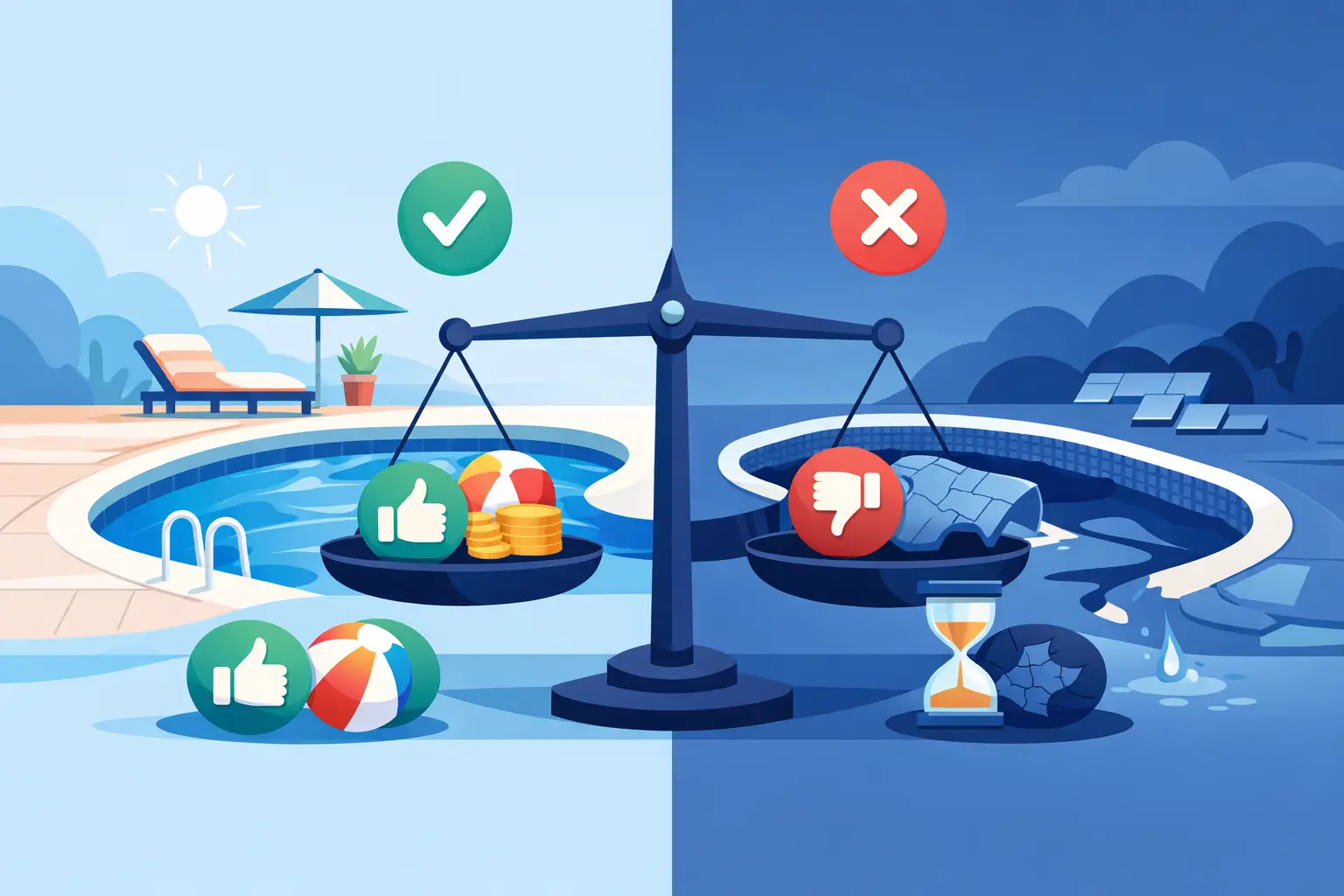
Vinyl liner pool pros and cons at a glance
If you are comparing pool types, the main appeal of vinyl is simple. It gives you a polished backyard pool experience with a lower initial investment than many concrete options. That matters if you want the lifestyle upgrade without pushing the budget to its limit.
The trade-off is durability over time. Vinyl liners do not last forever, and they are more vulnerable to punctures, fading, wrinkling, and replacement costs than harder pool surfaces. So when homeowners ask about vinyl liner pool pros and cons, the real question is usually this: do you want lower entry cost now, or are you aiming for a surface that may hold up longer with a different cost structure?
Why homeowners choose vinyl liner pools
The biggest reason is cost. A vinyl liner pool is often one of the more budget-friendly ways to build an in-ground pool. For families who want a private place to relax, cool off, and entertain without stepping into a much higher build price, vinyl can make the project more attainable.
Comfort also matters more than people expect. Vinyl has a smooth, softer feel compared with rougher surfaces. If you have kids who spend hours in the water or you simply want a pool that feels easy to enjoy, that softer finish can be a real advantage.
There is also design flexibility. Vinyl liner pools come in a range of shapes, sizes, patterns, and color options. You may not get the same level of custom freedom as a fully custom concrete build, but you can still create a backyard that looks polished and tailored to your home.
Installation can also be more straightforward in many cases. That does not mean every project is fast or simple, because site conditions still matter. But compared with some other pool types, vinyl is often an efficient path from planning to swimming.
The main pros of a vinyl liner pool
Lower upfront cost
This is usually the headline advantage. If your priority is getting into a well-finished in-ground pool without the highest initial spend, vinyl deserves a serious look. It can free up budget for decking, landscaping, lighting, or outdoor living features that shape the full backyard experience.
Smooth surface
Vinyl is comfortable. It is gentler on feet, easier on skin, and less likely to scrape knees or elbows during everyday use. For families, that can be a meaningful quality-of-life benefit.
Attractive appearance
A new liner looks crisp. Modern patterns and colors can give the water a bright, clean look, and the overall finish can fit well with a relaxed, resort-style backyard design.
Easier chemical balance in some cases
Because the vinyl surface is nonporous, it does not interact with water chemistry the same way plaster can. That can simplify parts of water care, though it does not remove the need for regular testing, cleaning, and equipment maintenance.
The cons that deserve real attention
Liners need replacement
This is the issue homeowners should think through carefully. A vinyl liner is not a one-time surface. It will eventually need to be replaced, often somewhere around the 7 to 12 year range, though that varies based on sun exposure, water chemistry, usage, and care.
Replacement is not a small detail. It is a planned future expense, and timing is not always perfect. If you are evaluating ownership costs honestly, liner replacement has to be part of the conversation from the start.
Punctures and tears can happen
Vinyl is durable enough for normal use, but it is still more vulnerable than concrete or fiberglass when it comes to sharp objects and accidental damage. Pet claws, toys with hard edges, pool equipment mishandling, or even certain maintenance mistakes can damage the liner.
Some repairs are simple. Others are not. A small issue can also become a bigger one if it is ignored.
Fading, wrinkles, and wear
Over time, liners can lose color and show age. Water balance problems, direct sunlight, and general wear all play a role. Wrinkles may form, especially if installation was not precise or if groundwater conditions affect the pool.
None of this means vinyl is a bad choice. It means appearance and performance depend heavily on proper installation and consistent care.
Less long-term toughness
If you are the kind of homeowner who wants the most rugged pool surface possible, vinyl may not be your favorite fit. It performs well, but it does not have the same hard-surface resilience that some buyers want for the longest possible ownership horizon.
It depends on how you plan to use the pool
This is where the answer gets more personal. A vinyl liner pool can be a very smart choice for a family that wants a beautiful backyard pool, uses it regularly, and understands the long-term maintenance cycle. If the goal is comfort, value, and a clean finished look, vinyl checks a lot of boxes.
But if you are building a high-end forever backyard and want to minimize future surface replacement, your priorities may point elsewhere. The best pool type is not universal. It depends on budget, expectations, and how much future upkeep you are willing to plan for.
A homeowner focused on near-term value may see vinyl as the clear winner. A homeowner focused on decades of surface durability may weigh the trade-offs differently. Both views are reasonable.
Maintenance matters more than many buyers expect
A vinyl liner pool is not high-maintenance in a dramatic sense, but it does require attention. Water chemistry needs to stay in range. Cleaning still matters. Equipment still needs care. And because the liner is the surface, mistakes show up faster.
Low pH, high chlorine, or neglected water can shorten liner life. Rough handling during cleaning can do the same. That is why service support and clear care expectations matter. A pool should feel like an upgrade to daily life, not a string of preventable repairs.
For many homeowners, this is where working with a specialist makes the biggest difference. The install matters, but the ownership experience matters more.
Are vinyl liner pools good for resale value?
They can be, especially if the pool is well designed, well maintained, and fits the home. Buyers often respond to the lifestyle first. They see a finished outdoor space, a place to entertain, and a feature that makes the property feel more complete.
The condition of the liner, however, will affect that impression. A newer liner helps. A faded or aging one may feel like an upcoming cost to the next buyer. So the resale question is less about vinyl as a category and more about presentation, condition, and timing.
Who should consider vinyl and who should pause
Vinyl is worth strong consideration if you want an in-ground pool with a lower upfront cost, you like the feel of a softer surface, and you are comfortable planning for eventual liner replacement. It also makes sense if you want room in the budget for outdoor finishes that shape the overall backyard experience.
You may want to pause and compare other options if you are focused on maximum surface durability, you do not want to think about liner replacement down the road, or you expect very heavy use and want a harder-wearing finish.
Neither path is automatically better. The right choice is the one that fits your property, your budget, and the way you want to live with the pool.
The real decision behind vinyl liner pool pros and cons
Most homeowners are not really choosing between materials. They are choosing between ownership styles. Vinyl offers a comfortable, attractive, approachable path to a private backyard pool. That is a strong advantage.
The question is whether its future maintenance cycle fits the way you want to own the pool. If it does, vinyl can be a smart and satisfying investment. If it does not, it is better to know that before the build starts.
A pool should feel good on day one, but the better test is whether it still feels like the right decision after years of weekends, family time, and regular care.