
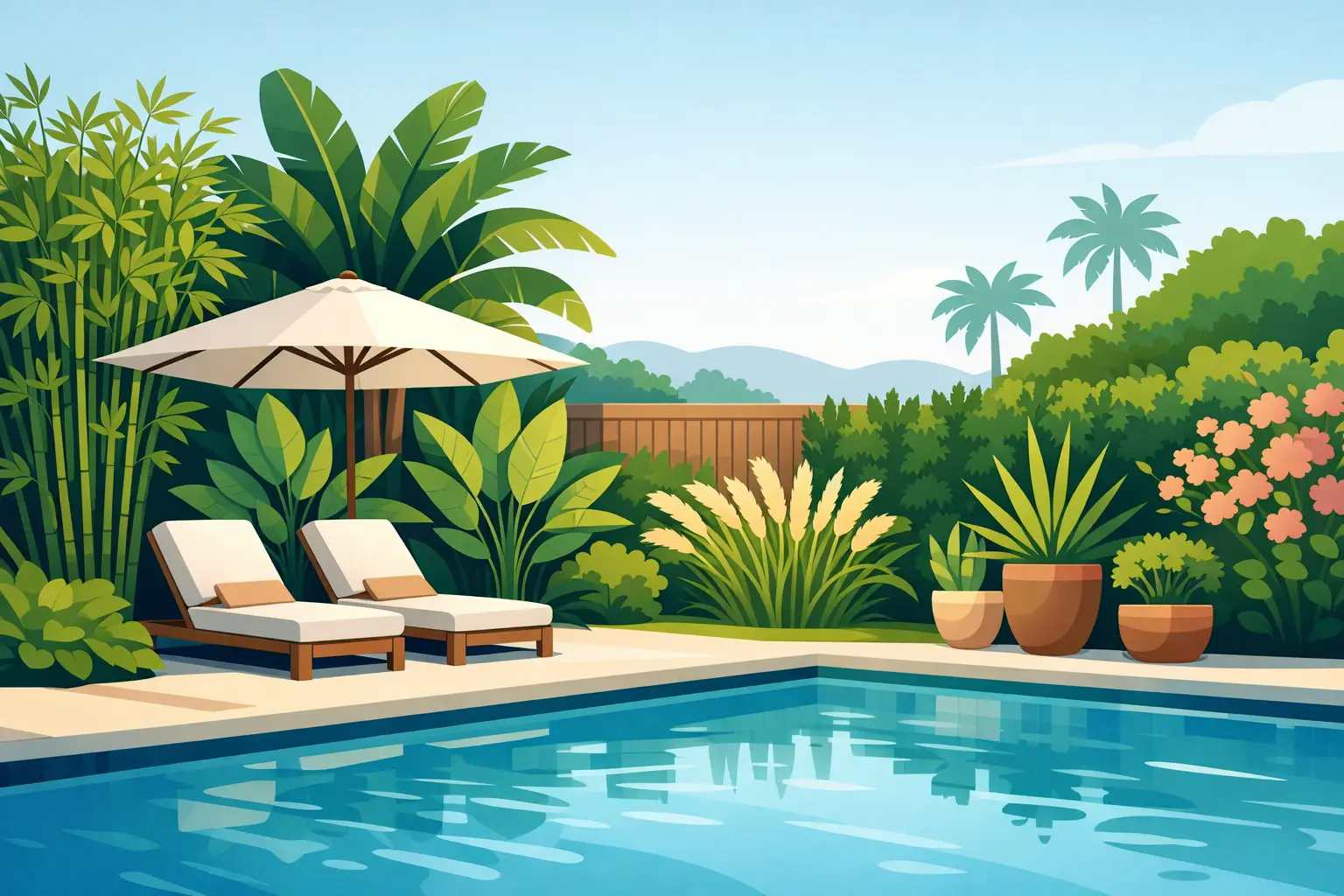
A privacy screen around a pool should feel like part of the retreat, not a row of plants installed to block a view. The best poolside plants for privacy create a calm enclosure, soften fencing and architecture, and leave enough room for swimmers, furniture, and everyday maintenance. They also need to handle reflected heat, chlorinated splashes, wind, and the occasional cannonball.
For most backyards, the right answer is a layered planting plan rather than one tall hedge. A dependable evergreen backbone gives the pool area year-round coverage. Ornamental grasses, flowering shrubs, or smaller accent plants make that screen feel less rigid. The result is privacy that looks considered from the water, the patio, and the windows inside the home.
What Poolside Privacy Plants Need to Handle
A plant can look perfect at the nursery and still be a poor fit beside a pool. Start with mature size, not the size in the container. A fast-growing hedge planted too close to a deck can crowd walkways, shade the water more than expected, and make future pruning difficult.
Low litter matters, too. Leaves, seed pods, berries, and flowers all end up in the skimmer basket when plants sit near the water. No landscape is maintenance-free, but choosing cleaner plants reduces the work required to keep the pool inviting.
Root behavior is another practical consideration. Keep large trees and aggressive-rooted species well away from pool shells, plumbing, decking, and retaining walls. Privacy planting should frame the pool area, not introduce a long-term repair concern. When there is limited room, narrow upright plants often provide more useful coverage than wide, thirsty trees.
Finally, match the plants to the site. Full sun, salt air, freezing winters, humid summers, and drainage all change the shortlist. A local landscape professional can confirm what will thrive in your USDA hardiness zone and how much irrigation the finished planting will need.
Best Poolside Plants for Privacy: 12 Smart Choices
1. Clumping bamboo
Clumping bamboo delivers a fast, tall, tropical-looking screen without the spreading habit associated with running bamboo. It works especially well along a property line where a homeowner wants a living wall and a little movement in the breeze. Choose a true clumping variety suited to the local climate, and plan for regular thinning as it matures.
Bamboo is not the lowest-maintenance option near a pool because it can drop leaves. Still, it is an excellent choice when speed and height matter most. Avoid planting any bamboo labeled as running unless a properly designed containment system is part of the plan.
2. Podocarpus
Podocarpus is one of the most polished options for warm-climate pool landscapes. Its narrow, deep-green foliage can be sheared into a formal hedge or allowed to develop a softer, more natural shape. It provides dense visual coverage without the broad footprint of many traditional evergreens.
This plant suits homeowners who want a clean, resort-style border. Give it adequate spacing and sun, and keep its mature height in mind. In the right region, podocarpus creates a quiet green backdrop that lets the pool and outdoor furnishings take center stage.
3. Wax myrtle
Wax myrtle is a useful native-friendly screening shrub in much of the Southeast and coastal regions. It grows quickly, tolerates heat and humidity, and has a relaxed texture that works well in casual outdoor spaces. Its olive-green foliage feels lighter than a dense formal hedge.
It is a better choice for a natural privacy border than a tightly clipped one. Plant several in a staggered row for coverage that does not look overly uniform, and leave room for air circulation between the plants.
4. Southern wax myrtle and yaupon holly
Where a screen needs more structure, yaupon holly is worth considering alongside wax myrtle. Many yaupon varieties are upright, durable, and adaptable, with small leaves that are easier to manage than the oversized foliage of some broadleaf evergreens. They can be pruned for a tailored look or left more open and coastal.
Check the cultivar before buying. Female varieties may produce berries, which can add color but also create seasonal cleanup. Male or fruitless selections are often the better fit closest to the pool deck.
5. Areca palm
Areca palms bring immediate vacation energy to warm-climate pool areas. Their feathery fronds create filtered privacy instead of a solid green wall, making them a strong choice where a space should feel open but protected. In groups, they can screen neighboring windows while preserving a light, breezy feel.
They need consistent moisture while becoming established and enough room for their mature spread. Place palms far enough from the water that fallen fronds are easy to collect before they reach the pool.
6. Clumping palms
Other clumping palms, including lady palms and certain Mediterranean fan palms, can work where areca palms are not a fit. These choices tend to create a more sculptural screen, especially around cabanas, lounge areas, or equipment enclosures. Their form provides privacy at eye level without turning the whole yard into a hedge.
Palms vary widely in cold tolerance, growth rate, and maintenance needs. Choose for the actual microclimate, not simply for the look of a vacation property.
7. Arborvitae
Arborvitae remains a go-to privacy plant in many northern and transitional climates. Upright varieties form a dense evergreen wall with a narrow footprint, which is valuable on smaller lots. They are most effective when installed in a properly spaced row and watered deeply during establishment.
The trade-off is heat and drought sensitivity in some locations. Arborvitae can struggle in intense reflected sun or dry, windy conditions around hardscape. If that describes the yard, a more heat-tolerant evergreen may be the wiser investment.
8. Juniper
Junipers offer a broad range of upright, drought-tolerant evergreens that work well near sunny pools. Their blue-green or deep-green foliage can provide a crisp architectural backdrop, particularly in modern pool designs. Many varieties require less supplemental water than thirsty hedge plants once established.
Use upright selections for screening rather than low spreading forms. Some junipers have sharp foliage, so keep them away from narrow circulation paths, gates, and areas where bare feet are common.
9. Viburnum
Viburnum can create a lush, broadleaf screen in a range of climates. Depending on the variety, it may be evergreen or semi-evergreen, with attractive leaves and seasonal flowers. It is ideal for homeowners who prefer a softer, garden-forward setting over the formality of a conifer hedge.
The key is choosing the right species and allowing sufficient width. Viburnum often wants more room than a narrow side-yard planting can offer. Set it back from the deck so its mature form can be enjoyed without constant shearing.
10. Ornamental grasses
Tall ornamental grasses add privacy where a solid wall would feel heavy. Varieties such as muhly grass, feather reed grass, and switchgrass can create a light screen around a seating area while bringing movement and texture to the landscape. They pair particularly well with stone, tile, and clean-lined pool coping.
Grasses are best used as a middle layer or seasonal screen, not as the only barrier between a pool and a close neighbor. Many need cutting back once a year, and some produce seed heads that may require cleanup.
11. Oleander alternatives: Indian hawthorn and pittosporum
Oleander is often suggested for sunny privacy, but its toxicity makes it a poor choice for many family pool areas, especially where children and pets play. Indian hawthorn and pittosporum can provide a similarly dense, sun-friendly look in suitable warm climates without making oleander the default solution.
Pittosporum offers glossy foliage and a refined appearance, while Indian hawthorn stays lower and works well at the front of a layered screen. Both require cultivar-specific planning for disease resistance, mature size, and local weather conditions.
12. Loquat and small evergreen trees
A small evergreen tree can solve a privacy problem above a fence line where shrubs cannot reach. Loquat is a handsome warm-climate option with bold leaves and a tropical character. Elsewhere, carefully selected magnolias or upright evergreens may offer the same vertical screening effect.
Use trees selectively. Their job is to block an unwanted second-story view or frame an edge of the property, not to shade the entire pool. Too much shade can lower water temperature, increase debris, and make a pool patio feel damp after rain.
Build Privacy in Layers, Not a Single Line
The most successful pool landscapes usually combine heights. A tall hedge or upright trees can handle views from neighboring homes. A middle layer of shrubs fills visual gaps at fence level. Lower grasses and perennials soften the base and keep the planting bed from looking like a green wall.
Staggering plants instead of lining them up precisely creates better coverage and a more natural look. It also gives each plant space to mature. A hedge planted tightly may look full quickly, but overcrowding leads to weak growth, disease pressure, and more pruning later.
Leave a service path where possible. Pool equipment, plumbing access, fencing, and drainage should remain reachable after the landscape fills in. This small planning decision protects both the planting investment and the practical upkeep of the pool.
Placement Details That Protect the Pool Experience
Keep thorny, spiny, or irritating plants away from pool entries, lounge chairs, and barefoot traffic. Avoid species that attract heavy bee activity immediately beside the water, even if they are beautiful elsewhere in the yard. Fragrant flowering plants can be better placed near a patio edge or garden path, where they can be enjoyed without floating into the pool.
Consider the view from inside the house as well. Privacy planting should improve the outlook from kitchen, living, and bedroom windows, not block valuable daylight or create a closed-in feeling. A few well-placed vertical screens often do more than planting every edge of the property.
For a backyard designed around everyday escape, plants should support the pool rather than compete with it. Coastal Cove Pools recommends planning the landscape alongside the pool layout, decking, drainage, and equipment access whenever possible. The earlier those decisions happen, the more natural the finished space will feel.
Choose plants that fit the climate, the scale of the yard, and the amount of care you actually want to give them. A screen that grows at the right pace and stays healthy will make privacy feel effortless long after the first swim.