
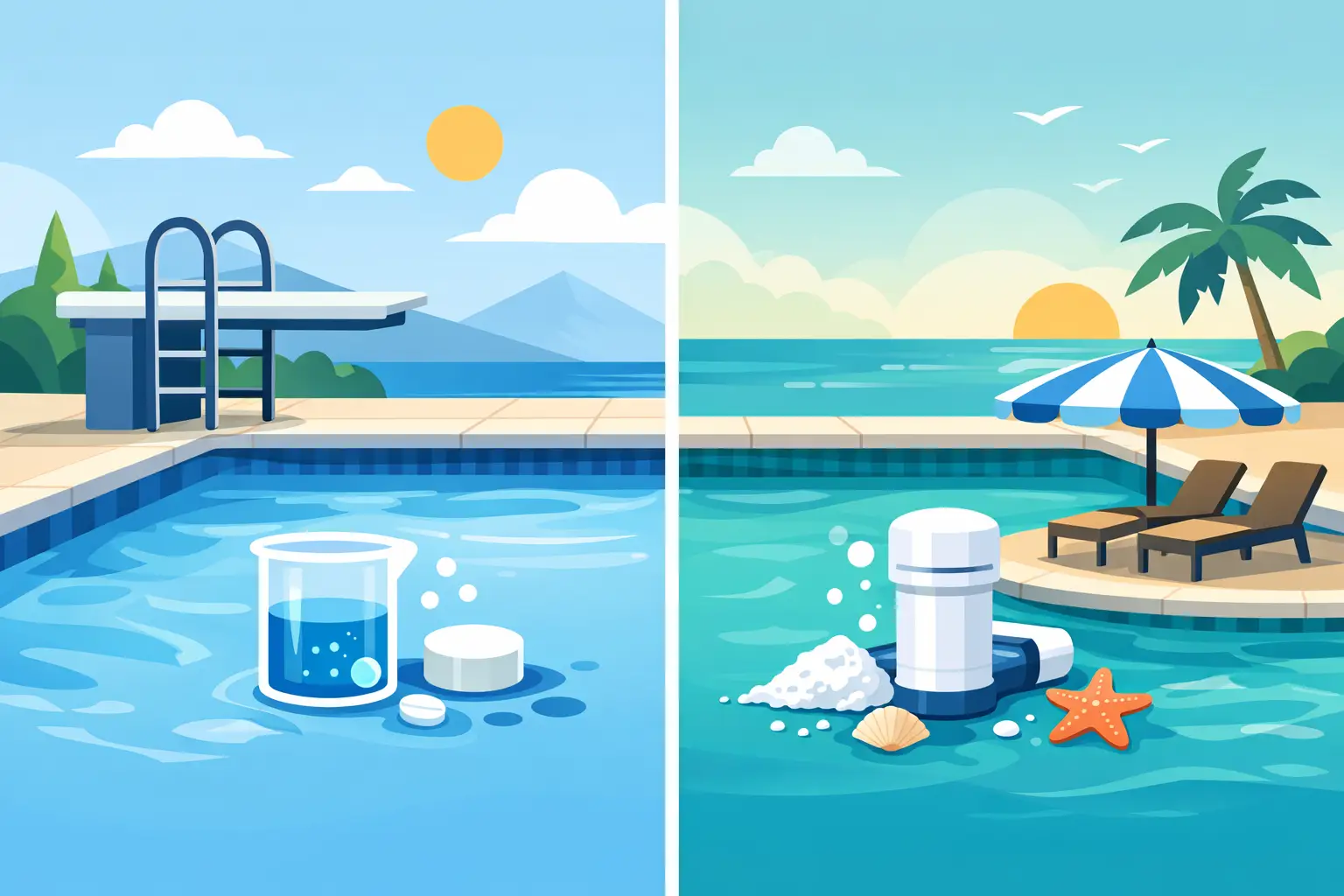
A pool can feel like a private resort until water care starts running the schedule. That is usually when homeowners ask the real question: which system will be easier to live with – traditional chlorine or saltwater?
The short answer is that both sanitize with chlorine. The difference is how that chlorine gets into the water, how the pool feels day to day, and what ownership looks like over time. For a backyard built around comfort, appearance, and low-friction upkeep, those details matter more than the label.
Chlorine vs Saltwater Pool: The Core Difference
A traditional chlorine pool uses chlorine added directly through tablets, liquid, or granules. A saltwater pool uses dissolved salt and a salt chlorine generator to create chlorine continuously. So this is not really chlorine versus no chlorine. It is direct-feed chlorine versus chlorine made on site.
That distinction changes the owner experience. In a standard chlorine pool, sanitation often comes in doses. Levels can rise after treatment and then taper down. In a saltwater system, chlorine is produced more steadily, which can make the water feel more balanced when the system is sized and maintained correctly.
For many homeowners, that consistency is the biggest selling point. The pool tends to feel calmer, not just chemically but operationally.
How the Water Feels
This is where saltwater usually wins first impressions. The water often feels softer on skin and eyes, and many swimmers notice less of the sharp pool smell they associate with public pools. That smell is not actually a sign of clean water. It is often a sign of chloramines, which build up when chlorine binds with contaminants.
A well-maintained chlorine pool can still feel great. The problem is that homeowner-managed pools do not always stay in a narrow ideal range. Miss a few adjustments, let stabilizer drift, or overuse tablets, and comfort drops fast.
Saltwater pools are not automatically perfect. If chemistry is ignored, they can still irritate skin or eyes. But for homeowners who want the water to feel more polished with fewer swings, saltwater usually has the edge.
Upfront Cost vs Long-Term Ownership
In a chlorine vs saltwater pool decision, cost is where the conversation gets more honest.
A traditional chlorine pool is usually cheaper to set up. There is no salt cell or generator to install, and replacement chemicals are familiar and easy to find. If you are watching the initial budget closely, chlorine can look like the practical choice.
Saltwater costs more upfront because of the generator system. That equipment is not optional. It is the whole point of the setup. Over time, the cell will also need replacement, which adds another ownership cost homeowners need to expect rather than treat as a surprise.
That said, saltwater can reduce the routine need to buy and manually add as many chlorine products. For some owners, that softens the higher entry cost. For others, especially if equipment replacement comes sooner than expected, the math may not feel like a dramatic savings.
This is one of those cases where cheaper to install does not always mean cheaper to live with, and lower-maintenance does not always mean lower-cost.
Daily Maintenance and Attention
Neither pool is maintenance-free. That is worth saying plainly.
A traditional chlorine pool usually asks for more active chemical management. You are testing, adjusting, storing products, and staying ahead of changes caused by heat, rain, heavy use, and sunlight. If that routine slips, water quality can change quickly.
A saltwater pool automates part of that process because the generator keeps producing chlorine. That often means fewer sharp corrections and less hands-on dosing. Many homeowners like that because it turns pool care into monitoring instead of constant intervention.
But saltwater has its own maintenance profile. Salt cells need inspection and cleaning. Water balance still matters. pH tends to drift upward in many salt systems, so that still needs attention. If the generator fails, chlorine production stops, and the pool can get out of range faster than some owners expect.
So the real question is not which one has no maintenance. It is which type of maintenance fits your household better.
Equipment Wear and Pool Materials
Saltwater has a reputation for being harder on equipment, and there is some truth there. Salt is gentler on swimmers than many people expect, but it can be tougher on metal components, certain stone choices, coping materials, and nearby fixtures if the pool is not designed and maintained with that in mind.
That does not mean saltwater is a bad choice. It means the whole environment needs to be considered. Material selection, water balance, and proper installation all matter. A saltwater pool done right can perform beautifully. A saltwater pool paired with the wrong finishes or neglected chemistry can create avoidable wear.
Traditional chlorine pools do not carry the same salt-related corrosion concerns, but they can still be rough on surfaces and equipment if chemistry runs out of balance. Highly acidic or over-chlorinated water is not kind to anything.
This is where experience matters. The best sanitation system on paper can become the wrong one if the pool, equipment pad, and surrounding materials are not matched carefully.
Which System Is Better for Families?
For many families, saltwater feels easier to enjoy. Kids are in and out of the water all week, guests come over on weekends, and nobody wants the pool to smell harsh before a backyard dinner. The softer feel and more stable sanitizer production can make saltwater a better lifestyle fit.
But a chlorine pool can be a very smart choice for families too, especially if the owners want lower startup cost and do not mind a more hands-on routine. Some homeowners prefer the simplicity of adding known chemicals themselves without relying on an electronic generator.
That preference is not old-fashioned. It is practical. If you are comfortable testing water and staying consistent, chlorine can deliver clean, clear, dependable results.
Climate, Usage, and How You Actually Live
The best answer often comes down to how the pool will be used.
If your pool sees frequent use and is part of everyday outdoor living, saltwater often aligns well with that resort-style experience. The water feel is part of the appeal, and the more automated sanitation can support regular swimming without making the pool feel like another household task.
If the pool is used more occasionally, or if you are trying to keep system complexity lower, chlorine may make more sense. It is straightforward, familiar, and easier to explain in simple maintenance terms.
Climate also plays a role. Warm, sunny conditions increase sanitizer demand. Heavy rain can throw off chemistry. Longer swim seasons put more pressure on consistency. In those conditions, some homeowners appreciate the steady output of a salt system. Others prefer direct control through traditional chlorine treatment.
There is no universal winner. There is only the system that best fits the pool, the property, and the owner.
Chlorine vs Saltwater Pool: What Usually Makes the Decision
Most homeowners do not choose based on chemistry charts. They choose based on three things: how the water feels, how much effort ownership requires, and how confident they are in the long-term setup.
Choose chlorine if you want lower upfront cost, simpler equipment, and you do not mind more active water care. Choose saltwater if you want a smoother swimming experience, more consistent sanitizer production, and you are comfortable with a higher initial investment and occasional cell replacement.
For a premium backyard environment, both can work. The stronger choice is usually the one planned correctly from the start. That includes the pool finish, the equipment package, the expected use, and the reality of how involved you want to be after installation.
Coastal Cove Pools sees this question less as a product comparison and more as an ownership decision. The right system should fit the way you want your backyard to function – easy mornings, clean water, relaxed weekends, and fewer avoidable headaches.
If you are deciding between the two, think beyond startup cost and ask a better question: which system will still feel like the right one a year from now, when the pool is no longer new and daily life has taken over? That is usually where the best choice becomes clear.