
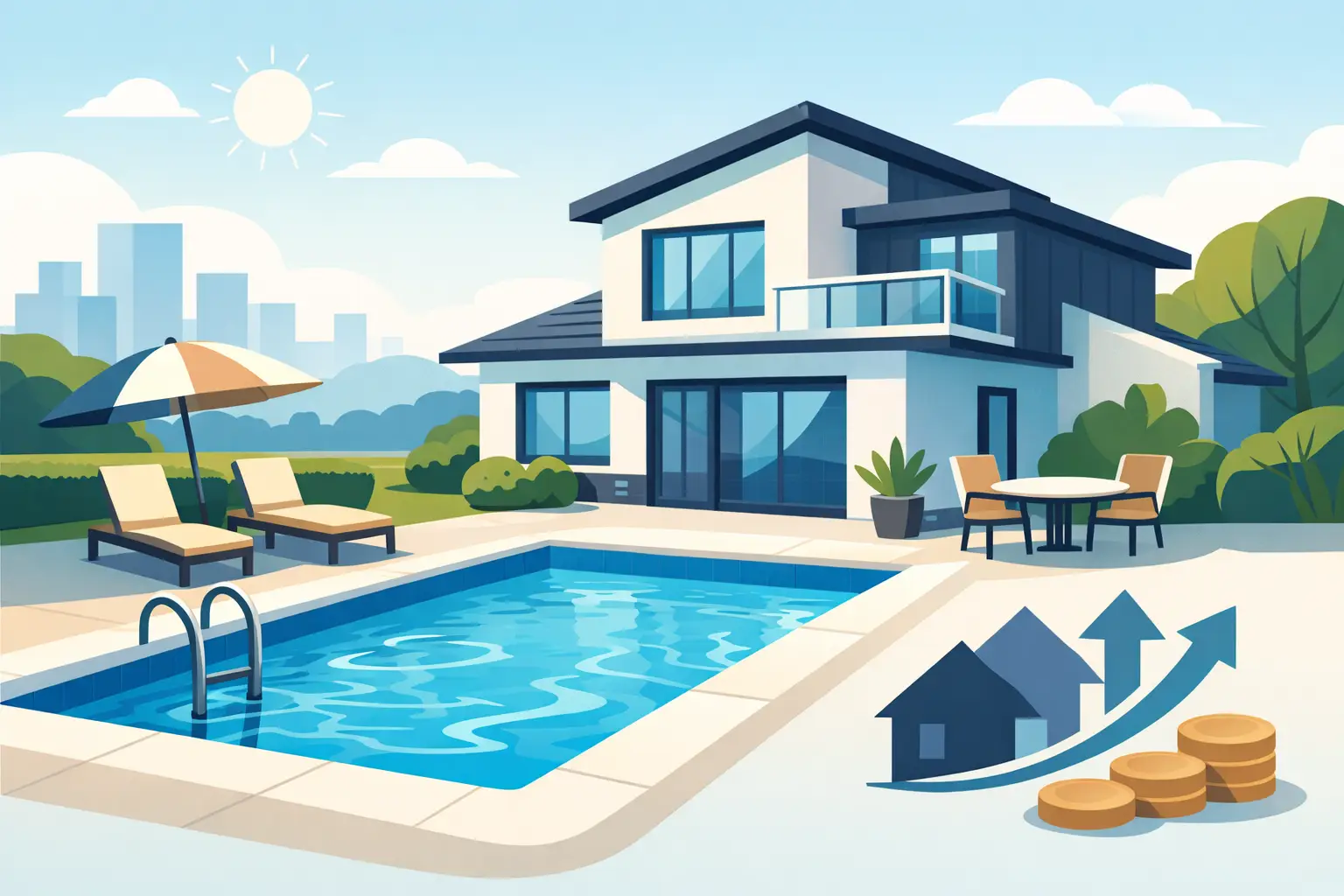
A backyard pool can feel like the best part of the house on a July afternoon. But when resale enters the conversation, the real question is sharper: does a pool increase home value, or does it simply make your home more enjoyable while you live there?
The honest answer is both, depending on the house, the market, and the pool itself. A well-designed pool in the right neighborhood can add appeal and support a stronger sale. In the wrong setting, or with the wrong upkeep history, it can narrow the buyer pool instead of expanding it.
Does a Pool Increase Home Value in Every Market?
No. Real estate is local, and pools are one of the clearest examples of that.
In warm-climate markets where outdoor living is part of daily life, a pool often feels less like a luxury and more like an expected feature for higher-end homes. In those areas, buyers may see a pool as part of a complete backyard, especially if entertaining, family recreation, and privacy matter. If nearby comparable homes have pools, not having one can even put a property at a disadvantage.
In cooler regions, the equation changes. A shorter swim season means some buyers focus more on maintenance costs, winterization, and liability than enjoyment. In those markets, a pool may still attract the right buyer, but it is less likely to deliver broad-based value across the entire market.
Price point matters too. On an entry-level home, a pool may not return much because buyers in that segment are often more payment-sensitive and less interested in extra upkeep. On a higher-value home with strong outdoor living features, a pool can feel more aligned with buyer expectations.
What Actually Drives Pool Value?
A pool does not add value just because water is in the ground. Buyers react to the total package.
Design is the first factor. A pool that looks integrated with the home, patio, landscaping, and yard tends to support value better than one that feels dropped into the space without a plan. Clean lines, proportional sizing, and a layout that preserves usable outdoor area all matter.
Condition is just as important. Buyers notice aging plaster, cracked decking, outdated tile, noisy equipment, and murky water immediately. Even if those issues are fixable, they send a message that ongoing care may have been inconsistent. That can turn a lifestyle feature into a negotiation point.
Function also matters. A pool built for the lot and the household tends to perform better at resale than one with highly personal features that limit broad appeal. Most buyers want a backyard that feels polished and easy to enjoy. They are usually less interested in paying extra for unusual decisions that only suited one owner.
The Neighborhood Sets the Ceiling
One of the biggest mistakes homeowners make is treating a pool as a value add in isolation. It is really a neighborhood decision.
If many comparable homes in your area have pools, buyers may expect one. In that case, adding a pool can help your property stay competitive. It may not create a dramatic premium on its own, but it can protect value and marketability.
If very few homes nearby have pools, the result is less predictable. A pool may help your home stand out, but standing out is not always the same as being worth more. Buyers and appraisers look to comparable sales. If there are not many nearby homes with similar outdoor features, the market may not fully credit the cost of installation.
This is where homeowners sometimes get disappointed. The build cost of a pool and the resale value of a pool are not the same number. Pools are lifestyle investments first. Some of that investment may carry into resale, but not always dollar for dollar.
Buyers Do Not All See Pools the Same Way
A family with school-age kids may see a pool as a built-in source of recreation, exercise, and time at home. A buyer who entertains often may view it as part of a complete outdoor living setup. For them, a finished backyard can be a major advantage because it saves time, disruption, and decision fatigue.
Other buyers see the same pool and think about safety gates, service bills, insurance, repairs, and responsibility. Neither perspective is wrong. It simply means pool value is tied to buyer match.
That is why a pool can improve saleability in one listing and create hesitation in another. The more your home attracts buyers who already want the pool lifestyle, the more likely the pool supports value.
Does a Pool Increase Home Value Enough to Cover the Cost?
Usually not in a pure one-to-one sense.
If the question is whether a new pool will raise resale value by the exact amount you spend building it, the answer is often no. Installation includes design choices, material selections, site conditions, permits, and construction costs that the resale market may not fully reimburse.
But that does not mean the investment is weak. It means the return is broader than resale alone. You are paying for daily use, visual impact, outdoor living, and years of convenience at home. If you stay in the property long enough to enjoy those benefits, the value picture changes.
The strongest pool investments usually happen when owners build for both lifestyle and restraint. That means choosing a pool that fits the property, aligns with neighborhood expectations, and avoids overbuilding for the market.
Features That Help a Pool Hold Value
Simple, durable choices often age best.
A pool that complements the architecture of the home tends to feel more valuable than one built around short-term trends. Quality decking, attractive lighting, practical seating areas, and a finished landscape plan can make the entire yard feel intentional. Buyers respond to that.
Energy-efficient equipment helps too. Modern pumps, heaters, and automation systems can reduce friction for the next owner. A buyer may not pay a huge premium for upgraded equipment alone, but they do appreciate a pool that feels current and manageable.
Safety and usability should never be treated as extras. Proper barriers, surfaces, and circulation contribute to both peace of mind and long-term appeal. A pool that looks easy to own is easier to sell.
What Hurts Value
Neglect is the fastest way to turn a strong backyard feature into a liability.
Visible wear, inconsistent water quality, broken equipment, and deferred repairs raise concerns beyond the pool itself. Buyers start wondering what else in the home has been postponed. Even a beautiful pool can lose value if it does not present as cared for.
Oversized pools can also work against resale, especially on smaller lots. If the pool consumes most of the yard, buyers may feel they are losing flexibility. Not everyone wants every outdoor square foot committed to water and decking.
Poor placement can create the same problem. A pool that disrupts traffic flow, crowds the house, or leaves awkward leftover space may reduce the overall function of the backyard.
Appraisal Value and Market Value Are Not Always the Same
This is an important distinction. A buyer may love your pool, but an appraiser still has to support value using available sales data.
If recent comparable sales show that homes with pools sold for more in your area, that helps. If the data is thin, the appraisal adjustment may be modest even when the pool clearly improves buyer interest. So yes, a pool can make your home easier to sell or more attractive in the market without producing a dramatic appraisal bump.
That gap matters if you are trying to justify a build strictly as a financial move. The market rewards pools most clearly when they fit a pattern buyers already recognize in that location.
So, Should You Add a Pool for Resale?
If resale is your only goal, be careful. A pool is rarely the cleanest short-term profit play.
If you want a better home experience now and a stronger property position later, the answer can be very different. In the right market, a pool can improve desirability, help your home compete, and support value when it is designed well and maintained properly.
That is the smarter lens. A pool should make the home feel more complete, not just more expensive. When it suits the property, the neighborhood, and the buyers likely to shop there, it has a much better chance of paying off.
For homeowners weighing that decision, the best move is not to ask whether any pool adds value. It is to ask whether the right pool adds value to your specific home, on your specific block, for the way people want to live there. That is where the real answer starts.