
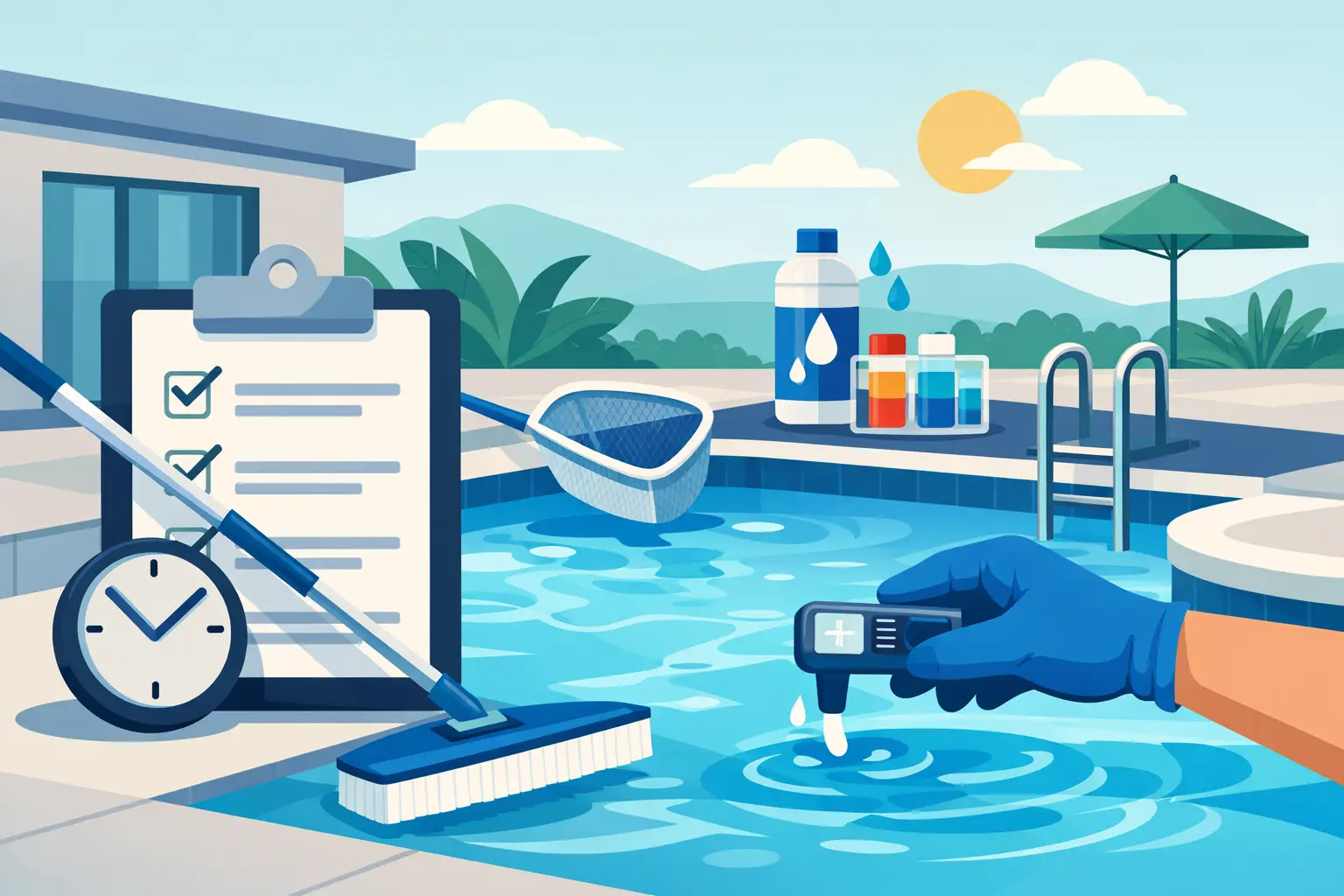
A pool usually looks easiest to manage right before it turns on you. The water is clear, the patio is set, and then one missed week leads to cloudy water, a strained pump, or a chemical problem that costs more than it should. A good guide to weekly pool maintenance schedule habits keeps that from happening.
For most homeowners, the goal is not to become a pool chemist. It is to keep the water clean, the equipment running, and the backyard ready when family or guests want to use it. Weekly care is where that happens. Done consistently, it protects the look of the pool, the comfort of the swim, and the value of the investment.
Why a weekly pool maintenance schedule matters
Pool care is less about big fixes and more about small corrections made on time. Water chemistry shifts fast in summer heat, after heavy use, and after rain. Leaves and debris do not just look bad – they change how the water behaves, add contaminants, and make the filtration system work harder.
A weekly schedule gives you a simple rhythm. You are checking for change before change becomes damage. That might mean catching a low chlorine reading before algae starts, noticing weak circulation before the pump is stressed, or brushing an area that tends to collect buildup before it stains.
There is also a practical side. Short, regular maintenance sessions are usually easier than a long recovery job. If you want your pool to feel like a private retreat instead of another household problem, consistency matters more than intensity.
Guide to weekly pool maintenance schedule basics
A strong weekly routine covers five areas: water testing, chemical adjustment, surface cleaning, wall and floor care, and equipment inspection. Most pools do not need the exact same approach every week, but every pool benefits from having each of these categories reviewed.
The trade-off is simple. The more trees, swimmers, sun exposure, and storm activity your pool gets, the more closely you need to watch it. A screened pool or lightly used pool may stay stable longer. An open backyard pool used by kids all weekend will change faster.
Test the water first
Start with testing because everything else depends on it. Check chlorine, pH, total alkalinity, and stabilizer if your pool relies on chlorine exposed to sunlight. Depending on your system, calcium hardness may also need regular attention.
For many residential pools, chlorine and pH are the first numbers that drift. If chlorine is low, the water may still look fine for a day or two, but sanitation is already falling behind. If pH rises too high, chlorine becomes less effective and scale can begin to form. If pH drops too low, the water can become harsh on surfaces and equipment.
Test strips are quick and convenient, but liquid test kits often give better precision. If you have had recurring chemistry issues, accuracy matters. Guessing is what usually leads to overcorrecting.
Adjust chemicals with restraint
Once you know the readings, make only the corrections the water actually needs. Adding extra chemicals just to feel safe often creates a second problem. Homeowners commonly overshoot pH adjustment or add sanitizer without considering recent treatment.
This is where timing matters. Add chemicals according to product instructions and allow circulation to do its job before retesting. If the pool had a busy weekend, a rain event, or visible debris, it may need more support than usual. If the pool has been covered and lightly used, smaller corrections may be enough.
Shock treatment is not automatically a weekly requirement for every pool. Some pools need it regularly during heavy season. Others only need it after unusually high use, storms, or signs of water quality decline. The right answer depends on bather load, weather, and sanitizer stability.
Skim, empty, and clear debris
A quick skim of the surface removes leaves, bugs, and floating debris before they sink or break apart. It is a small task, but it helps more than it seems. Organic debris affects chlorine demand and creates extra work for the filter.
Check the skimmer baskets and pump basket the same day. If baskets are packed, water flow drops and equipment performance suffers. Poor circulation often shows up later as cloudy water, dead spots, or inconsistent chemical readings.
This is one of the easiest places to stay ahead. Five minutes of clearing baskets can save hours of cleanup later.
Brush the walls and vacuum the floor
Even clear water can hide early buildup on steps, corners, tile lines, and shaded walls. Brushing breaks up material before it becomes algae, staining, or scale. Pay extra attention to low-circulation areas, behind ladders, and along seams where debris likes to settle.
Vacuuming removes what the skimmer cannot catch. Whether you use a manual vacuum, suction cleaner, pressure cleaner, or robotic unit, the goal is the same – remove settled dirt before it recirculates or stains the finish.
Some pools can get by with a light vacuum every week and a deeper clean less often. Others, especially pools near landscaping or under trees, need more attention. A weekly pattern helps you notice which type of pool you actually have.
Check the filter and circulation system
Your filter is doing quiet work every day, and weekly maintenance should include a look at how hard it is working. Check the pressure gauge, confirm the pump is running normally, and make sure return jets are moving water consistently.
If filter pressure is significantly above clean starting pressure, it may be time to backwash or clean the filter, depending on the system. Cartridge, sand, and DE filters all have different maintenance needs, so this part is not one-size-fits-all.
Listen as much as you look. New rattling, humming, air in the system, or weak flow can point to a problem before there is a full equipment failure. Weekly inspection is less about technical diagnosis and more about catching anything unusual early.
A realistic weekly routine for homeowners
The best schedule is one you will actually keep. For many homeowners, one dedicated maintenance block per week works well, with a smaller midweek check during peak season.
A practical routine might look like this: test the water, adjust chemicals as needed, skim the surface, empty baskets, brush key areas, vacuum or run the cleaner, and review filter pressure and circulation. If the pool gets heavy use, do a second quick check later in the week for chlorine level, debris, and basket buildup.
This does not need to take half a day. A stable pool can often be maintained in a focused session. What stretches the work is usually deferred care, not weekly care itself.
When the schedule should change
A guide to weekly pool maintenance schedule planning works best when you treat it as a baseline, not a rigid rule. Pools respond to weather, use, and season.
After a storm, you may need extra skimming, vacuuming, and chemistry correction. During peak summer heat, chlorine may burn off faster and require closer monitoring. In cooler months, the water may stay more stable, though debris and circulation still need attention.
If your pool has a heater, spa spillover, water features, or an attached tanning ledge, maintenance may be slightly more involved. More moving water can improve circulation, but it also means more equipment and more points to monitor. Saltwater pools also follow the same basic care rhythm, but you need to watch cell performance and salt levels alongside standard chemistry.
Common mistakes that make weekly care harder
Most pool problems start with neglect or overreaction. Skipping testing and adding chemicals by habit is one version. Ignoring filter pressure is another. So is waiting until the pool looks bad before doing anything at all.
The other common mistake is treating symptoms without finding the cause. If water keeps turning cloudy, the answer may not be more chlorine. It could be poor filtration, weak circulation, high swimmer load, or chemistry imbalance outside the sanitizer level. Weekly maintenance gives you the pattern recognition to catch that.
There is also value in knowing when not to force a DIY fix. If chemistry will not stabilize, equipment is underperforming, or the pool repeatedly develops the same issue, a professional service check can save money compared with repeated trial and error.
When professional support makes sense
Some homeowners enjoy handling weekly care. Others want the pool ready without managing every test, dose, and equipment check themselves. Both approaches are valid.
Professional support is especially useful when a pool has recurring algae, complicated equipment, automation systems, or seasonal issues that do not respond to routine care. It also helps if your time is better spent enjoying the backyard than troubleshooting it. Coastal Cove Pools works with homeowners who want that balance – a pool that feels easy to own and ready to use.
A weekly schedule is not about perfection. It is about keeping the pool consistently clean, safe, and inviting with fewer surprises. If you stay ahead of the small things, the water stays clearer, the equipment lasts longer, and the backyard keeps feeling like the part of home you actually want to use.