
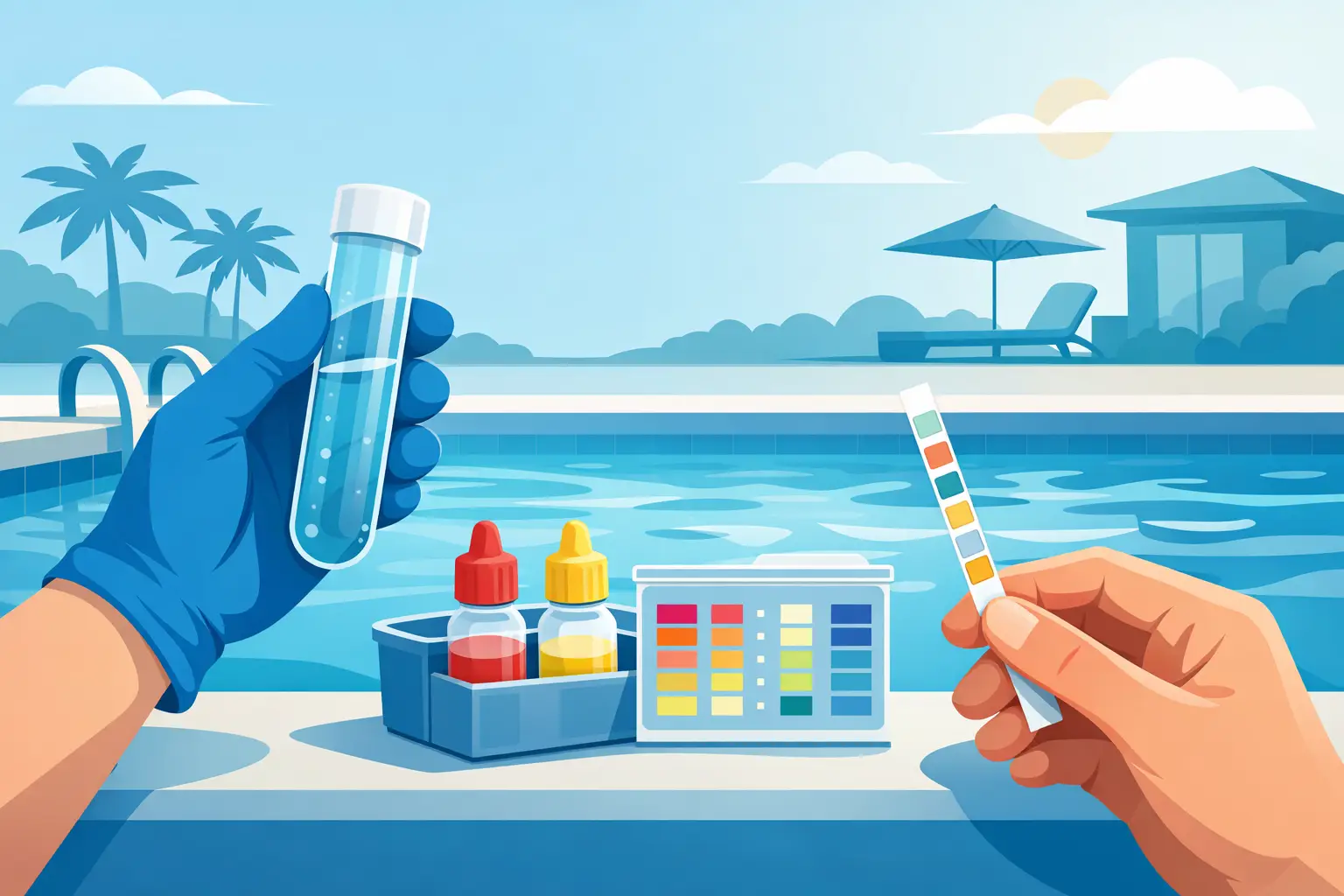
A pool can look perfectly clear in the morning and still be drifting out of balance by dinner. That is why homeowners ask how often should pool water be tested after the pool is filled, opened for the season, or hit with a busy weekend of swimming. The short answer is more often than most people think – but not every test needs the same schedule.
For a residential backyard pool, the right rhythm is usually simple. Test the basics several times a week, test after anything unusual, and use a fuller water analysis on a regular cadence to catch the slow changes that are harder to see. Clean water is part chemistry, part routine, and part paying attention to what your pool is telling you.
How often should pool water be tested for everyday use?
For most home pools, chlorine and pH should be checked at least two to three times per week during swim season. If the pool gets heavy use, sits in full sun, or sees frequent rain, daily testing is often the better call. These two readings move fastest, and when they drift, the rest of the water can follow quickly.
Total alkalinity can usually be tested weekly unless you are actively correcting water balance. Calcium hardness and stabilizer do not shift as quickly, so monthly testing is often enough for a stable residential pool. If you use a salt system, salt level should also be checked regularly based on your generator’s performance and your test method, often every few weeks or monthly unless there is a known issue.
That schedule works well for many homeowners because it matches how pool water actually behaves. Chlorine gets used up by sunlight, swimmers, and contaminants. pH can climb or fall depending on sanitizer type, rain, fill water, and circulation. Alkalinity, hardness, and stabilizer tend to change more gradually, but when they are ignored too long, the fix is rarely quick.
The pool test schedule that makes the most sense
A good testing plan is less about perfection and more about consistency. If you wait until water looks cloudy, feels irritating, or starts growing algae, you are already behind.
In practical terms, many homeowners do well with a schedule like this:
- Chlorine and pH: 2-3 times per week, or daily during heavy use
- Total alkalinity: weekly
- Calcium hardness: monthly
- Cyanuric acid or stabilizer: monthly
- Salt, if applicable: every few weeks to monthly
- Full professional-style panel: at opening, midseason, closing, and anytime water becomes difficult to manage
That is not a rigid rule. A screened pool in a milder climate may stay steady with less adjustment. A sunny backyard pool with kids, parties, and frequent top-offs may need much closer attention.
Why testing frequency changes with weather and use
Pool care is never one-size-fits-all. The biggest mistake is assuming last week’s balance means this week’s water is fine.
Hot weather speeds things up. Strong sun burns through chlorine faster, especially if stabilizer is low. Warm water also gives algae and bacteria a better chance to grow if sanitizer falls behind. During the hottest part of the season, testing more often is usually cheaper than correcting a green pool later.
Rain matters too. A light shower may not change much, but a heavy storm can dilute chemicals, push in debris, and alter pH or alkalinity. If your pool overflows or takes on runoff, test it as soon as conditions settle.
Bather load is another major factor. A quiet week with two adults is different from a holiday weekend with kids in and out all afternoon. Sunscreen, body oils, sweat, and splash-out all affect chemistry. After heavy use, a quick test is smart even if you already tested earlier in the day.
Then there is source water. If you are adding water often because of evaporation, leaks, or backwashing, that fill water may be changing hardness, alkalinity, or pH. Some homeowners blame sanitizer when the real issue is the makeup water steadily shifting the whole balance.
What to test every time and what can wait
If you want the leanest approach that still protects the pool, focus on the numbers that move quickly and affect swimmer comfort first.
Free chlorine is the front line. If it drops too low, water can turn fast. pH comes next because it affects chlorine performance, equipment wear, and how the water feels on skin and eyes. Those two should be watched most closely.
Total alkalinity acts more like a support system for pH. When alkalinity is too low, pH can swing wildly. When it is too high, pH tends to drift upward and become stubborn. It does not need daily attention in a stable pool, but weekly checks help prevent the bigger corrections nobody enjoys.
Calcium hardness matters more over time. In plaster pools especially, water that is too soft can be aggressive, while overly hard water can scale surfaces and equipment. Vinyl and fiberglass pools are less sensitive to surface damage from low calcium, but heaters and tile lines still care about scale.
Cyanuric acid, also called stabilizer, is often overlooked. Too little and chlorine disappears fast in sunlight. Too much and chlorine becomes less effective than many homeowners realize. Since stabilizer tends to build gradually, monthly checks are usually enough unless you are draining, refilling, or recovering from a chemistry problem.
Test strips, liquid kits, and lab-style testing
The right test frequency also depends on how you test. Test strips are fast and convenient, which makes them useful for regular checks. The trade-off is precision. They are good for spotting trends and catching obvious problems, but they are not always the best choice when water is acting strange or you are making larger chemical corrections.
Liquid drop kits usually give more reliable readings for core chemistry, especially chlorine and pH. They take a little more time but often lead to better decisions. For homeowners who want steady control without overthinking it, that extra minute is usually worth it.
Then there is professional water testing. A more complete analysis can be helpful at opening, after storms, when algae appears, or anytime your pool seems hard to balance even though the basics look close. If you keep correcting the same issue over and over, it is usually time for a broader reading instead of more guesswork.
Signs your pool water needs testing right now
You do not always need a calendar reminder. Sometimes the pool tells you.
Cloudy water, strong chlorine smell, eye irritation, algae on walls, slippery surfaces, scaling, staining, or poor chlorine hold are all reasons to test immediately. So are major weather events, pool parties, equipment failures, and chemical additions that were larger than usual.
A strong chlorine smell is a common point of confusion. People often assume it means there is too much chlorine. In many cases, it means the water is not balanced properly and chloramines are building up. That is exactly why testing matters more than guessing by smell.
How often should pool water be tested in the off-season?
If your pool is open year-round, keep testing even when nobody is swimming much. Cooler weather slows things down, but it does not stop chemistry. For many pools, once a week is enough in colder months if the water is stable and usage is low.
If the pool is winterized and closed, the schedule changes based on your closing method, cover type, and local climate. You may not be actively balancing water every few days, but preseason and post-opening testing become even more important because off-season drift can create a rough start.
The real cost of testing too little
Most homeowners are not worried about the price of a test strip. They are worried about wasting chemicals, damaging equipment, or losing a weekend to water problems. Fair concern.
Testing too little often leads to bigger expenses than testing more often. Low chlorine can become algae. High pH can become scale on tile and heaters. Poor balance can shorten equipment life, stain finishes, and make the pool less inviting even when it looks decent from across the yard.
A well-kept pool feels easy because the routine is steady. Not because the water takes care of itself.
A simple standard for most homeowners
If you want the practical answer to how often should pool water be tested, use this baseline: check chlorine and pH two to three times a week at minimum, test after storms or heavy swimming, and run a fuller chemistry check every month. Increase that frequency in hot weather, during peak season, or anytime the water starts behaving differently.
That is the sweet spot for most residential pools – often enough to stay ahead, not so often that it turns into a chore. And if your pool starts demanding constant correction, that is usually a sign the issue is not the schedule. It is the balance underneath it.
A backyard pool should feel like part of the good life, not a chemistry experiment. The closer your testing routine is to your pool’s real use, weather, and setup, the easier it is to keep the water clear, comfortable, and ready when you are.