
A pool can look calm on the surface and still be moving water badly. That is why pool circulation problems explained in plain terms matter so much for homeowners. When circulation is off, the first signs are usually easy to dismiss – a few cloudy spots, debris that keeps coming back, algae near the steps, or a pump that sounds a little different than usual.
Good circulation is what keeps a backyard pool feeling clean, clear, and ready to use. It helps sanitizer reach the whole pool, pushes fine debris toward the filter, and prevents warm spots, dead zones, and stagnant water. When that movement slows down or becomes uneven, everything else gets harder. Water chemistry gets less predictable. Equipment works harder. The pool stops feeling like an easy part of home life and starts asking for attention.
Pool circulation problems explained for homeowners
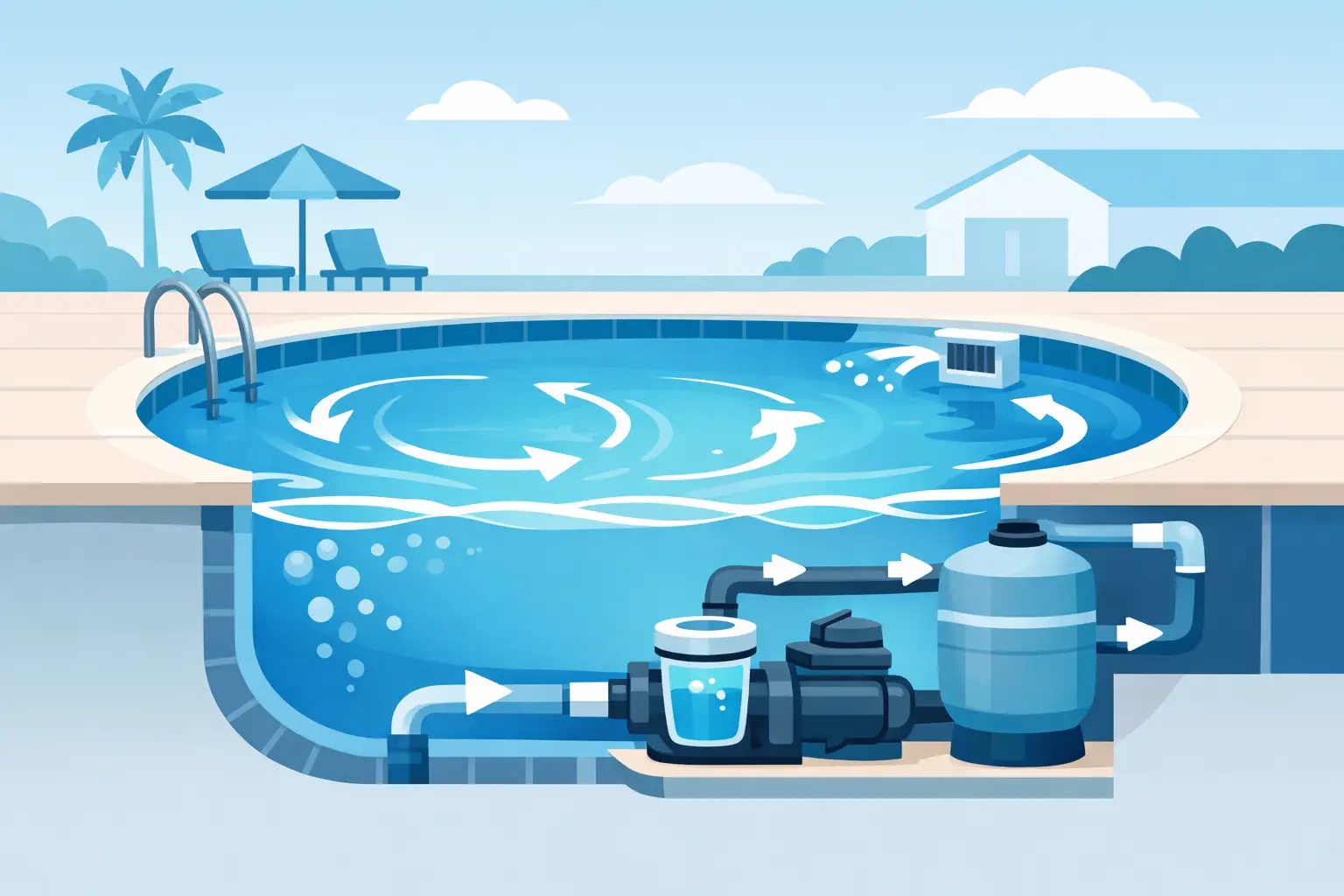
At its simplest, circulation is the path water takes through your pool system. Water is pulled from the skimmer and main drain, sent through the pump, pushed through the filter, and returned to the pool through the return jets. That cycle needs enough flow, enough time, and the right direction to keep the entire pool moving.
The problem is that circulation issues are not always dramatic. Sometimes the system is still running, but not well enough. A partially clogged basket, a dirty filter, a suction-side air leak, or return jets pointed the wrong way can all reduce performance without causing a total shutdown. Homeowners often notice the results before they recognize the cause.
That is also why circulation gets confused with chemistry. If water turns dull or algae starts to appear, many people assume the answer is only chemical. Sometimes it is. But if treated water is not moving through the entire pool, even good chemistry can struggle. The sanitizer cannot protect areas it is not consistently reaching.
What poor pool circulation usually looks like
Most circulation problems show up as patterns. Debris collects in the same area every day. One corner looks cloudy while the rest of the pool looks clear. Steps, tanning ledges, and spa spillover areas develop algae faster than open water. The surface may have weak skimmer pull, so leaves float past instead of getting captured.
You may also hear it. A pump that is gulping air, surging, or losing prime is not moving water the way it should. Filter pressure can climb if the filter is loaded up, or it can read unusually low if there is a blockage or suction issue upstream. Return jets may feel weak, or one may seem much stronger than the others.
Some signs are less obvious. If your pool takes longer than normal to clear after heavy use or after a storm, circulation may be part of the reason. If chemicals seem to disappear quickly or need constant correction, poor water movement can be contributing. Pools do not need perfect hydraulic balance to work well, but they do need consistent flow.
The most common causes behind circulation trouble
A dirty filter is one of the most common causes. As the filter collects debris, resistance goes up and flow drops. That is normal to a point. The problem starts when cleaning is delayed too long, especially during heavy swim season, pollen season, or after storms. The pump keeps running, but the system cannot move enough water efficiently.
Skimmer baskets and pump baskets are another frequent issue. A basket packed with leaves restricts flow immediately. This is one of the simplest fixes, but it is also one of the most overlooked because the equipment is technically still on.
Air leaks on the suction side can create bigger trouble. If air is entering the system before the pump, water flow becomes inconsistent. You may see bubbles in the pump lid or air blowing back into the pool through the returns. The source might be a loose pump lid, a worn O-ring, a valve problem, or plumbing that needs attention.
Return jet placement matters more than many homeowners expect. If returns are aimed poorly, water can short-cycle, meaning it moves in a tight path without circulating the entire pool. That leaves dead spots where debris settles and sanitizer levels weaken. A pool can have a healthy pump and clean filter and still circulate poorly if the water is not being directed well.
Low water level creates its own chain reaction. If the water drops below the skimmer opening, the skimmer starts pulling air instead of steady water. That can reduce skimming, interrupt pump performance, and place stress on equipment. On the other hand, water that is too high can limit the skimmer’s ability to pull surface debris effectively.
There are also larger equipment and plumbing issues. An undersized pump, a failing motor, a clogged impeller, a broken valve, or underground line restrictions can all reduce circulation. These are less common than basket or filter issues, but they matter because they often get missed until symptoms have gone on too long.
Why circulation problems get expensive
Poor circulation is not just a cleanliness issue. It can become an equipment issue fast. When a pump struggles to maintain prime or push through a blocked system, wear increases. Filters work harder under poor conditions. Heaters and chlorinators can also be affected because they depend on proper flow.
There is also the cost of chasing symptoms. Homeowners often spend money on extra shock, algaecide, clarifier, or phosphate treatment before realizing the pool was not moving water correctly in the first place. Those products may help temporarily, but if circulation is weak, the root problem remains.
Then there is the lifestyle side of it. A residential pool should feel easy to enjoy. If water clarity is inconsistent, if maintenance keeps getting reactive, or if guests notice cloudy water before you do, the experience changes. For homeowners who invested in a polished outdoor space, circulation is part of protecting that investment.
How to check whether your pool has a circulation issue
Start with the basics. Check the water level first. Then inspect the skimmer basket and pump basket. If both are clean, look at the pump lid while the system is running. If you see excessive air inside the pump pot, there may be a suction-side leak or a priming issue.
Next, check the filter pressure gauge and compare it to your pool’s normal operating range. A higher-than-usual reading often points to a dirty filter. A lower-than-usual reading can suggest a blockage, air leak, or pump performance problem. Pressure readings only help if you know what is normal for your system, so it is worth paying attention when everything is working well.
Walk the pool and feel the return jets. They should have steady output. Then look at the surface movement. You want to see water traveling toward the skimmers, not sitting flat in corners. Pay attention to areas that repeatedly collect dust, pollen, or algae. Repetition usually means poor circulation, not bad luck.
If your pool has automation or a variable-speed pump, review run times and speed settings. Sometimes circulation problems are not about broken equipment at all. The schedule may simply be too short or the RPM too low for the pool’s layout and season. Lower speed can save energy, but there is always a balance between efficiency and actual water movement.
Fixes that often solve the problem
Many circulation problems have straightforward solutions. Clean the baskets. Clean or backwash the filter as appropriate for the system. Restore proper water level. Re-aim return jets to create a circular surface pattern that pushes debris toward the skimmer. Make sure valves are positioned correctly and not partially closed by mistake.
If air is present in the system, inspect the pump lid O-ring and fittings for wear or looseness. If the pump is struggling but baskets and filter are clean, the impeller may need inspection. If the issue is isolated to one return line or one suction point, the problem may be more specific to plumbing or a valve.
This is where trade-offs matter. Some homeowners are comfortable handling basic checks and routine cleaning. That makes sense. But once the issue points to hidden leaks, line blockages, electrical concerns, or equipment diagnosis, guessing can get expensive. A circulation issue that looks minor on the surface can involve several connected parts.
For a lot of residential pools, the real fix is not one dramatic repair. It is getting the system back into proper balance – clean flow path, correct run time, correct jet direction, and equipment operating as designed. That kind of adjustment protects water quality and also makes the whole pool easier to live with.
Coastal Cove Pools sees this often with backyard pools that look close to fine, but never quite stay clear without constant effort. Usually the water is telling the truth. It is not moving the way it should.
If your pool keeps asking for extra chemicals, extra cleaning, or extra patience, look at circulation before you blame everything else. Clear water starts with movement, and a well-circulated pool is usually the one that feels the easiest to own.