A pool enclosure comparison starts with a simple question: what do you want your pool area to feel like on an ordinary Tuesday afternoon? Open to the breeze, protected from insects, sheltered from wind, or usable through more of the year? The right answer affects more than appearance. It changes daily maintenance, furniture choices, pool temperature, cleaning routines, and the way your backyard works when guests arrive.
For most homeowners, an enclosure is not just an accessory. It is part of the pool environment. A well-chosen structure can make pool ownership easier and the outdoor space more comfortable. The wrong one can make a beautiful yard feel closed in, add maintenance you did not expect, or solve a problem you do not actually have.
Pool Enclosure Comparison: Start With Your Priorities
The best enclosure is rarely the one with the most features. It is the one that matches your climate, lot, pool use, and tolerance for upkeep. A family that swims every weekend may value insect control and safety. Homeowners who entertain may care more about clear views and a refined architectural look. Someone in a windy coastal area may need greater weather protection than a homeowner in a sheltered neighborhood.
Before comparing materials, decide which trade-off matters most. More protection usually means more visible structure. A lighter, more open design preserves the feeling of the yard but does less to block wind, debris, and changing weather. Budget matters too, but the lowest initial cost is not always the lowest cost over the life of the enclosure.
Screen Enclosures: The Everyday Practical Choice
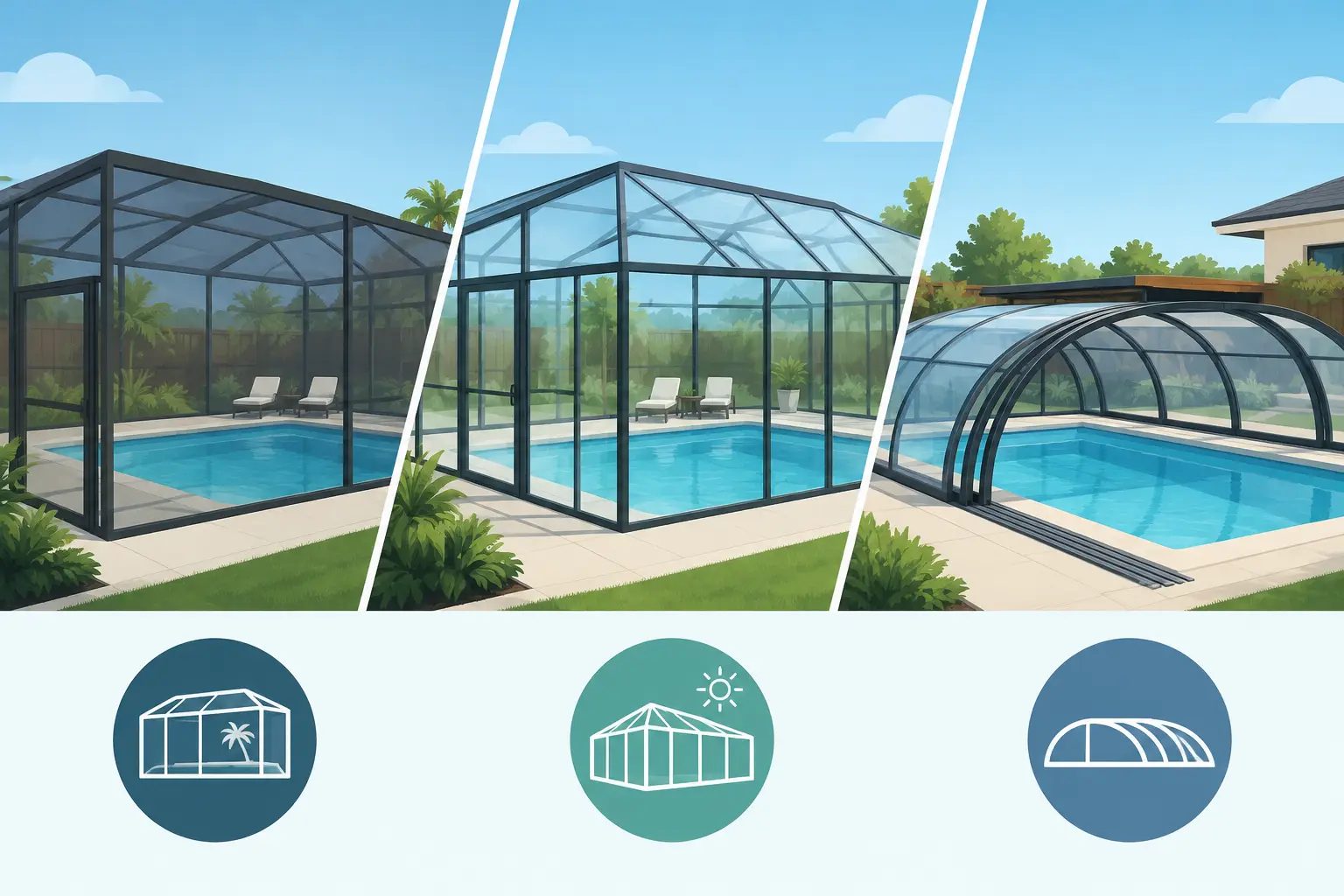
Screen enclosures are familiar for a reason. They create a defined pool zone while allowing fresh air, daylight, and a connection to the landscape. They are especially useful where mosquitoes, gnats, leaves, and other airborne debris can turn a relaxing swim into a chore.
A screened enclosure can reduce the amount of debris reaching the pool, which may mean less skimming and less strain on filtration. It also creates a comfortable boundary for outdoor dining and lounge furniture. For families, it can make the pool deck easier to enjoy from morning through evening without relying as heavily on sprays, fans, or constant cleanup.
The trade-off is visibility and weather exposure. Even a clean, well-designed screen system has framing, and the mesh can become noticeable from certain angles. Screens do not provide the insulation or wind control of solid panels. They can also require periodic repair, especially after storms, accidental impact, or years of sun exposure.
Screen selection matters. Standard mesh offers a balanced view and airflow. Finer mesh improves protection from small insects but may reduce airflow and collect more dirt. Stronger pet-resistant options can make sense near active dogs, but they are not indestructible. The right mesh depends on how the space is used, not simply which product sounds toughest.
Glass Enclosures: Clear Views, Higher Commitment
Glass pool enclosures offer a more polished, architectural result. They are often chosen when homeowners want shelter without giving up views of the water, landscaping, or a nearby coastal horizon. In the right setting, glass makes the pool feel like an intentional extension of the home rather than a separate outdoor feature.
Compared with screening, glass offers much better wind protection. Depending on the design, it can also help create a warmer and more controlled poolside environment. This can be valuable in cooler seasons, on exposed properties, or in backyards where wind regularly disrupts dining, lounging, and swimming.
That clarity comes with a higher price and more cleaning. Glass shows fingerprints, water spots, pollen, and salt residue. Homeowners who love the look should be realistic about the upkeep required to keep it looking premium. Drainage, ventilation, and door placement also deserve careful planning. An enclosure that traps humidity or directs water poorly can become frustrating fast.
Glass may be a stronger fit for a smaller pool deck, a high-end renovation, or a home with a strong modern design language. It can feel too formal or visually heavy in a casual, open backyard if the proportions are not right. The goal is shelter that belongs to the property, not a structure that dominates it.
Retractable Enclosures: Flexibility at a Premium
Retractable pool enclosures are designed for homeowners who want options. When conditions are ideal, the structure can open and restore the feeling of an uncovered pool. When bugs, wind, rain, or cooler temperatures arrive, it can close to provide greater protection.
That flexibility is the main advantage. A retractable system can support a longer swim season in some regions and make the pool area more adaptable for families who use it in different ways throughout the year. It can also help reduce debris and retain warmth when closed, depending on the design and materials used.
The compromise is complexity. Retractable systems have moving components, tracks, seals, and operating requirements that fixed structures do not. They need professional installation and a realistic maintenance plan. They also tend to represent a significant investment, particularly for large pool footprints or custom shapes.
A retractable enclosure is worth considering when the homeowner will actively use the open-and-close function. If it will remain in one position most of the year, a fixed screen or glass design may deliver better value. The feature should support your habits, not become an expensive feature you rarely touch.
Low, Medium, and Full-Height Designs
Height changes the experience as much as material. Low-profile enclosures sit closer to the pool and can be visually discreet, but they usually limit how freely you can move around the deck while covered. They work best when protection for the water is the priority and the enclosure is opened or removed for active use.
Medium-height designs offer a compromise between coverage and usability. They can provide room to walk through portions of the space while avoiding the visual scale of a full-height structure. Their suitability often depends on the pool layout, deck width, and where doors or access points are needed.
Full-height enclosures create a true outdoor room. They allow people to stand, dine, and circulate comfortably around the pool under cover. For homeowners who see the pool deck as an entertaining area, this is often the most practical format. It is also the most visible, so roofline, framing color, placement, and neighborhood considerations deserve attention from the start.
Weather, Codes, and Pool Safety
No pool enclosure comparison is complete without addressing local conditions. Wind exposure, rainfall, snow load in colder areas, hurricane requirements, drainage, and soil conditions can all affect what is appropriate. A design that performs well in a protected inland yard may not be suitable for a coastal property with stronger weather demands.
Local building codes and permit requirements can influence height, setbacks, anchoring, doors, and safety features. An enclosure is not automatically a substitute for required pool barriers. Gates, latches, alarms, and fence requirements may still apply. Treat safety compliance as part of the design process, not a detail to revisit after choosing the look you want.
It also helps to think beyond installation day. Ask how panels will be cleaned, how damaged sections are repaired, whether replacement parts are available, and what routine inspection is recommended. A pool investment performs best when every part of the environment is planned for long-term ownership.
Choosing the Right Fit for Your Backyard
Screen enclosures generally suit homeowners who want a practical, airy layer of protection. Glass makes sense when clear views, wind control, and a refined visual finish are worth the added investment and cleaning. Retractable systems are for homeowners who genuinely value the ability to shift between open-air and covered use.
The layout should guide the decision. A pool surrounded by mature trees has different debris concerns than one on an open lot. A compact patio may benefit from a clean glass boundary, while a broad family deck may feel best under a full-height screen enclosure. If your pool is primarily for exercise, your priorities may be different from a household that hosts weekend gatherings.
Coastal Cove Pools approaches these decisions as part of the larger backyard experience, not as an isolated product choice. The enclosure should support the way you want to live around the water – comfortably, confidently, and with less time spent managing avoidable hassles.
Take a few evenings to notice how sun, wind, insects, privacy, and debris move through your yard. Those small observations will often point more clearly to the right enclosure than any showroom display can.