
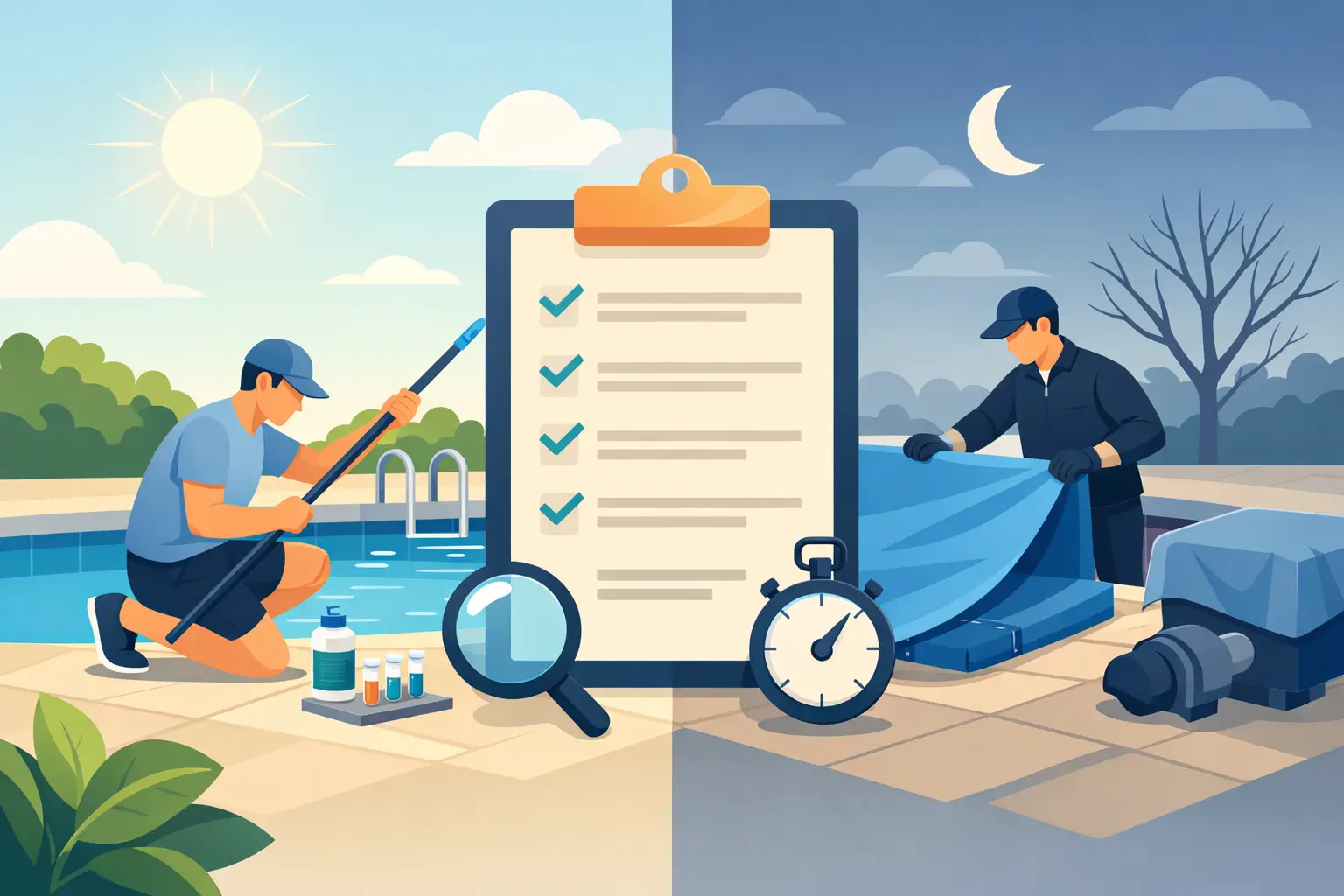
A missed valve setting in spring or a rushed winter cover in fall can turn a good pool season into an expensive one. That is why a solid pool opening and closing service checklist matters. For homeowners, it is less about memorizing every task and more about knowing what should be handled, what should be inspected, and where small mistakes can lead to bigger repair bills.
A residential pool is part of how a backyard feels and functions. It is where weekends happen, where families gather, and where the yard shifts from ordinary to resort-like. Opening and closing service protects that experience. It also protects the less visible parts of pool ownership – circulation, sanitation, freeze protection, and equipment life.
Why a pool opening and closing service checklist matters
Seasonal service is not just about taking a cover off or putting one on. It is a controlled transition between inactive and active use. In spring, the goal is to bring the pool back safely, cleanly, and with equipment running as it should. In fall, the goal is to leave the pool stable enough to sit through months of weather without algae, cracked plumbing, or damaged components.
Skipping steps usually shows up later. Water that looks slightly off at opening can become a stubborn cleanup. A line that was not properly winterized can freeze and crack. A neglected gasket or worn O-ring can become a leak after startup. The checklist approach keeps service focused on prevention, not just reaction.
Pool opening and closing service checklist for spring
Spring opening starts before the first pump is switched on. The first job is to assess the pool as it sits. That means checking the cover for damage, debris load, standing water, and any signs that anchors, straps, or edge points have shifted over the off-season. If a cover is removed carelessly, debris can spill straight into the pool and create extra cleanup from the first minute.
Once the cover is off, the pool shell and surrounding area should be inspected. This is the time to look for tile damage, deck movement, coping issues, liner wrinkles, plaster wear, and anything else winter may have stressed. Some flaws are cosmetic. Others can affect water retention or safe operation, so this is where experience matters.
Water level comes next. If the pool lost more water than expected over winter, it is worth checking for a leak before startup moves forward. Topping off the pool without noticing an underlying issue can delay repairs and complicate diagnosis.
Equipment startup checks
The equipment pad is where many opening problems begin. Baskets should be cleared, valves confirmed, drain plugs reinstalled, and the filter inspected before the system is pressurized. If the pump, filter, heater, chlorinator, or automation system has any visible wear, corrosion, or loose fittings, those issues should be addressed before full operation.
Priming the pump is not just a routine action. It confirms whether the system can establish flow properly. Weak priming, air in the system, or unusual pressure readings can point to suction leaks, blocked lines, dirty filters, or worn seals. A proper opening includes watching the system long enough to see how it behaves, not just turning it on and leaving.
If the pool has a heater, startup should include a basic function check. If it has lights, water features, spas, or automation controls, each should be tested individually. This is where a service visit adds value. Seasonal startup is one of the best times to catch issues before peak use begins.
Cleaning and water preparation
Even a well-covered pool usually needs some level of cleaning at opening. That may include skimming, vacuuming, brushing walls and steps, and removing fine debris that settled over winter. If algae formed under the cover, the cleanup may take more than one visit. That is one reason opening too late in the season can cost more in time, chemicals, and labor.
Water testing should happen early, but treatment should be deliberate. pH, alkalinity, calcium hardness, sanitizer level, and stabilizer all affect how quickly the pool can return to balance. Depending on water condition, a pool may need shock treatment, phosphate management, stain prevention, or filter support. It depends on the pool surface, the source water, the local climate, and how it was closed the previous fall.
A good opening does not chase perfect chemistry in one rushed adjustment. It restores circulation, removes contaminants, and brings the pool back into stable operating range. That usually produces better water and fewer follow-up problems.
What should be included in a fall closing
Closing service should happen before temperatures consistently drop into conditions that raise freeze risk, but not so early that the pool sits warm and untreated for too long. Timing matters. Close too late, and equipment or plumbing may be exposed to cold-weather damage. Close too early, and the water may invite algae before winter really sets in.
The first part of a closing is cleaning. Leaves, dirt, and organic matter should be removed before the pool is put to bed. Closing a dirty pool almost always creates more work at opening. Clean water going into winter gives you a better chance of cleaner water coming out.
Water chemistry should then be balanced for the off-season. That generally means adjusting pH, alkalinity, hardness, and sanitizer to appropriate levels for winter conditions. Depending on the pool, a closing treatment may also include algaecide or other winterizing products. This is not a place for guesswork. Overdosing or underdosing can both create trouble, especially when the pool sits untouched for months.
Winterization and protection steps
Mechanical winterization is where the checklist becomes critical. Water must be lowered to the proper level based on the pool type, cover type, and regional weather pattern. Lines should be blown out as needed, with plugs installed correctly to keep water from re-entering. Skimmers, returns, cleaner lines, and attached water features may all need individual attention.
The pump, filter, heater, chlorinator, and related equipment should be drained or otherwise winterized according to manufacturer and system requirements. This is one of the biggest it-depends areas in pool care, because not every setup is the same. A simple residential pool has different closing needs than a pool with a spa, raised features, automation, or a salt system.
Covers also deserve more attention than they usually get. A safety cover needs secure anchoring and even tension. A winter cover needs proper fit and support. If the cover is worn, sagging, or torn, it is not really protecting the pool the way homeowners think it is. Closing service should include a realistic look at whether the cover is ready for another season.
The most common checklist misses
The biggest seasonal mistakes are usually small ones. A forgotten drain plug. A valve left in the wrong position. Chemistry balanced before circulation is fully restored. A line assumed to be clear when it is not. These are not dramatic errors, but they are the ones that lead to callbacks, cloudy water, broken fittings, or costly spring surprises.
Another common miss is treating every pool the same. The right approach depends on pool finish, local debris load, equipment age, surrounding trees, bather use, and whether the homeowner wants a quick basic service or a more complete seasonal reset. Good service is checklist-driven, but it is not checklist-only. It still requires judgment.
How homeowners can use the checklist wisely
You do not need to perform every technical step yourself to benefit from knowing the process. A strong pool opening and closing service checklist helps you ask better questions. Was the equipment tested under operation? Were lines winterized fully? Was chemistry adjusted for startup conditions or just treated once and left? Was the cover inspected, or only removed and stored?
That kind of clarity matters when comparing service providers. Price alone rarely tells you how complete the visit will be. One company may offer a basic open that gets water moving. Another may include inspection, cleaning, startup verification, and early chemistry support. The same goes for closings. The cheaper visit can become the expensive one if spring reveals damage that should have been prevented.
For homeowners who value a polished backyard and fewer surprises, seasonal pool service should feel organized, not rushed. Coastal Cove Pools approaches that work the same way a homeowner experiences the space itself – clean, dependable, and ready to enjoy.
A pool should open with confidence and close with care. When the checklist is handled properly, the season begins easier, ends cleaner, and your backyard stays one step closer to ready.