
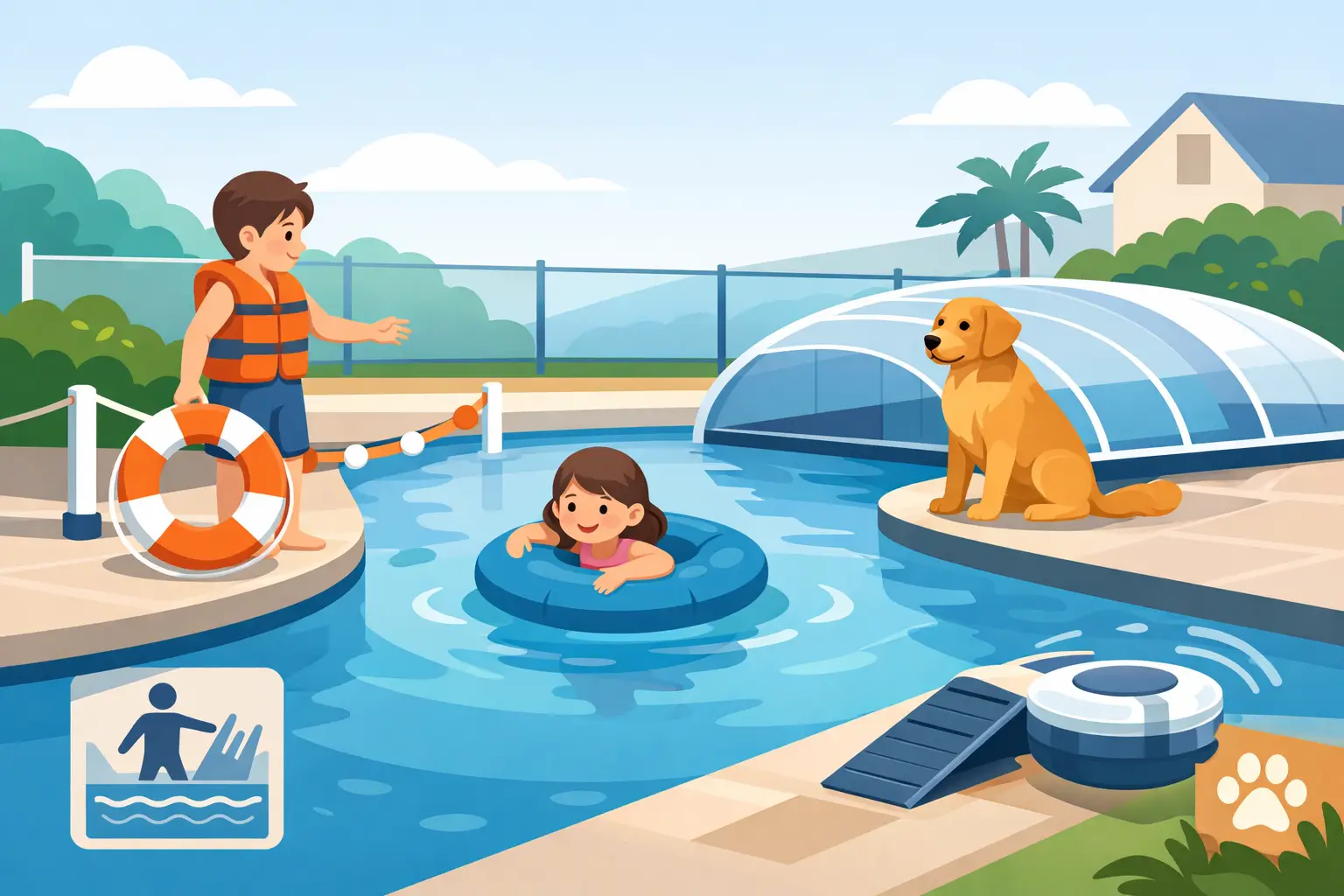
A backyard pool should feel like part of the good life, not a source of constant stress. For families, that means thinking beyond shape, finish, and water color. The right pool safety features for kids and pets can change how you use the space every day – with more confidence, better visibility, and fewer chances for a close call.
The key is to stop thinking about safety as one product. Real protection comes from layers. A fence helps with access. An alarm helps with awareness. A cover helps when the pool is not in use. Supervision still matters, but smart design reduces the margin for error.
Why pool safety features for kids and pets need a layered approach
Most accidents do not happen because a family ignored safety completely. They happen in ordinary moments – a gate left open, a dog slipping near the edge, a child reaching the water faster than expected. That is why one feature alone is rarely enough.
A pool fence, for example, is one of the strongest first lines of defense. But if the gate does not self-close and self-latch, the fence becomes less reliable in real life. A pool alarm may alert you to movement, but it should not replace a physical barrier. Good pool safety planning works best when each feature backs up the others.
This is also where the layout of the yard matters. Some families have clear sightlines from the kitchen or patio. Others have landscaping, elevation changes, or separate outdoor zones that create blind spots. The best setup depends on how your property actually functions, not just what looks good in a catalog.
Start with the barrier that controls access
For most homes, fencing is the first decision that matters. A four-sided fence that isolates the pool from the house and yard is typically more protective than perimeter fencing alone. It creates a dedicated pool zone rather than assuming the entire yard is equally secure.
Fence height, spacing, and gate hardware all matter. If a child can squeeze through, climb over, or push through a gate that did not latch, the barrier has already failed. A self-closing, self-latching gate is not a small upgrade. It is part of what makes the system work when people are distracted, carrying towels, or moving in and out during a gathering.
There is also a design trade-off here. Some homeowners want an open backyard feel with minimal visual interruption. That is understandable. But safety barriers should not be treated as an afterthought or watered down for appearance. The right fence can still look clean and upscale while doing its job.
Covers add protection when the pool is closed
A proper safety cover can be a strong second layer, especially when the pool is not being used. This is different from a basic solar cover or thin floating cover, which may help with heat retention but are not designed to support weight or prevent entry.
For households with kids or pets, a true safety cover is worth serious consideration. It helps block access, reduces debris, and can simplify off-season care. Automatic covers are especially appealing because they are easier to use consistently. That convenience matters. A safety feature only helps if it becomes part of your routine.
Still, covers come with real-world considerations. Automatic systems add cost and require maintenance. Mesh and solid covers each have their own pros and cons around drainage, debris, and visibility. If the pool is used frequently, some families find that they rely more on fencing and alarms during the season and use the cover as added protection when the space is idle.
Alarms support awareness, not replacement supervision
Alarms can be useful, but they work best as backup. Gate alarms, door alarms, and in-pool motion or surface alarms each serve a different purpose. The right choice depends on your house-to-pool access points and how your family uses the yard.
If a child can reach the pool through a back door, a door alarm may be a practical addition. If the bigger concern is unauthorized gate entry, a gate alarm may make more sense. Some families choose both. In-pool alarms can add another layer, though they may be less helpful in windy conditions or during active use when false alerts become more common.
What matters most is avoiding a false sense of security. An alarm is only useful if it is armed, functioning, and taken seriously. It should support attentive adults, not stand in for them.
Safer surfaces matter more than many homeowners expect
Not every pool accident involves entry into the water. Slips and falls are common around wet decks, especially with running kids and excited dogs. Surface choice plays a larger role here than many homeowners realize.
Textured decking, slip-resistant materials, and thoughtful drainage can make the pool area safer without changing its look dramatically. This is one of those decisions that pays off every day. A beautiful deck that becomes slick when wet is a problem waiting to happen.
Pets bring an extra layer to this issue. Dogs often launch into motion without much traction control, especially when they are chasing a toy or following people across the patio. The edge around the pool should help feet and paws grip, not slide.
Entry and exit design should be easy to understand
Children and pets are safer around water when entry and exit points are obvious and usable. Wide steps, tanning ledges, and shallow entry zones can improve comfort and control. They also reduce panic if someone ends up in the water unexpectedly.
For pets, this point is often overlooked. Not every dog can climb out easily from every pool shape. If a pet falls in and cannot find an exit point, even a strong swimmer can become distressed quickly. Some pools benefit from a clearly defined shelf, broad step area, or a pet-friendly ramp solution depending on the animal and the layout.
This does not mean every pool should be built around pet use. It means families with animals should be honest about how the space will actually be used. If your dog has regular access to the yard, the pool design should reflect that reality.
Visibility is a safety feature too
One of the simplest ways to improve backyard safety is to keep the pool visible from key living areas. Clear sightlines from the home, outdoor seating, and common pathways help adults notice movement quickly. Landscaping should frame the pool, not hide it.
Lighting matters here as well. Evening swimming is part of the appeal of pool ownership, but poor visibility changes the risk level fast. Good pool lighting, deck lighting, and illuminated paths make it easier to monitor the area and move around it safely.
This is where clean design and safety often work together. A well-lit, uncluttered pool space usually looks better and functions better. It feels calmer, and it is easier to supervise.
Rules and habits still carry the whole system
Even the best hardware cannot fix careless routines. Gates should stay closed. Toys should not be left floating as an invitation. Pet access should be intentional, not accidental. Adults should know who is actively watching the water, especially during parties when everyone assumes someone else is paying attention.
For younger children, swim lessons can support safety, but they do not remove risk. The same goes for dogs that seem comfortable in water. Comfort is not the same as judgment. Excitement, fatigue, and distraction change behavior quickly.
This is where a professional pool partner can help. Coastal Cove Pools works with homeowners who want a pool that fits the way they live, and that includes safety choices that make sense for the property, the family, and the long-term use of the space.
Choosing the right pool safety features for kids and pets
The best setup depends on your home, not a generic checklist. A family with toddlers may prioritize a four-sided fence and door alarms. A home with multiple dogs may need more attention on deck traction and exit design. A household that travels often may place more value on a dependable safety cover.
It also depends on whether you are building new, renovating, or improving an existing pool. New construction gives you more freedom to plan sightlines, surfaces, and access points from the start. Existing pools may require strategic upgrades rather than a full redesign. Either way, the goal is the same: reduce easy mistakes and make safe use the default.
A pool should feel easy to enjoy. The right safety features do not take away from that experience. They protect it. And for families with kids and pets, that peace of mind is part of what makes the backyard worth having in the first place.