
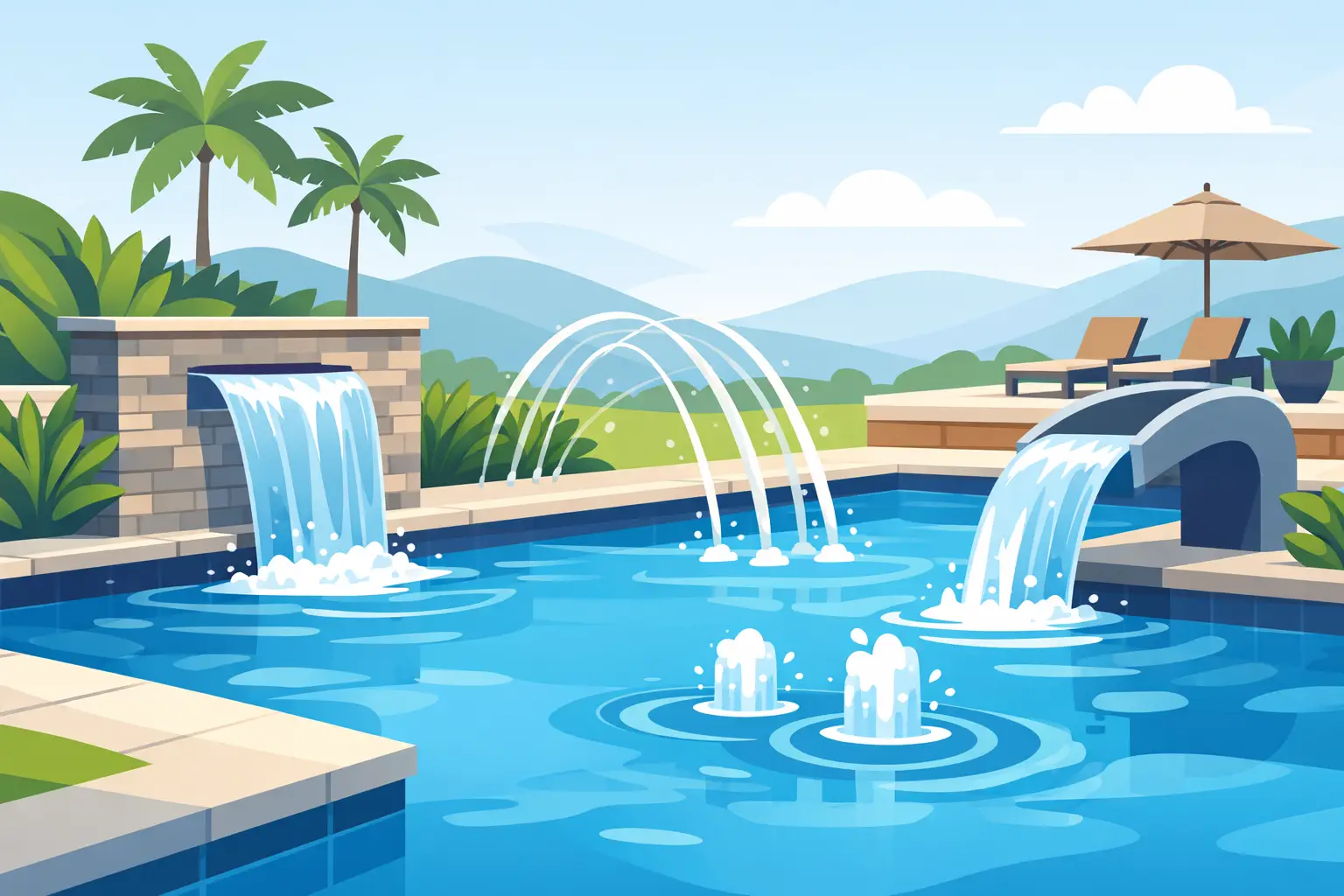
The right pool water features do more than make a backyard look finished. They shape how the space feels from the kitchen window, how conversations sound around the patio, and whether the pool reads as a quiet retreat or the center of a lively gathering. The best choice is rarely the biggest feature. It is the one that fits the pool’s architecture, the way your family uses the yard, and the level of care you want to take on.
What Water Features Add to a Pool
Moving water brings energy to an otherwise still surface. During the day, it catches sunlight and gives the pool a more active, resort-inspired look. At night, lighting can turn a spillway, bubbler, or water wall into a focal point without adding clutter to the patio.
Sound is just as important. A soft sheet of falling water can help soften nearby street noise and create privacy without a physical barrier. A larger waterfall produces a stronger sound and a more natural setting, but it can compete with conversation if the seating area is close. There is no universal “better” feature. The right sound level depends on how you plan to use the space.
Water features can also make a pool feel more connected to its surroundings. Clean, linear features suit a modern home and a structured outdoor kitchen. Natural stone, layered falls, and planted edges can soften a more relaxed backyard. The feature should feel intentional, not like an extra item added after the pool was designed.
Choosing Pool Water Features for Your Backyard
Start with the pool’s purpose. A family pool with a broad tanning ledge may benefit from bubblers that give younger swimmers something to enjoy while keeping the water movement gentle. A pool built around entertaining may call for a set of deck jets or scuppers that add visual rhythm without taking up lounge space.
Then consider what you see most often. If the pool is visible from the main living area, a raised wall with sheer descents can create a polished view every day. If the best angle is from a covered patio, a water wall or a carefully placed spillway may be more effective. A feature hidden behind landscaping may still sound nice, but it will not deliver the visual impact you are paying for.
Scale matters. A compact pool can look crowded with a large rock waterfall, while a wide pool with a substantial patio may need more than one small spillway to feel balanced. Feature size should relate to the pool, the house, and the usable yard around them. This is where early planning saves money and avoids an awkward final result.
Sheer Descents and Scuppers
Sheer descents create a smooth, clear sheet of water from a raised wall. They have a crisp, architectural look that works especially well with tile, stucco, and contemporary pool finishes. Their sound is generally controlled and pleasant, making them a strong choice near dining or conversation areas.
Scuppers are smaller openings, often built into a raised beam or retaining wall. They produce individual streams rather than a broad sheet of water. Several evenly spaced scuppers can add movement across a long wall without overwhelming the pool design. They are a practical option when you want a feature with clean lines and modest visual weight.
Deck Jets and Laminars
Deck jets send arcing streams from the deck into the pool. They are playful, easy to appreciate from multiple angles, and can be especially effective on pools used by families. Because the streams cross open space, placement matters. A poorly aimed jet can splash a walkway, a lounge area, or a guest who expected to stay dry.
Laminars create a more precise, glass-like arc of water and are often paired with integrated lighting. They bring a refined evening effect to a modern design, but they require careful installation and adjustment. Wind can also affect any arcing feature, so exposed yards may need a different approach.
Bubblers and Tanning-Ledge Features
Bubblers are installed in shallow water, most often on a sun shelf. They create a small upward fountain and a pleasant shimmer across the ledge. For households with children, they provide a gentle play element. For adults, they make a shallow lounging area feel more active without changing the calm character of the main pool.
They work best when the tanning ledge is large enough to support chairs or in-water loungers without feeling crowded. A shelf packed with furniture, umbrellas, and multiple bubblers can lose the open, restful quality that made it appealing in the first place.
Waterfalls and Naturalistic Features
Rock waterfalls create a bolder statement. They can make a pool feel tucked away and can provide a stronger water sound for homeowners seeking more separation from nearby activity. They are often a natural fit for freeform pools, tropical planting plans, and yards with changes in elevation.
The trade-off is visual permanence. A large stone feature becomes a dominant part of the backyard in every season. It should complement the home’s materials and the long-term landscaping plan, not simply follow a trend. Naturalistic features also have more surfaces where leaves, debris, and mineral deposits can collect.
Plan Plumbing, Drainage, and Structure Early
A water feature is not just a design decision. It needs dedicated plumbing, appropriate flow, electrical planning for lights when included, and a return path that keeps water where it belongs. Adding a feature after a pool is complete is possible in some cases, but it can involve cutting decking, modifying plumbing, or rebuilding portions of a wall.
Raised features deserve special attention. Their finishes, waterproofing, and drainage details need to be handled correctly before tile, stone, or veneer is installed. Water that continually runs down the face of a wall can leave deposits or cause discoloration if the design does not direct it properly.
Equipment selection matters as well. Some features can operate through the main circulation system, while others perform better with a dedicated pump. A dedicated pump gives you more control and may let you run the feature independently of normal filtration, but it adds equipment, energy use, and maintenance considerations. The right setup depends on the feature’s size, the desired flow, and how often you expect to use it.
Understand the Ongoing Care
Every water feature affects the care routine, even a simple one. Moving water increases evaporation, especially in warm, sunny, or windy conditions. It can also change how quickly pool water loses heat. If a heater is running while a large waterfall is operating on a cool evening, the feature may work against the temperature you want.
Water chemistry remains central. Calcium deposits can form along spillways, scuppers, tile lines, and stone edges, particularly when calcium hardness or pH is not well managed. Organic debris can settle in rock crevices and feature basins. Regular brushing, balanced water, and consistent circulation protect the appearance of the feature as much as the pool itself.
For many homeowners, automation makes ownership easier. Timers and smart controls can run water features during the hours when the backyard is in use, then shut them down when the pool is quiet. That approach preserves the experience without treating a decorative feature like it needs to run all day.
Make the Feature Part of the Whole Outdoor Space
The strongest pool designs use water features to support the backyard, not dominate it. A row of scuppers may echo the lines of a pergola. A pair of laminars can frame the view toward an outdoor fireplace. Bubblers can make a tanning ledge feel like a destination for an afternoon at home.
Lighting deserves the same restraint. Underwater lights, illuminated laminar streams, and a softly lit raised wall can create a dramatic evening setting. Too many colors or competing light sources can make a refined pool feel busy. Warm white lighting is often the most flexible choice for a premium, relaxed outdoor environment.
Budget should account for more than the installation itself. Ask about equipment needs, finish materials, electrical work, future repairs, energy use, and the maintenance required to keep the feature looking its best. A smaller, well-built feature that is easy to operate usually delivers more long-term satisfaction than a larger one that becomes costly or inconvenient to use.
A pool should give you a reason to step outside more often. Choose a water feature that makes that moment better – whether it is a quiet morning by the water, a family afternoon on the sun shelf, or an evening patio that feels a little closer to a private coastal retreat.