
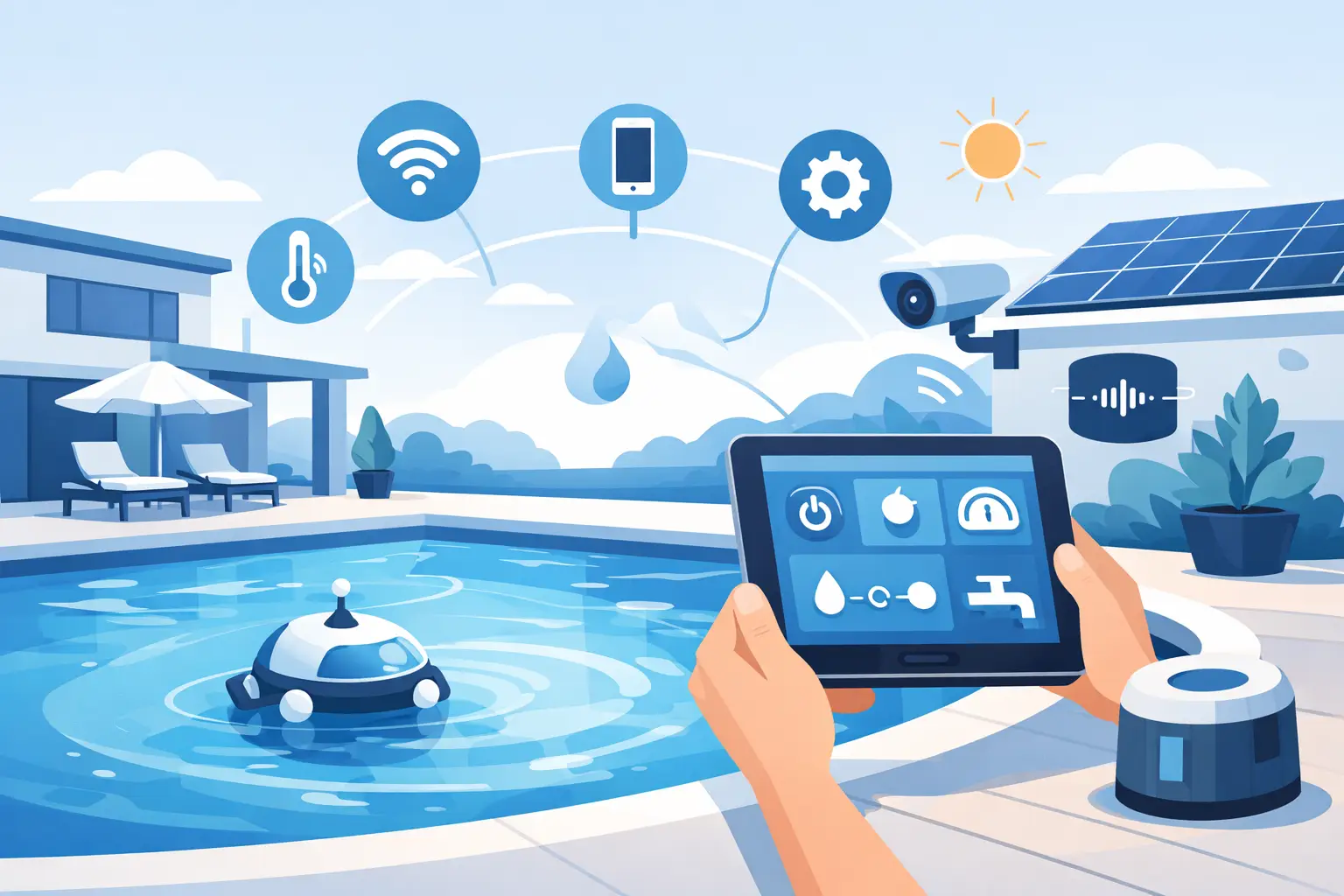
A pool used to come with a mental checklist. Turn on the pump. Check the water. Adjust the heater. Switch the lights before guests arrive. For many households, smart pool automation trends for homeowners are changing that routine from daily management to simple oversight.
That shift matters because most homeowners do not want more equipment to think about. They want a backyard that feels ready. They want clean water, comfortable temperature, lower stress, and fewer avoidable service issues. The best automation trends are not about adding flashy features for the sake of it. They are about making pool ownership feel more polished and more livable.
Why smart pool automation trends for homeowners are growing
The biggest driver is convenience, but convenience is only part of the story. Energy costs have made homeowners more aware of when and how long pool equipment runs. At the same time, newer control systems can coordinate pumps, heaters, sanitation, and lighting in ways that are more efficient than manual operation.
There is also a lifestyle shift behind the demand. Homeowners are treating the backyard less like a seasonal bonus and more like an extension of the home. If the patio, outdoor kitchen, and seating area are designed for regular use, the pool needs to keep up. Automation supports that expectation. It helps the space feel less like a maintenance project and more like a private retreat.
For families and busy professionals, there is another benefit that often gets overlooked. Smart systems reduce decision fatigue. Instead of remembering five separate tasks, the owner checks one app, reviews one dashboard, or relies on pre-set schedules. That simplicity is part of the appeal.
The move from single-function controls to connected systems
One of the clearest smart pool automation trends for homeowners is the shift away from isolated equipment controls. In older setups, the pump, heater, lights, and cleaner might all operate separately. That works, but it creates friction. Every separate control point is another opportunity to forget a step or run equipment longer than needed.
Newer systems aim to bring those functions into one interface. A homeowner can set pump speeds by time of day, coordinate heating with expected use, and trigger lighting scenes for evening swims or entertaining. That kind of integration sounds simple, but it has a real impact on the day-to-day experience.
The trade-off is that connected systems are only as good as their design and setup. If automation is layered onto old equipment with compatibility issues, the experience can feel clunky. For some pools, a partial upgrade makes sense before full automation is added. It depends on the age of the equipment pad, the electrical setup, and what the homeowner wants the system to actually do.
Energy management is becoming a major selling point
Automation is increasingly tied to efficiency. Variable-speed pumps have already pushed the market in that direction, and smart controls are making them more useful. Instead of running at one rate for one long block of time, pumps can be scheduled to operate at lower speeds for filtration and higher speeds only when needed for cleaning, heating support, or water features.
That matters because not every pool function needs maximum power. A pool can often circulate effectively at lower speeds, which reduces energy use and wear on equipment. Smart scheduling helps homeowners get those savings without constant manual adjustment.
Heating is part of this trend as well. Automated heating schedules let owners warm the pool for planned use rather than keeping it hotter than necessary around the clock. In warmer climates, that can still mean meaningful savings. In cooler shoulder seasons, it can make pool use more intentional and cost-conscious.
This does not mean automation automatically creates low utility bills. A heated pool with water features and extended hours of use will still cost money to operate. What automation does is reduce waste. It gives the owner more control over when they spend.
Water chemistry monitoring is getting smarter, but not hands-off
Few parts of pool ownership create more anxiety than water quality. Homeowners want clean, clear water, but many do not want to test and adjust chemistry constantly. That is why remote monitoring and smart alerts are gaining traction.
Some systems can track temperature, sanitizer levels, pH, and equipment status, then send notifications when something moves outside the desired range. This can help catch problems earlier, especially during heavy pool use, high heat, or vacation periods.
Still, this is an area where expectations need to stay realistic. Smart monitoring improves visibility, but it does not eliminate the need for proper pool care. Sensors need calibration. Water conditions can change quickly after storms, parties, or extended sun exposure. Chemical feed systems can help maintain consistency, but they are not a substitute for informed service and periodic manual verification.
For homeowners, the practical value is peace of mind. Alerts are useful. Remote checks are useful. But the best results still come from a well-maintained system paired with consistent oversight.
App control is now expected, not optional
A few years ago, app-based pool control felt like a premium add-on. Now it is close to the baseline expectation for many homeowners considering new equipment. If the thermostat, doorbell, lighting, and security cameras are already managed from a phone, the pool is expected to fit that same pattern.
App control makes sense because pool use is rarely static. Plans change. Guests come over. A cool evening turns into a swim night. Being able to raise the temperature, adjust lighting, or activate a spa before getting home fits the way people actually live.
What homeowners are increasingly looking for, though, is not just remote access. They want simple interfaces. If the app is confusing or buried in menus, the feature loses value fast. Good automation should reduce friction, not create a new learning curve.
That is one reason professionally selected and configured systems often perform better in real life than pieced-together smart setups. Compatibility on paper is not the same as ease of use after installation.
Lighting, ambiance, and scene control are becoming lifestyle features
Not every automation trend is about maintenance. A major area of growth is scene-based control that supports entertaining and everyday enjoyment. Pool lights, spa settings, bubblers, and water features can now be grouped into pre-set experiences instead of adjusted one by one.
For homeowners who use their pool as part of a broader outdoor living space, this is a natural fit. One tap can shift the backyard from quiet evening mode to weekend gathering mode. That sounds cosmetic, but for many buyers, the emotional side of pool ownership matters just as much as the technical side.
There is also a resale angle. Buyers respond to outdoor spaces that feel finished and easy to use. Automation that supports lighting and ambiance can reinforce the impression of a well-designed, higher-end backyard environment.
Of course, not every pool needs a long menu of scenes and effects. Some owners want clean white lighting, dependable heat control, and little else. The right automation plan should match how the space is used, not chase features for their own sake.
Predictive service and equipment alerts are the next practical step
One of the more useful smart pool automation trends for homeowners is the rise of equipment-level alerts. Instead of discovering a problem after the water turns cloudy or the heater fails to start, some systems can flag unusual runtime patterns, flow issues, or communication errors earlier.
This trend is especially valuable for owners who travel often or do not want to inspect the equipment pad regularly. Early warnings can help prevent small issues from turning into larger repair calls. A clogged filter, a pump performance issue, or a heating fault is easier to address before it affects the full pool system.
It is not perfect. Alerts are only helpful if they are accurate and acted on. Too many notifications can train homeowners to ignore them. But when set up correctly, they add a layer of protection that makes ownership feel less reactive.
What homeowners should keep in mind before upgrading
Automation works best when the goal is clear. Some homeowners want lower energy use. Others want remote control and easier maintenance. Others want their backyard to feel more refined for regular entertaining. Those are different priorities, and they can lead to different equipment choices.
It is also worth thinking about long-term support. A smart pool system should not be evaluated only by the app screen or feature list. It should be judged by reliability, serviceability, and how well it fits the pool as a whole. The best setup is usually the one that simplifies ownership over time, not the one with the longest brochure.
For homeowners planning a new pool or updating an older one, this is where a specialist matters. Coastal Cove Pools sees automation as part of the full ownership experience – not a gadget layer, but a smarter way to protect comfort, efficiency, and time.
The real trend is not just smarter equipment. It is a higher expectation for how a backyard should work. Homeowners want the pool ready when they are, and that expectation is shaping every upgrade worth making.