
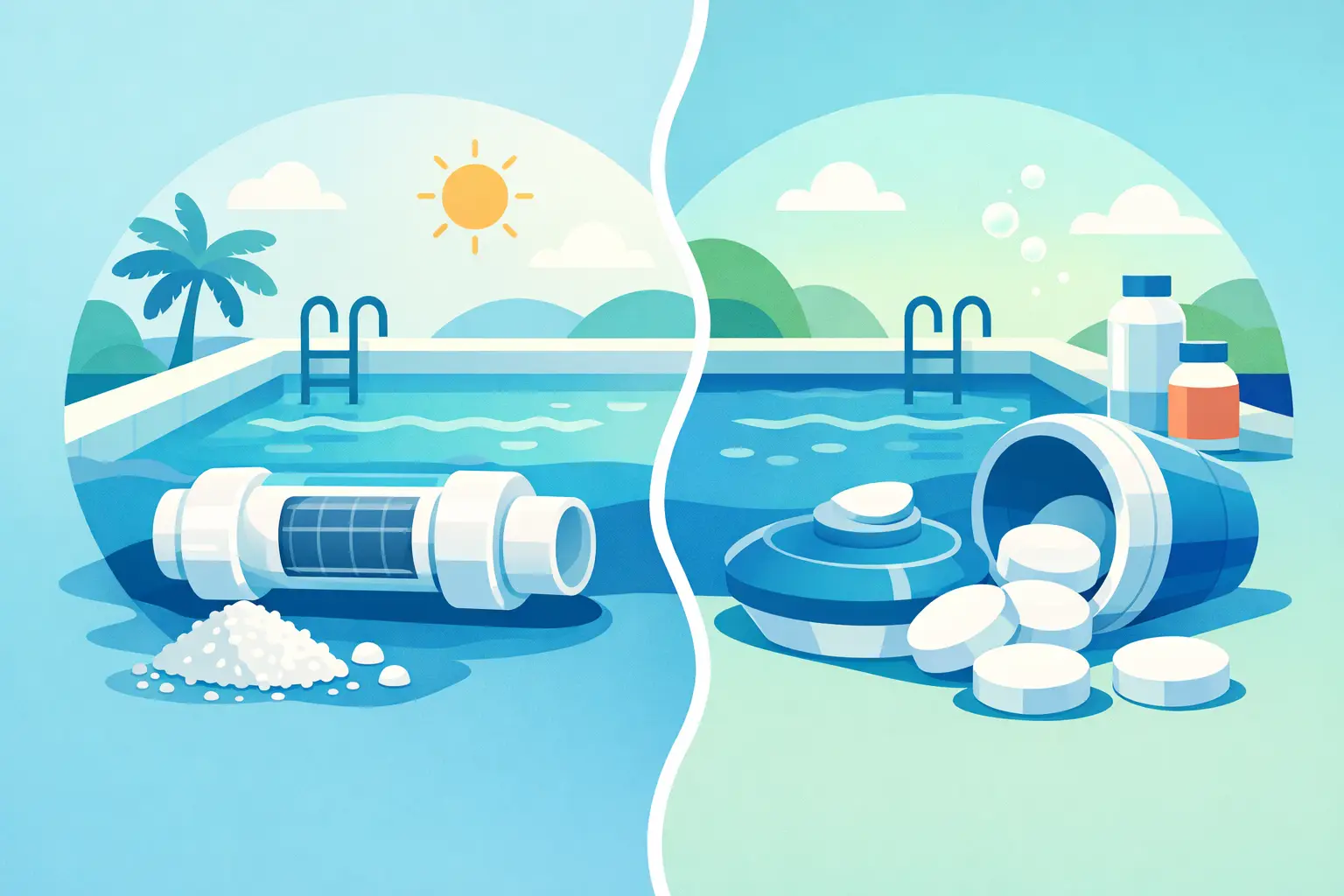
A pool should feel ready when the family wants to swim, not like a chemistry project waiting by the back door. When homeowners compare a salt system versus chlorine tablets, the real question is usually not whether chlorine is involved. Both options use chlorine to sanitize the water. The difference is how that chlorine gets into the pool, how often you manage it, and which trade-offs fit the way you use your backyard.
For a polished, easygoing pool experience, consistency matters. The best choice depends on your budget, pool equipment, climate, swimming habits, and willingness to stay involved with water care.
Salt system versus chlorine tablets: the basic difference
A saltwater pool is still a chlorine pool. Salt is added to the water, then a salt chlorine generator uses electricity to convert dissolved salt into chlorine. As the chlorine does its job and breaks down, the system continues that cycle while the pump runs. The water contains a low concentration of salt – usually far below the salinity of ocean water.
Chlorine tablets are a more familiar approach. Trichlor tablets dissolve slowly in a feeder, floater, or automatic chlorinator, releasing chlorine over time. They are convenient, widely available, and often the lower-cost way to begin sanitizing a pool.
Neither method means water care disappears. A pool still needs regular testing, proper circulation, filtration, occasional shock treatment when conditions call for it, and adjustments for pH, alkalinity, calcium hardness, and stabilizer. The difference is in the day-to-day rhythm.
The case for a saltwater system
The biggest appeal of a salt system is steady chlorine production. Rather than adding tablets every week, the generator creates chlorine as water moves through the system. Once it is properly sized and adjusted, that can mean fewer sharp swings in chlorine level and fewer trips to handle sanitizer.
Many swimmers also prefer the feel of saltwater. Properly balanced salt pools often feel softer on the skin and are less likely to carry the strong chlorine odor people associate with poorly maintained pools. That is not because saltwater is chlorine-free. It is because stable, balanced water can reduce the chloramine buildup that causes irritation and odor.
A salt system can make particular sense for homeowners who use their pool frequently, want a more hands-off routine, or see their pool as a central part of outdoor living. It is also a good fit for owners who plan to stay in the home long enough to benefit from the investment.
There are costs and responsibilities to consider. A generator and salt cell require a higher upfront investment than a container of tablets. Salt cells do not last forever and eventually need replacement. Their lifespan varies with water chemistry, run time, cell cleaning, and local conditions.
Salt systems also tend to push pH upward over time. That means acid may need to be added periodically to keep the water in range. In cold water, chlorine production slows or stops, so seasonal pool owners may need a different sanitation plan during cooler months. A qualified pool professional can also check that existing equipment, surfaces, heaters, and nearby metal features are appropriate for saltwater use.
What chlorine tablets do well
Chlorine tablets remain a practical choice for many residential pools. They are simple to understand, easy to source, and inexpensive to start using. In a correctly adjusted feeder, tablets deliver a measured amount of sanitizer over several days, which is helpful for owners who do not want to add liquid chlorine every day or two.
They can be especially sensible for a smaller pool, a seasonal pool, a home with a limited upfront budget, or an owner who prefers straightforward equipment. If your pool already has a working tablet feeder and your water stays balanced with regular service, there may be no urgent reason to convert.
The main limitation is that most chlorine tablets add cyanuric acid, often called stabilizer, along with chlorine. Stabilizer protects chlorine from sunlight, which is useful in a sunny backyard. But it does not leave the water through evaporation. Over time, excessive stabilizer can make chlorine less effective, even when a test strip appears to show an acceptable chlorine reading.
That is why tablets should not be treated as an unlimited set-it-and-forget-it solution. If stabilizer climbs too high, partial draining and refilling may be necessary. Tablets are also acidic, so they can lower pH and total alkalinity over time. Routine testing helps prevent a convenient sanitizer from creating a larger correction later.
Never place tablets directly in a skimmer unless your equipment professional specifically recommends it. Highly concentrated chlorinated water can move through plumbing and equipment, creating unnecessary wear. Tablets should be used only in a proper feeder or floating dispenser, with careful attention to product instructions and safe storage.
Cost: upfront price versus long-term ownership
Chlorine tablets usually win on initial cost. A feeder is relatively affordable, and tablets can be purchased as needed. That makes this approach attractive when building costs are already stretched or when a pool is used lightly.
A salt system costs more at installation because it includes the generator, plumbing integration, electrical considerations, and salt. Over several years, however, some homeowners find that the convenience and reduced reliance on purchased tablets justify the initial expense. The exact math varies. Tablet prices, electricity rates, pool size, local service needs, and salt cell replacement all affect the long-term cost.
It helps to avoid treating this as a simple price comparison. A salt system is partly an investment in routine and comfort. Tablets are partly an investment in flexibility and a lower barrier to entry. The better value is the one you will maintain correctly.
Maintenance differences that matter
With tablets, you will refill the feeder, monitor chlorine output, and watch stabilizer, pH, and alkalinity closely. The schedule depends on pool size, bather load, rainfall, sunlight, and water temperature. A busy summer weekend with kids, guests, sunscreen, and lawn debris can change chlorine demand quickly.
With a salt system, you will test the same core water balance, inspect the cell, verify that the generator is producing at the correct level, and add salt only when testing shows it is needed. Salt is generally lost through splash-out, backwashing, leaks, draining, or heavy rain overflow – not because the generator uses it up like a tablet supply.
Both systems need extra attention after storms, heavy use, algae concerns, equipment downtime, or an extended period away from home. Automation can simplify operation, but it does not replace water testing. Clear water is not always balanced or properly sanitized water.
Which option fits your pool?
A saltwater system is often the stronger choice if you want a more consistent sanitizer level, swim often, and prefer a lower-touch maintenance routine after the initial setup. It can complement a premium backyard designed for relaxed daily use and entertaining.
Chlorine tablets may be the better fit if controlling upfront costs is the priority, your pool use is more occasional, or you want to keep an existing simple system in place. They can work very well when stabilizer and water balance are monitored with discipline.
There is also a middle ground. Some pool owners use a salt system as their primary sanitizer and keep other chlorine products on hand for targeted adjustments. Others begin with tablets and convert later after they have lived with the pool for a season or two. The right timing depends on the pool’s condition, equipment layout, and how you want ownership to feel.
Before making a change, have the pool’s current chemistry, equipment age, surface type, heater, and plumbing reviewed. Coastal Cove Pools can help homeowners look beyond the sanitizer label and assess the full water-care picture. A system that fits the pool and the household is easier to manage, protects the equipment, and leaves more room for the reason the pool is there in the first place: an unhurried afternoon in your own backyard.