
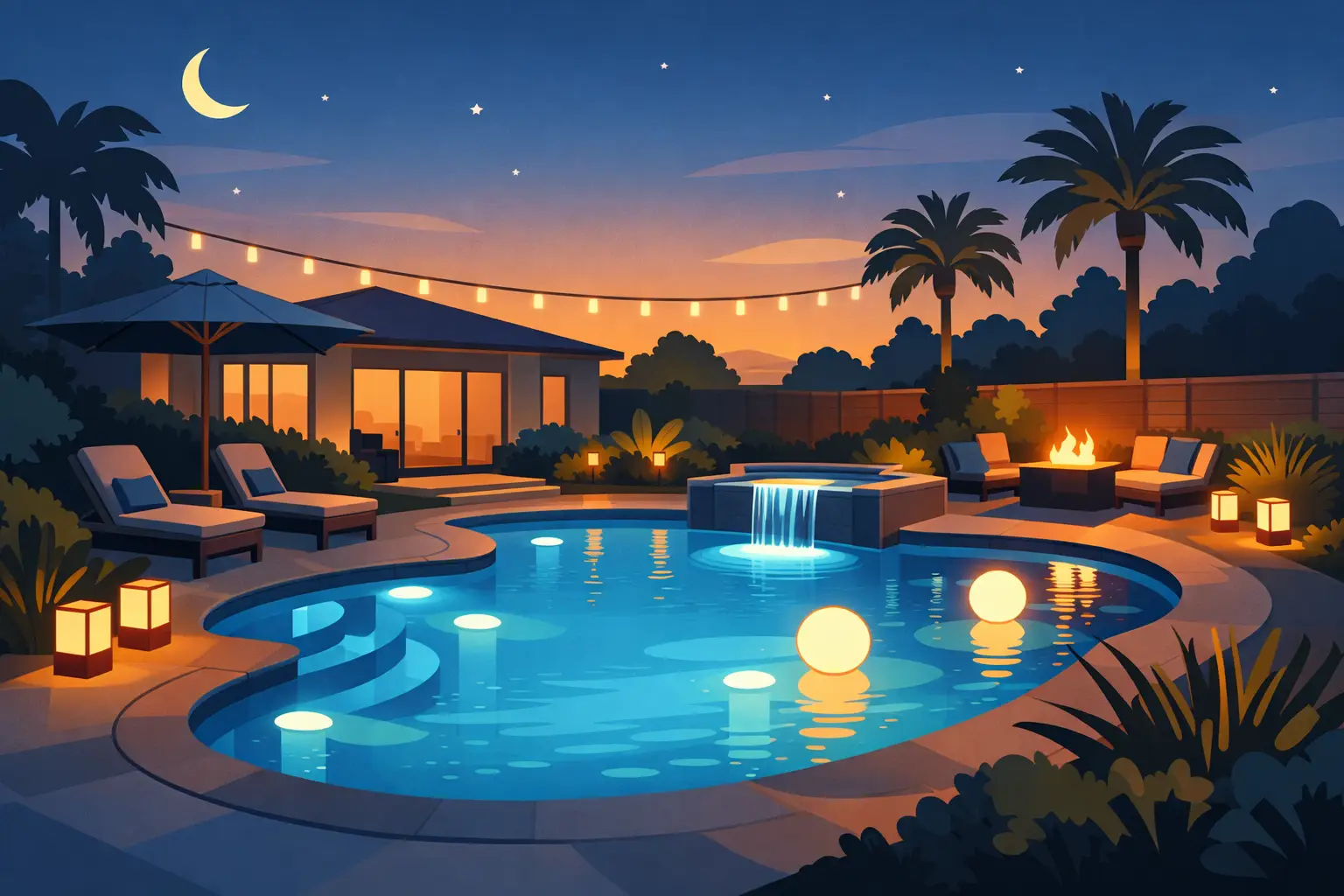
A pool can look finished by day and disappear after sunset. The best pool lighting ideas change that. They make the water safer to use, give the patio a more inviting feel, and turn an ordinary evening outside into time you actually want to spend in the backyard.
Good lighting is not about making every surface bright. It is about creating layers: enough visibility at the waterline and steps, soft definition around the deck, and a few intentional focal points that give the space its character. For a coastal-inspired backyard, the goal is a relaxed glow that feels polished without looking overdone.
Start With Lighting Inside the Pool
Underwater lighting does the most visible work after dark. A single light can be enough for a compact pool, but larger pools, freeform designs, and pools with deep ends often benefit from two or more fixtures. The placement matters as much as the number.
Lights are usually positioned to shine away from the main viewing areas. This reduces glare when you are sitting on the patio, cooking at the grill, or looking out from inside the home. If the brightest beam points straight toward the house, the water may be visible, but the experience will not be comfortable.
1. White LED Pool Lights
White LED lights are the strongest choice for homeowners who want a clean, classic look. They show the water clearly, support safe nighttime swimming, and work with nearly any pool finish or architectural style. A cool white can feel crisp and modern, while a warmer white is often better suited to natural stone, tan decking, and softer landscape colors.
LED fixtures also use far less energy than older incandescent lights and generally last longer. That does not mean they are maintenance-free. A properly sealed fixture, reliable electrical connection, and compatible control system all matter. When replacing an older light, it is worth evaluating the full setup rather than treating the bulb as the only issue.
2. Color-Changing LEDs for Entertaining
Color-changing LEDs bring more flexibility to a pool without permanently committing the backyard to a dramatic look. On a typical evening, many homeowners keep the lights white or pale blue. For birthdays, holidays, game nights, or a late swim with friends, a controlled color setting can add energy quickly.
The trade-off is restraint. Fast-changing color shows can feel more like a commercial attraction than a private retreat. Choose a system that lets you select a single color, a subtle transition, and a simple white setting. The best effect is usually a color palette that complements the water rather than competes with it.
3. Lighted Steps, Benches, and Baja Shelves
Steps and shallow lounging areas deserve special attention because they are where people enter, exit, and gather. A lit entry helps guests see changes in depth and makes the pool easier to use after sunset. Small, purpose-built fixtures can also make a tanning ledge or swim-up bench feel intentional rather than lost in shadow.
This is one area where function should lead the design. Decorative lighting is useful, but clear visibility at steps is a safety feature. If the pool has multiple entries, raised walls, or a deep transition, discuss those details during the lighting plan instead of adding them after construction.
Best Pool Lighting Ideas Around the Deck
The water should be the visual center, but the space around it determines whether the backyard feels usable after sunset. Deck lighting creates a sense of boundary and helps people move comfortably between the house, seating areas, and pool.
4. Low-Profile Deck and Coping Lights
Recessed deck lights and subtle coping lights can create a refined outline around the pool. They are especially effective on contemporary pools with clean lines, pavers, or expansive travertine. Instead of flooding the deck with light, they mark edges and walkways with a soft, even rhythm.
Less is often more. Too many lights placed close together can create bright dots that pull attention away from the water. A thoughtful spacing plan will make the deck feel open while still helping people see where they are walking.
5. Step Lights for Patio Changes in Elevation
Any raised patio, outdoor kitchen platform, or transition between deck levels should have dedicated step lighting. These fixtures prevent a common nighttime hazard while giving the hardscape a finished appearance. A warm, shielded light is usually preferable to a bright fixture that shines directly into someone’s eyes.
Step lights are particularly valuable when entertaining. Guests do not know the backyard layout as well as the homeowner does, and they may be carrying a drink, plate, or towel. Clear, unobtrusive guidance makes the space feel more welcoming.
6. Pergola, Cabana, and Outdoor Kitchen Lighting
A pool area is more than water. If the backyard includes a pergola, covered patio, cabana, or outdoor kitchen, that structure needs its own lighting plan. Recessed ceiling lights provide practical task lighting for food prep and seating, while a few dimmable fixtures can keep the area relaxed once dinner is over.
Avoid placing harsh overhead lights directly over the pool-facing edge of a structure. They can reflect off the water and create glare. Aim light downward where it is needed, then let the pool remain the visual draw from the seating area.
Use Landscape Lighting to Create Depth
Landscape lighting is what keeps the pool from looking like a bright rectangle surrounded by darkness. It brings definition to palms, ornamental grasses, privacy hedges, specimen trees, and stone features beyond the deck. The result is more depth and a stronger sense of enclosure.
7. Uplighting for Palms and Feature Trees
A few well-placed uplights can make trees feel architectural at night. Palm trunks, layered canopies, and mature shade trees all create natural texture when illuminated from below. Use warm white light for a relaxed, resort-like effect, especially around natural stone and wood finishes.
Be selective. Lighting every tree can flatten the yard and increase visual clutter. Highlight the trees that frame the pool view, soften a property line, or create a focal point from the house.
8. Soft Lighting Along Planting Beds
Low, shielded fixtures along planting beds help define the backyard without putting bright light at eye level. They work well beside pathways, near fence lines, and around lounge areas where you want enough visibility without disrupting the mood.
The fixture itself should mostly disappear during the day. Quality placement and beam control matter more than decorative hardware. This is also where an experienced pool and outdoor-living team can coordinate lighting with irrigation, drainage, future plant growth, and maintenance access.
9. Highlight Water Features Carefully
Sheer descents, scuppers, waterfalls, and spillover spas can look exceptional at night when lit from the right angle. Light placed beneath a falling sheet of water can create a dramatic effect, while a spa light makes the raised waterline stand apart from the main pool.
Still, water features do not always need their own separate fixture. In some designs, the pool light provides enough reflection and movement. Adding more lights only makes sense when the feature disappears without them or when it is intended to be a primary focal point.
Make Controls Simple Enough to Use
The most impressive lighting plan is wasted if it is difficult to operate. Modern pool controls can group lights into scenes, allowing you to select a quiet evening setting, a swim setting, or an entertaining setting from one control point. Dimming capability is equally useful. Bright light is helpful during cleanup or active swimming, but lower levels usually feel better for conversation.
Automation should fit how the family uses the backyard. A homeowner who swims laps early in the morning may want a straightforward white-light schedule. A household that entertains often may appreciate coordinated pool, landscape, and patio scenes. Coastal Cove Pools can help homeowners consider those routines before equipment choices are finalized.
Put Safety and Serviceability First
Pool lighting involves water and electricity, so the installation should never be treated as a cosmetic weekend project. Fixtures, junction boxes, transformers, bonding, grounding, and GFCI protection must be installed and serviced correctly. Local codes and equipment requirements can vary, especially when an older pool is being upgraded.
Serviceability matters too. Ask where electrical components will be located, how fixtures can be accessed, and whether replacement parts will be readily available. A beautiful lighting layout should not create unnecessary disruption when a fixture eventually needs service.
The right lighting plan lets the backyard stay calm after the sun goes down. Start with safe, clear water visibility, then add only the layers that make your favorite parts of the space worth staying out for a little longer.