A beautiful pool can lose its appeal quickly when rainwater ponds against the deck, washes mulch into the water, or moves toward the house. Pool drainage planning is the behind-the-scenes work that protects the investment and keeps a backyard ready for the way you want to use it: relaxed afternoons, family swims, and easy outdoor entertaining.
Drainage should be considered before excavation begins, not after the first heavy storm reveals a problem. The right approach depends on the property’s natural slope, soil, groundwater conditions, local rainfall patterns, pool elevation, hardscape layout, and where water can legally and safely discharge.
Why Pool Drainage Planning Comes First
A pool changes how water moves through a yard. Before construction, rain may spread across grass and soak into open soil. Once a pool, deck, retaining walls, landscaping, and outdoor kitchen are installed, those surfaces redirect water. If that new flow is not planned, water will find its own route – often toward the home, under the deck, or along the pool shell.
Standing water around a pool is more than an inconvenience. It can soften soils, stain hardscape, create slippery walking surfaces, damage plantings, and contribute to erosion. In some situations, poor drainage can place added pressure on structures or undermine areas around a deck.
The goal is straightforward: move surface water away from the pool area and home, then send it to an approved location without creating a new issue for a neighbor or another part of the property.
Separate pool water from rainwater
Pool water and stormwater have different paths. Rainwater that lands on decking, patios, and landscaped areas needs a drainage route. Pool overflow, splash-out, equipment drainage, and backwash water may have separate requirements depending on local rules and the pool system.
Treating all water as though it can run to the same place is a common mistake. A thoughtful plan identifies each source and confirms where it belongs before the yard is finished.
Start With the Grade, Not the Drain
A drain can collect water, but proper grading keeps excessive water from reaching the drain in the first place. Grade is the subtle slope built into the yard, deck, and surrounding surfaces. It is one of the most important decisions in a successful pool project.
The pool deck should generally slope away from the pool where practical, while still accounting for the rest of the site. The surrounding yard should direct runoff away from the home’s foundation. These directions do not always align perfectly, especially on compact lots, side yards, or properties with a noticeable natural slope.
That is why a site-specific plan matters. A flat-looking backyard is rarely truly flat. Even a small change in elevation can determine whether water reaches a collection drain or sits at the edge of a patio.
Think beyond the pool footprint
The area immediately around the pool gets the most attention, but drainage planning should include the entire affected yard. Consider roof downspouts, neighboring properties, driveway runoff, side-yard swales, raised planters, retaining walls, and any future structures.
For example, a new covered patio can shed a surprising amount of water during a storm. If its downspouts empty onto a pool deck with no collection point, the deck may flood even if the original pool grading was correct. Likewise, a raised planter wall can act like a dam if it interrupts the path water once used to leave the yard.
Drainage Options for Residential Pools
There is no single drainage system that fits every backyard. The best solution may combine surface drains, pipes, grading, and landscape features. The right choice is based on where water originates, how much water the site receives, and where it can go.
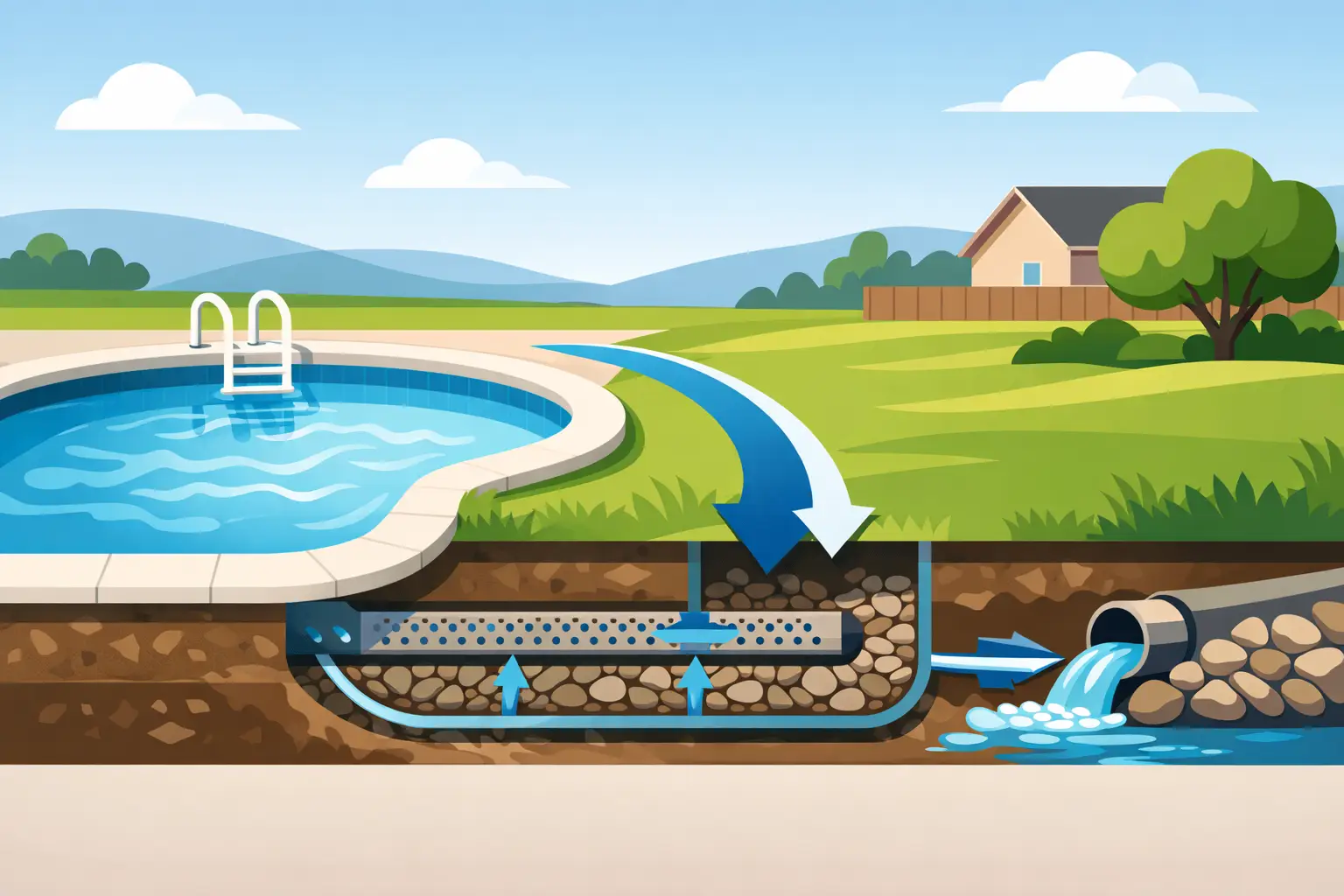
A deck drain is often used where hardscape surfaces need a defined collection point. These drains may sit along the edge of the deck, near a house, at the base of steps, or beside a raised feature. They collect surface water and direct it through underground piping.
Channel drains are useful where water may sheet across a broader hardscape area. They are commonly considered near patio transitions, outdoor kitchens, gates, or other low spots where a narrow drain line needs to capture runoff.
French drains can help manage water moving through soil rather than water flowing across the surface. They are not a replacement for correct deck grading, but they can be valuable in areas with persistent dampness, landscape runoff, or soil that drains slowly.
Swales are shallow, graded landscape channels that guide water across a yard. When designed well, they can look natural and reduce the need for more visible drainage components. They require room, however, and may not work on every compact residential property.
Some sites also require catch basins, dry wells, retention areas, or connections to an approved stormwater system. Local regulations, lot conditions, and soil performance determine whether these options are suitable. A dry well, for example, may perform poorly in dense clay soil or in an area with a high water table.
Plan for the Pool Deck and Outdoor Living Area
A resort-style backyard should feel effortless. That means the drainage details need to support the finished space without taking over the design.
Deck material affects drainage decisions. Pavers have joints that allow some water through, but the base below still needs a route for drainage. Concrete is less forgiving because water stays on the surface until it reaches a slope or drain. Natural stone, tile, and textured finishes add their own installation requirements, particularly around transitions and low points.
Features such as fire pits, cabanas, outdoor kitchens, and pergolas should be included early in the drainage conversation. Each one changes surface coverage and can create new runoff patterns. A kitchen island may block a direct slope. A cabana roof adds concentrated runoff. A sunken seating area needs careful protection from water collecting at its lowest point.
It is often less expensive and far cleaner to route drainage piping before concrete, pavers, and landscaping are installed. Retrofitting may require saw cutting, removing finished materials, or disturbing a completed yard.
Keep water away from equipment
Pool equipment needs a stable, accessible pad with adequate drainage. Water should not collect around pumps, heaters, electrical components, or automation equipment. The equipment area should also remain reachable for routine service without forcing technicians to walk through mud or standing water.
This is especially relevant in coastal or high-rainfall environments, where storms can deliver a large volume of water in a short period. The system should be planned for real conditions, not only for a light shower on a clear-weather day.
Soil, Groundwater, and Construction Conditions
Surface drainage is only one part of the equation. Soil and groundwater can affect pool construction, long-term stability, and how the surrounding yard performs after rain.
Sandy soil may drain quickly, but it can also shift or erode if runoff is concentrated in one area. Clay soil can hold water for long periods and may require more deliberate collection and conveyance. Sloped properties can experience runoff velocity that cuts channels through landscaping or carries soil toward the pool.
A high water table adds another layer of planning. Groundwater around an empty or partially drained pool can create pressure conditions that require professional attention. Homeowners should never drain a pool completely without understanding the risks for that specific structure and site.
During construction, weather can expose drainage challenges early. Excavation changes the yard temporarily, and heavy rain may collect in places that will not exist once the project is complete. Still, those conditions offer useful information. A contractor can evaluate where water is entering and adjust the plan before the permanent deck and landscaping are installed.
Common Shortcuts That Create Expensive Problems
The most avoidable drainage issue is treating it as a finishing detail. By the time a deck is poured and landscaping is mature, options become more limited.
Another shortcut is installing drains without confirming where the pipes discharge. A drain that leads to an unsuitable low spot simply moves the problem out of view. Water needs a complete route from collection point to approved release point.
Homeowners should also be cautious about relying only on decorative landscaping to solve a drainage issue. River rock, mulch, and plants can help manage erosion and appearance, but they cannot correct a poorly graded hardscape or an undersized drain system.
Finally, do not assume a neighbor’s drainage pattern will remain unchanged. New fences, additions, patios, and landscaping on nearby properties can alter runoff over time. Your pool area should have a plan that performs independently rather than depending on water continuing to flow a certain way.
Questions to Settle Before Construction
Before finalizing a pool design, ask where roof runoff will go, where deck drains will discharge, and whether the finished yard will direct water away from the house. Confirm the location of utility lines, easements, septic components, and any municipal drainage requirements that could affect the plan.
Ask how the proposed deck elevations relate to existing doors, yard grades, and neighboring lots. If retaining walls are part of the design, clarify how water behind those walls will be relieved. If the project includes an outdoor kitchen or roofed structure, make sure its runoff is included rather than addressed later.
At Coastal Cove Pools, those decisions belong in the early site conversation, alongside pool shape, finish selections, and the way your family plans to use the space. The best drainage plan supports the finished experience without calling attention to itself.
After the project is complete, pay attention during the first few major storms. Clear leaves from drain grates, keep downspouts directed as designed, and watch for new low spots as soil and landscaping settle. A backyard pool should be a place to stay a little longer, not a place to worry about where the water is going.