
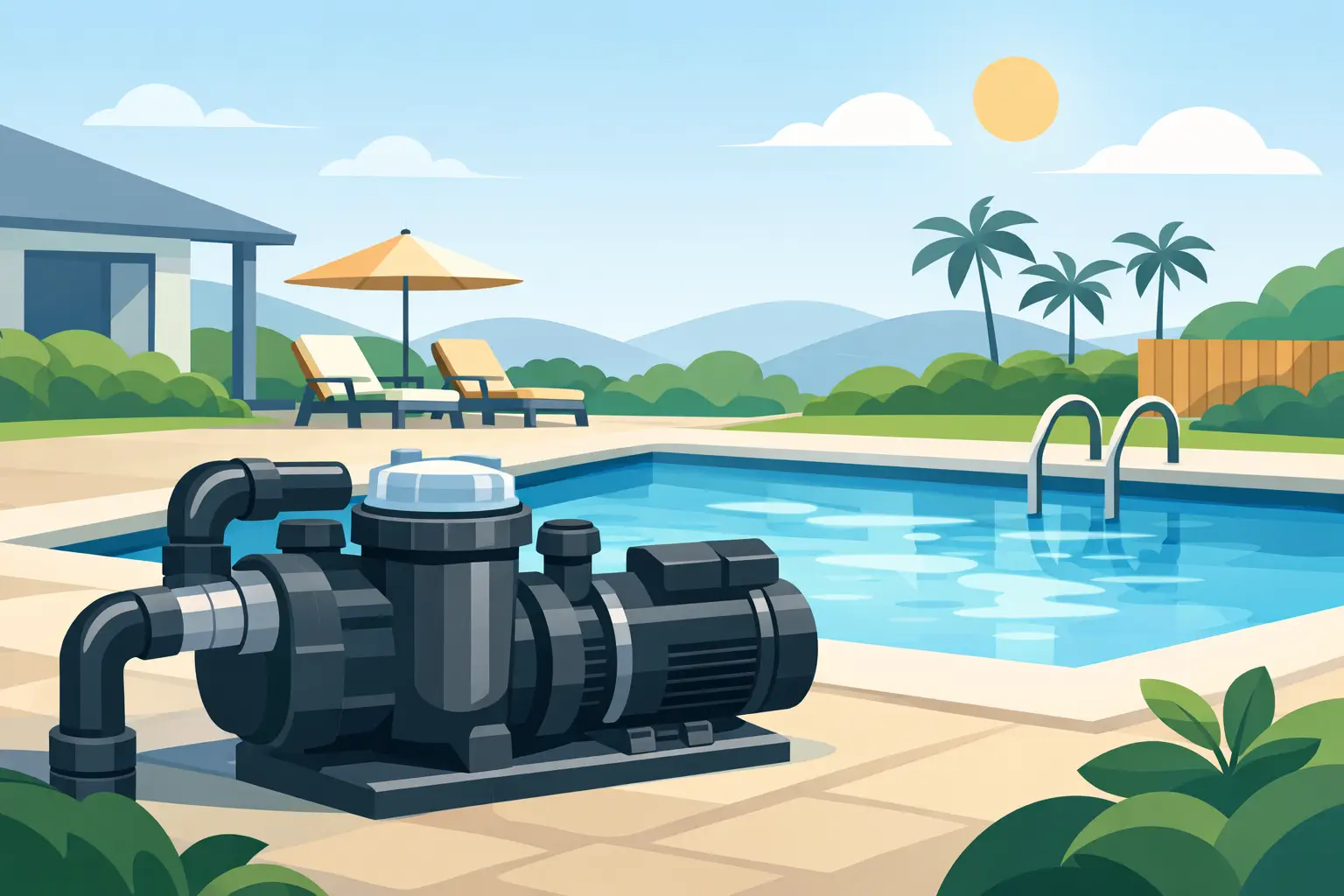
A pool pump is easy to ignore when it is working and impossible to ignore when it is not. It is the equipment that keeps water moving through the filter, supports circulation for sanitation, and helps preserve the clear, inviting look that makes a backyard pool worth having. This pool pump review focuses on what residential homeowners should actually compare before replacing a pump or selecting equipment for a new pool.
The best choice is rarely the pump with the biggest motor. It is the one sized for the pool, plumbing, filter, water features, and the way the backyard is used. A quieter, efficient pump that runs reliably in the background usually delivers more value than a high-powered unit that costs more to operate than the pool requires.
Pool Pump Review: The Case for Variable Speed
For most residential pools, a variable-speed pump is the strongest long-term choice. Unlike a single-speed pump that operates at one fixed, high setting, a variable-speed model can run slowly for everyday circulation and increase speed only when the pool needs it.
That distinction matters because a pool does not need maximum flow all day. Low-speed operation is often enough for routine filtration, especially when the pump runs for longer periods. When it is time to vacuum, run a spa, operate a water feature, or improve skimming after a busy weekend, the pump can be turned up temporarily.
The practical benefits are clear. Variable-speed pumps generally use less energy, produce less noise, and place less strain on plumbing and filtration equipment during normal operation. In many areas, they are also the standard expected for new equipment installations because of energy-efficiency requirements.
The trade-off is upfront cost. A variable-speed pump costs more than a basic single-speed replacement, and programming can feel unfamiliar at first. Still, homeowners who plan to keep their pool for several years often find that lower operating costs and a quieter backyard make the investment easier to justify.
Single-speed pumps can still make sense in limited situations, such as a simple above-ground pool or a short-term repair where the existing system has few demands. For a permanent in-ground pool, however, buying a single-speed pump simply because it is cheaper at checkout can create higher utility costs for years.
Start With Proper Pump Sizing
Pump horsepower is one of the most misunderstood details in pool equipment. More horsepower does not automatically mean cleaner water. An oversized pump can move water too quickly through the filter, increase electrical use, create louder operation, and add unnecessary pressure to the system.
Sizing begins with the pool’s volume, but it cannot end there. The right pump must also account for pipe diameter, the distance between the pool and equipment pad, elevation changes, filter type, heater or heat pump requirements, and any attached spa or water features. A pool with a raised spa, multiple sheer descents, and a long plumbing run has different needs than a compact rectangular pool with standard returns.
A qualified pool professional looks at the whole circulation system rather than selecting a pump based on a horsepower number alone. The goal is enough flow to filter the pool effectively and operate equipment as designed, without wasting energy or forcing water through the system at excessive speed.
Turnover Is Helpful, Not the Only Measure
Homeowners often hear that the water should turn over once every certain number of hours. Turnover is useful as a planning reference, but it should not become the only target. Water clarity and sanitation depend on circulation patterns, filtration, bather load, debris, chemistry, and daily run time.
A well-programmed variable-speed pump may run at a low speed for much of the day, maintaining steady filtration with far less energy than a pump that runs at full speed for a shorter schedule. The right schedule changes with the season, pool use, and local weather. Hot weather, storms, pollen, and frequent entertaining can all call for longer run times or temporary higher speeds.
Noise Changes How the Backyard Feels
A pool should feel like part of the outdoor living space, not like a utility room that happens to be outside. Pump noise deserves real attention, especially when equipment sits near a patio, bedroom wall, property line, or outdoor kitchen.
Variable-speed models are typically much quieter at lower operating speeds. This is one reason they fit well in lifestyle-focused backyards where people want to swim early, relax outside after dinner, or host guests without a constant mechanical hum nearby.
Installation quality matters here as much as the pump itself. Vibration can travel through an equipment pad, plumbing, and nearby structures. Loose fittings, restricted plumbing, a failing bearing, or poor mounting can make even a good pump sound worse than it should. If a previously quiet pump suddenly becomes loud, do not assume the fix is always a replacement. A service inspection may identify a repairable cause.
Compare Features You Will Actually Use
Pump control panels can range from simple manual buttons to programmable digital interfaces that coordinate with a larger pool automation system. More features are not always better. The useful question is whether the controls make routine ownership easier for your household.
A basic programmable pump can handle daily circulation schedules well. For many homeowners, that is enough. If the pool includes a spa, heater, lights, water features, or remote controls, integrated automation may be worth considering. It can coordinate equipment operation and prevent conflicts, such as a heater running without the necessary flow.
Pay attention to service access, too. A pump basket that is difficult to reach or a control panel mounted where it cannot be read becomes an annoyance over time. Equipment placement should allow room for maintenance and future repairs, not just fit into the smallest available corner.
The Filter and Pump Must Work Together
A pump is not a stand-alone purchase. It has to match the filter. A pump that pushes more water than the filter is designed to handle can raise pressure and reduce filtration performance. The result may be cloudy water, leaks, or wear that arrives sooner than expected.
This is especially relevant during a replacement. If the old pump failed, it may be tempting to install the closest current equivalent. But the existing system may have been incorrectly sized from the beginning, or changes such as a new heater, salt chlorine generator, or spa addition may have altered its needs.
Before selecting a replacement, review the filter’s flow rating, plumbing configuration, and any equipment that requires a minimum flow rate. The correct pump setting should satisfy the most demanding component without making high-speed operation the default.
Operating Cost Is Part of the Purchase Price
A lower-priced pump is not always less expensive to own. Electricity use can become the larger cost over the pump’s life, particularly in warm climates where pools run most of the year.
Variable-speed operation lowers energy use because reducing motor speed can reduce power demand dramatically. Exact savings depend on local electric rates, the pool’s circulation needs, and the schedule selected. The point is not to promise one savings number for every pool. It is to compare ownership cost, not just equipment cost.
Ask for a recommended schedule with the installation. A good schedule should include normal filtration speed, a higher speed for cleaning or water features, and settings for a spa if one is present. It should also be adjusted after the pool has been running, since actual performance matters more than a generic preset.
Signs It May Be Time to Replace the Pump
A pump does not have to stop completely before replacement becomes the sensible call. Repeated priming problems, water leaks around the seal, frequent breaker trips, persistent loudness, poor circulation, and rising energy use can all point to a pump nearing the end of its useful life.
Some repairs are worthwhile. A worn seal, lid gasket, basket, capacitor, or minor plumbing issue may be a straightforward fix. But when an older single-speed motor needs major work, replacement with an appropriately sized variable-speed model may offer better value and a better ownership experience.
Coastal Cove Pools approaches equipment decisions as part of the larger pool system, not as an isolated motor swap. That helps homeowners protect the equipment they already own while making choices that suit the way they use their backyard.
The right pump should disappear into the rhythm of pool ownership: quiet circulation, clear water, dependable filtration, and more time spent enjoying the space. Choose for fit, efficiency, and serviceability, and the equipment pad can stay where it belongs – out of the spotlight.