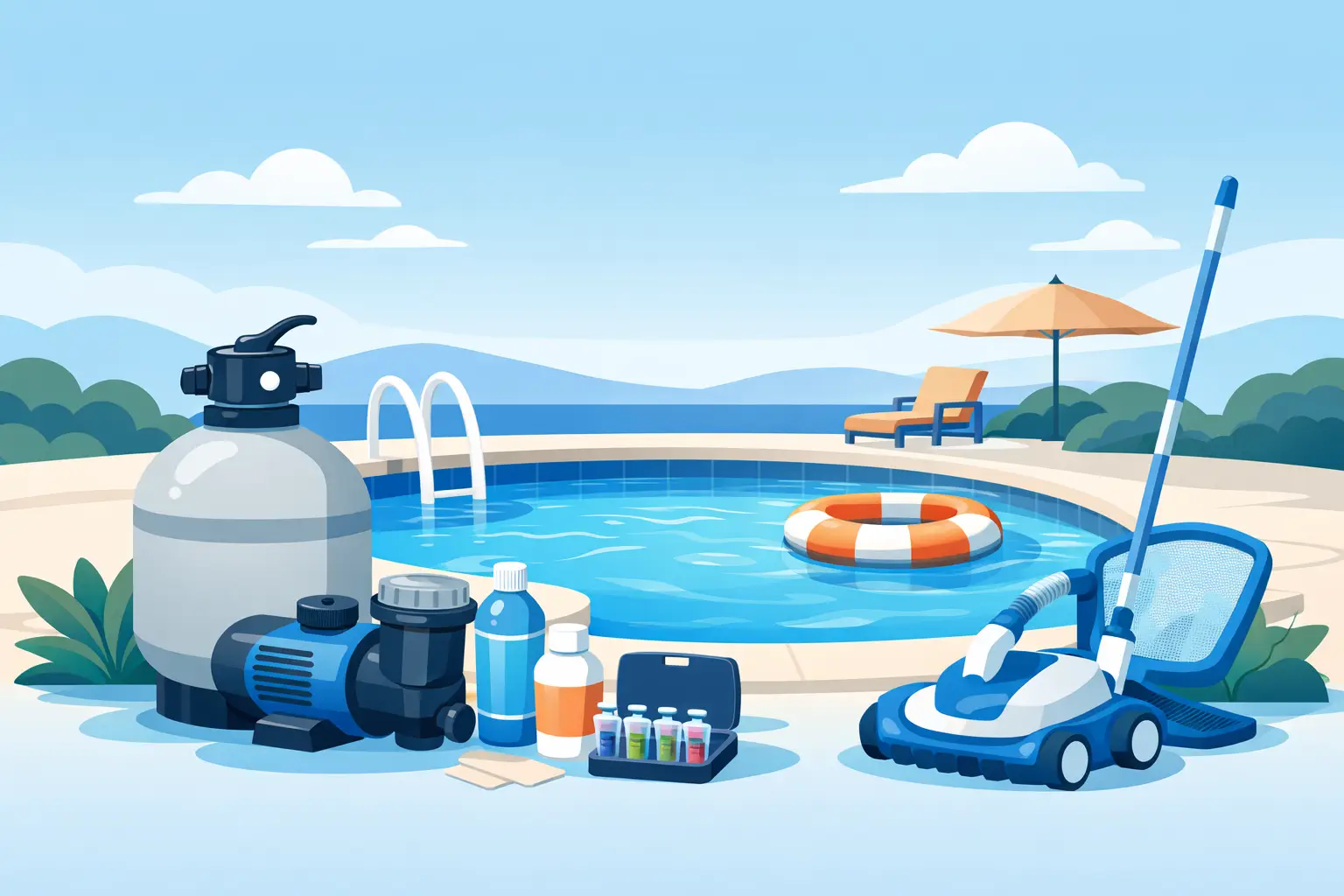
A pool can look simple from the patio. Clear water, a clean surface, maybe a few loungers nearby, and the whole backyard feels finished. Then you open the equipment pad and see pipes, valves, a motor, a filter tank, and controls that look more technical than expected. That is exactly why a guide to pool equipment basics for beginners matters. Once you know what each part does, pool ownership feels a lot less mysterious and a lot more manageable.
Most residential pool systems work the same way at a basic level. Water leaves the pool, passes through equipment that moves it, cleans it, and sometimes heats or sanitizes it, then returns to the pool. Every piece on the pad has a job. Some are essential. Others are upgrades that improve comfort, efficiency, or convenience. The key for a homeowner is not learning every technical detail. It is understanding the system well enough to spot issues early, make better service decisions, and avoid expensive neglect.
Guide to Pool Equipment Basics for Beginners: Start With Water Flow
If you only remember one thing, remember this: circulation is the foundation. Pool water has to move. Stagnant water collects debris, loses chemical balance faster, and creates conditions where algae and bacteria can thrive. The equipment system is built around keeping water in motion and treating it along the way.
Water usually enters through skimmers and main drains, then travels to the pump. From there it goes through the filter. Depending on the setup, it may also pass through a heater, chlorinator, or salt cell before returning through the pool jets. Some pools also route water through cleaners, water features, or spas using the same circulation network.
That flow pattern helps make the equipment pad less intimidating. You are looking at a loop, not a random collection of parts.
The Pump: The Heart of the System
The pump is the part that keeps water moving. If the pool had a heartbeat, this would be it. It pulls water from the pool and pushes it through the rest of the equipment.
For beginners, the main thing to know is that pump performance affects almost everything else. If the pump is weak, clogged, leaking air, or running at the wrong speed, the filter will not work as well, sanitation may suffer, and heating can become less effective. Even the look of the water can change quickly.
Many older pools have single-speed pumps, while newer systems often use variable-speed pumps. A variable-speed model costs more up front, but it is usually quieter, more efficient, and cheaper to run over time. That trade-off matters. If you plan to stay in the home and use the pool often, efficiency usually wins. If you are managing an older pool and trying to keep short-term costs down, replacement timing may depend on the condition of the current pump.
You should also know about the pump basket. This catches larger debris before it reaches the impeller. Leaves, twigs, and other debris can restrict flow if the basket gets packed. Checking it regularly is one of the simplest habits that helps the whole system.
The Filter: What Actually Removes Debris
A lot of new pool owners assume chlorine cleans everything. It does not. Chlorine sanitizes. The filter removes physical debris and fine particles from the water.
Most residential pools use one of three filter types: cartridge, sand, or diatomaceous earth, often called DE. Each works well when maintained properly, but each has a different upkeep style.
Cartridge filters are common because they are effective and straightforward. You remove the cartridges, hose them off, and replace them when they wear out. They do not require backwashing, which can save water. Sand filters are simple and durable, but they may not catch the finest particles as well as the other options. DE filters can provide excellent water clarity, but they require more hands-on maintenance and a bit more comfort with the system.
There is no perfect choice for every homeowner. It depends on how much maintenance you want to handle, how important maximum clarity is to you, and what kind of service routine you plan to maintain. What matters most is that the filter is sized correctly and cleaned when pressure rises beyond normal operating range.
How to Know the Filter Needs Attention
The pressure gauge tells part of the story. A rising reading usually means the filter is getting loaded with debris. Water returning to the pool may feel weaker, and surface skimming may seem less effective. If the pressure stays high and flow drops, cleaning should not wait.
Ignoring a dirty filter puts strain on the system. The pump has to work harder, circulation suffers, and the water can turn quickly.
Pool Sanitizers: Clean Water Is More Than Clear Water
A pool can look clear and still be poorly sanitized. That catches many beginners off guard. Sanitizers are what control bacteria, algae, and contaminants introduced by swimmers, weather, and organic debris.
Traditional chlorine systems remain the standard for a reason. They are effective, familiar, and widely supported. Some pools use tablets through a feeder, others use liquid chlorine, and some use saltwater systems. A saltwater pool is still a chlorine pool. The difference is that a salt cell generates chlorine from salt in the water rather than relying entirely on manually added forms.
For many homeowners, salt systems feel easier because the water can seem softer and daily chlorine management may be more consistent. But they are not maintenance-free. Salt cells need inspection and cleaning, water chemistry still matters, and replacement costs should be part of the long-term plan.
This is where beginner expectations need a reset. Pool care is rarely about one magic product. It is about balance. Sanitizer works best when pH, alkalinity, and circulation are all in a healthy range.
Heaters and Heat Pumps: Comfort Comes at a Cost
If you want a longer swim season, heating matters. The two most common options are gas heaters and electric heat pumps. Both can make the pool more comfortable, but they work differently.
Gas heaters warm water quickly. That makes them a strong fit for homeowners who want fast heat for weekends, parties, or occasional use. The trade-off is operating cost. They can be more expensive to run, especially with frequent use.
Heat pumps are usually more energy efficient over time, but they heat more slowly and depend on ambient air temperature. In warmer climates, they can be an excellent long-term solution. In cooler weather, performance may be less impressive.
If your goal is resort-style comfort with regular swimming, heating is often worth it. If you only swim during peak summer months, it may be more of a luxury than a necessity.
Automation and Controls: Convenience, Not Just Tech
Automation can manage pump speeds, heating schedules, lighting, spa settings, and sanitizer functions from a single panel or app. For busy homeowners, this can remove a lot of guesswork.
The value is not just convenience. Good automation can improve efficiency by running equipment on the right schedule and reducing unnecessary energy use. It also makes it easier to keep water moving consistently, which supports overall pool health.
That said, not every pool needs a highly advanced system. A simple timer may be enough for a basic setup. The right level of control depends on how complex the pool is and how hands-on you want to be.
Skimmers, Drains, Returns, and Valves
These parts get less attention, but they matter. Skimmers pull in floating debris. Main drains help draw water from the lower part of the pool. Return jets send filtered water back in. Valves control where water goes.
When something feels off, these simple components are often part of the issue. A clogged skimmer basket, a stuck valve, or poor return jet direction can affect circulation more than beginners expect. If one part of the pool always seems to collect debris or algae, the issue may be flow, not just chemistry.
A Practical Beginner View of Pool Equipment Basics
The best guide to pool equipment basics for beginners is not a parts catalog. It is a way to understand what normal looks like. You should know the usual pump sound, the normal filter pressure, how strong the return jets feel, and how often baskets need cleaning in your yard and climate.
That baseline helps you catch problems early. A whining pump motor, air bubbles in the pump lid, sudden pressure changes, weak circulation, or a heater that cycles off too soon are all signs worth attention. Small equipment issues have a way of becoming larger water-quality problems if they are ignored.
It also helps to think in terms of ownership, not just installation. The cheapest equipment is not always the least expensive over five years. Quiet operation, energy savings, service access, and proper sizing all matter. Homeowners often focus on what gets the pool running. The better question is what keeps it running well without constant frustration.
For many households, the smartest move is a system that is easy to maintain and well matched to how the pool will actually be used. A family that swims every week has different needs than a homeowner who wants a polished outdoor space with occasional entertaining. Both deserve equipment choices that fit real life.
If you are new to pool ownership, do not aim to know everything at once. Learn the flow of water, understand the role of the pump and filter, and pay attention to how sanitation and heating fit into the system. Once those basics click, the equipment pad starts to make sense. And when it makes sense, the pool becomes what it should be – less of a question mark and more of a place you want to spend time.