The strongest pool design trends 2026 are not about adding more features for the sake of it. They are about building a backyard that gets used on an ordinary Tuesday evening as easily as it does for a full house on Saturday. Homeowners are choosing pools that feel integrated with the home, easier to care for, and comfortable in every season.
That shift matters before the first design drawing is approved. A pool is a major investment in the property and in how a family spends time at home. The best designs start with daily habits, the layout of the lot, and the level of upkeep the homeowner is prepared to own.
Softer Pool Shapes Take Center Stage
For years, clean rectangles have dominated modern pool design. They are still a smart choice for lap swimming, automatic covers, narrow yards, and a crisp architectural look. But 2026 is bringing more movement into the water.
Softly curved walls, rounded tanning ledges, oval-inspired forms, and subtly irregular freeform layouts are appearing in new projects. The goal is not a throwback to heavily shaped pools with rock waterfalls. It is a quieter approach that makes the pool feel settled into the landscape rather than placed on top of it.
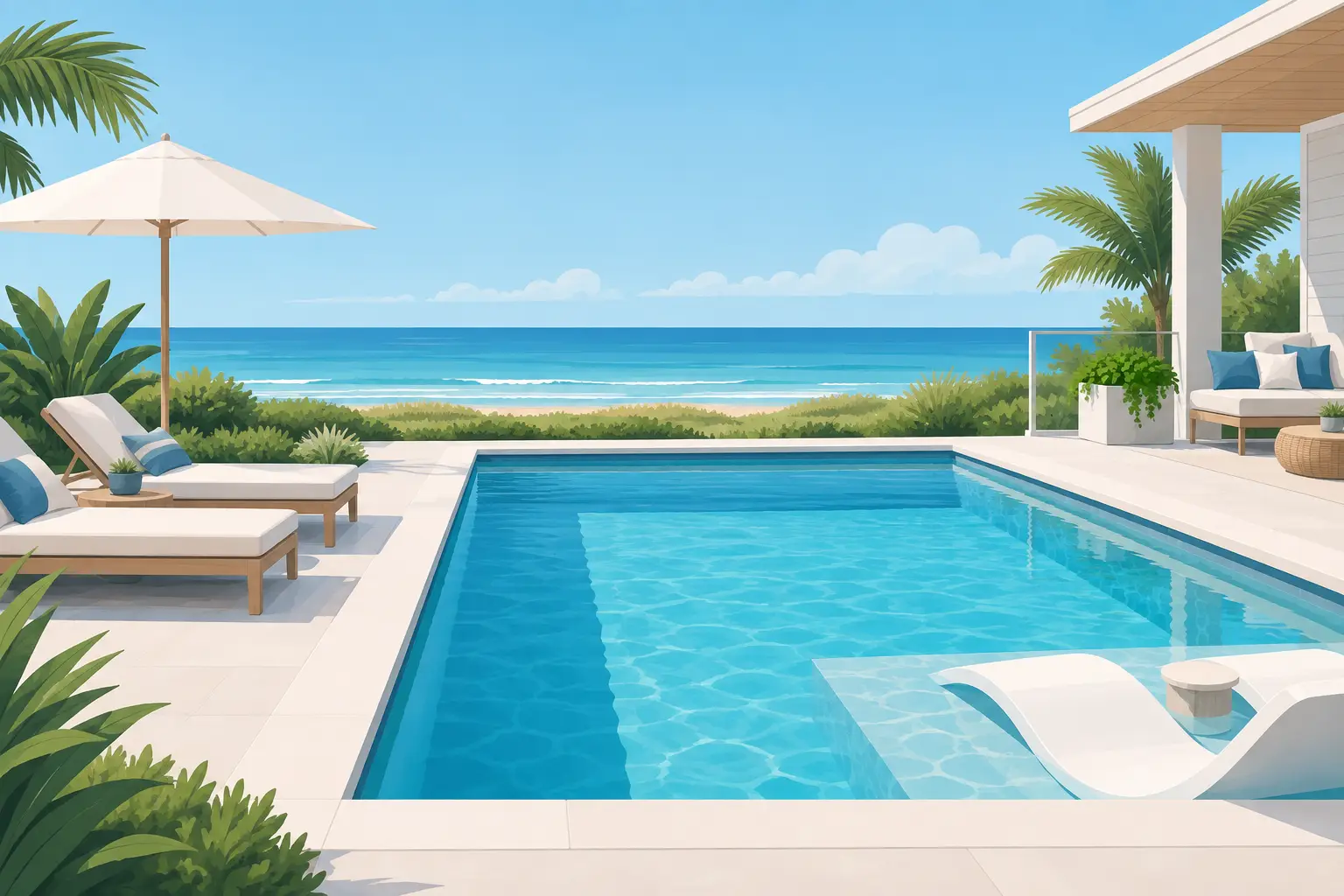
A softened rectangle can be especially effective. It keeps the practical advantages of straight waterlines and efficient cover options while removing some of the hard, formal feel. On coastal properties, curves also pair naturally with palms, ornamental grasses, pale stone, and relaxed planting plans.
The right shape still depends on the yard. A compact lot often benefits from a disciplined geometric design. A larger property with broad planting areas can support a more organic outline without losing visual order.
The Pool Becomes One Part of an Outdoor Room
The most useful pool design trend is the move away from treating the pool as a stand-alone destination. Homeowners want the entire backyard to work together: water, shade, dining, cooking, lounging, and circulation all need a purpose.
That often means creating distinct zones around the pool. A shallow ledge can serve young children by day and become a place for low-profile loungers during an adult gathering. A shaded dining area should sit close enough to the kitchen to be practical, while a fire feature or conversation area can create a reason to stay outside after swimming ends.
The key is leaving enough clear space to move comfortably. A deck crowded with furniture, planters, and features may look impressive in a rendering but feel cramped in real life. Good design accounts for wet feet, pool towels, serving trays, children running between spaces, and the view from inside the home.
For many homeowners, the best upgrade is not a larger pool. It is a better-planned patio and a more intentional connection between the back door and the water.
Tanning Ledges Get More Flexible
Tanning ledges are no longer an optional add-on reserved for large resort-style pools. They have become one of the most requested features because they support different kinds of use without taking up much extra space.
A properly sized ledge gives children a shallow place to play under supervision. It gives adults a cool place to sit without fully swimming. It can also create a clean visual transition from deck to deep water. In 2026, designers are using these ledges with more restraint, matching their proportions to the overall pool instead of making them oversized showpieces.
Consider how the ledge will be used before choosing its depth and size. A ledge for lounge chairs needs different dimensions than one intended mainly for small children. Umbrella sleeves can add welcome shade, but they require thoughtful placement so the umbrella does not block circulation or dominate views.
Natural Finishes, Clearer Water, Less Visual Noise
Color palettes are getting warmer and calmer. Bright blue tile and high-contrast surfaces are giving way to sand, limestone, soft gray, muted blue-green, and creamy white. These finishes can make the water look clean and inviting without appearing overly artificial.
Tile is also being used more selectively. Rather than covering every available surface with a bold pattern, many projects feature a refined waterline tile, a textured spa spillway, or a single material carried from the pool coping into the patio. This creates continuity without visual clutter.
Material selection should never be based on appearance alone. Light-colored decking can reduce heat underfoot in sunny climates, but some materials show stains more readily. Textured surfaces improve traction, yet aggressive textures can be uncomfortable on bare feet. Natural stone brings character, though sealing and maintenance requirements vary. These are decisions worth discussing before construction, not after the first season of use.
Smart Equipment That Reduces Friction
Smart pool technology is becoming less about novelty and more about control. Homeowners want to check water temperature, adjust lighting, run features, and manage schedules from a phone without standing at the equipment pad.
Variable-speed pumps remain a practical priority because they can run at lower speeds for routine circulation and higher speeds when a cleaner, heater, or water feature needs more flow. Automation can coordinate that equipment so the system works consistently without demanding constant attention.
Still, technology does not remove the need for water care. Sensors, timers, and automated sanitizing systems help maintain a routine, but chemistry must be tested and adjusted based on weather, bather load, debris, and local water conditions. A simple equipment plan that a homeowner understands is often better than an overloaded system with features nobody uses.
Lighting deserves the same practical approach. Warm, adjustable LED lighting can make the pool and patio more usable at night while avoiding the harsh glow associated with older installations. Keep it focused on safe paths, steps, seating areas, and the water itself.
Compact Spas and Year-Round Use
A spa continues to be one of the clearest ways to extend pool enjoyment beyond peak swimming months. In 2026, attached spas are trending toward cleaner integration with the pool instead of being treated as a separate raised object. A low-profile spillway, matching finishes, and a shared visual line can make the two feel like one composition.
The trade-off is cost and complexity. A spa needs heating capacity, controls, plumbing, and a realistic plan for energy use. It is worth considering when the household will genuinely use warm water in cooler weather, not simply because it looks good in a photo.
For some properties, a fire feature, patio heater, or covered lounge area may deliver more off-season value than a spa. The right answer depends on climate, budget, and how the family entertains.
Privacy and Shade Become Design Essentials
Privacy has become a central part of backyard planning, particularly in newer neighborhoods where homes sit close together. Layered landscaping, decorative screens, pergolas, hedging, and cabanas can define the pool setting while softening nearby views.
Shade is equally important. A beautiful pool deck that becomes too hot to use in the afternoon will not deliver the lifestyle homeowners expect. Fixed structures provide reliable cover, while umbrellas offer flexibility. Mature trees can be appealing but require careful placement to avoid excessive leaves, roots, and blocked sunlight.
A good privacy plan does more than hide a fence. It frames views, controls sun, and gives the backyard a sense of enclosure without making it feel closed in.
Build for the Way You Actually Live
The most lasting pool design trends 2026 have one thing in common: they are personal. A family with young children may prioritize a wide entry, shallow play space, durable decking, and sightlines from the house. Empty nesters may prefer a smaller pool with a spa, generous seating, and lower-maintenance landscaping. A frequent host may need more patio space than water surface.
Coastal Cove Pools approaches those choices as part of the full ownership experience, not just the construction phase. Equipment access, water care, drainage, shade, lighting, and materials all influence whether a new backyard remains easy to enjoy years later.
Before settling on a trend, picture the backyard after the guests have gone home. Picture the quiet swim, the family dinner outside, the weekend cleanup, and the first cool evening of fall. The design that supports those moments is the one worth building.