A pool can look perfectly blue in the morning and still be headed toward a problem. Fine debris, sunscreen residue, pollen, algae particles, and dust are often too small to notice until the water loses its sparkle. Pool filters handle that unseen work. They are one of the main reasons a backyard pool feels ready for an afternoon swim instead of another item on the weekend to-do list.
The right filter is not automatically the most expensive one. It is the system that fits the pool’s size, circulation equipment, surrounding environment, and the amount of hands-on maintenance a homeowner wants to handle. A properly selected and maintained filter protects water quality, supports efficient circulation, and helps the rest of the equipment work as intended.
What Pool Filters Actually Do
A pool filter removes suspended particles from water as it moves through the circulation system. The pump pulls water through skimmers and main drains, pushes it through the filter, and returns cleaner water to the pool through the return lines.
Filtration is only one part of clear water. Balanced chemistry and consistent circulation matter just as much. Still, when a filter is undersized, dirty, damaged, or poorly matched to the pool, chemical adjustments alone will not solve recurring cloudiness. The water may clear briefly, then turn dull again because the system cannot capture what is floating in it.
For homeowners, the goal is simple: clean, comfortable water with equipment that does not demand more attention than it should. The filter type determines how that routine looks.
The Three Main Types of Pool Filters
Sand filters
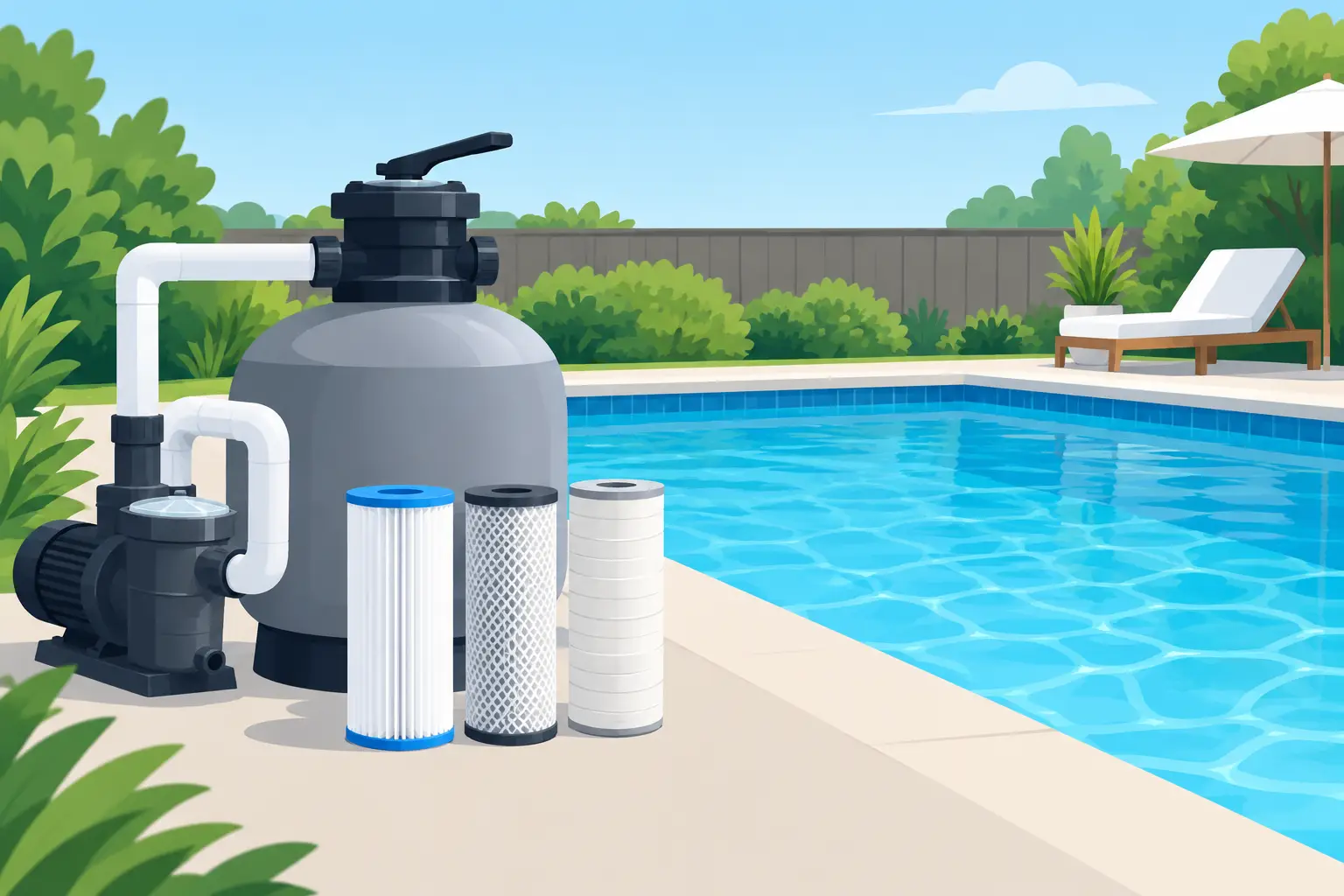
Sand filters use specially graded filter sand to trap debris as water passes through the tank. They are a familiar choice for residential pools because they are straightforward, durable, and relatively forgiving. When pressure rises, the filter is cleaned through a process called backwashing, which reverses water flow and sends trapped debris out through a waste line.
Sand filters generally capture larger particles than cartridge or DE filters. That does not mean they cannot keep a pool clean. For many households, especially those that prefer a simple maintenance routine, they deliver reliable results. They can also be a practical option for pools that collect heavier debris from nearby landscaping.
The trade-off is water use. Backwashing consumes water, and it may not be ideal in areas with water-use restrictions or for owners who want to conserve every gallon. Sand media also needs replacement over time, though not every season.
Cartridge filters
Cartridge filters use pleated fabric elements that catch fine particles while allowing water to move efficiently through the system. They are often favored for residential pools because they offer strong filtration without backwashing. Instead, the cartridges are removed and rinsed when the pressure rises or flow begins to drop.
For a polished backyard pool, cartridge filters are often a good fit. They can capture finer debris than standard sand filters, use less water during maintenance, and work well with variable-speed pumps. Their larger filtration area can also mean longer periods between cleanings when the system is sized correctly.
They do require a little more care at cleaning time. Cartridges need a thorough rinse, occasional deep cleaning, and eventual replacement. A cartridge that is cracked, flattened, coated with oils, or repeatedly cleaned past its useful life will limit circulation even if the water looks acceptable at first glance.
DE filters
Diatomaceous earth, commonly called DE, filters provide the finest filtration of the three common options. They use internal grids coated with a fine powder that captures very small particles. The result can be exceptionally clear, polished-looking water.
That clarity comes with more involved maintenance. DE filters must be backwashed or taken apart periodically, then recharged with the correct amount of DE material. The grids, seals, and internal assembly need careful inspection. Improper handling can create mess, waste material, or reduce filtration performance.
A DE filter can be an excellent choice for homeowners who value maximum water clarity and are comfortable with a more detailed service routine. It can also be well suited to pools exposed to fine dust, pollen, or frequent swimmer use. For a household that wants minimal equipment involvement, a large cartridge filter may be the better match.
Choosing the Right Filter Size
Filter type matters, but size matters just as much. An undersized filter becomes dirty quickly, raises operating pressure, restricts flow, and asks the pump to work harder. That can make heating less effective, reduce the performance of water features, and create uneven circulation in the pool.
The right size depends on the pool’s water volume, pump flow rate, plumbing layout, and desired turnover time. Turnover refers to how long it takes the circulation system to move the full volume of pool water through filtration. A qualified pool professional should look at the full equipment pad rather than selecting a filter by tank size alone.
Bigger is often beneficial within a properly designed system. A larger filter usually has more surface area, lower resistance, and longer intervals between cleaning. But oversizing without considering pump flow, plumbing, and other equipment is not a substitute for sound design. The components need to work together.
For a new build or major renovation, filter selection should happen early. Choosing equipment after the plumbing and pump are already set can limit better options later.
How to Tell When a Filter Needs Attention
Every filter has a normal operating pressure. Once the system is clean and running properly, note the pressure reading on the gauge. That baseline gives you a useful reference. When pressure rises roughly 20 to 25 percent above normal, it is typically time to clean or backwash the filter according to its manufacturer guidance.
Pressure alone does not tell the whole story. Watch for cloudy water that returns after treatment, weak return flow, debris lingering in the pool, a pump that sounds strained, or a heater that cycles off because of low flow. These can point to a dirty filter, but they can also indicate a clogged skimmer basket, blocked pump basket, closed valve, failing pressure gauge, or circulation issue elsewhere.
Do not clean a filter simply because it is on a fixed calendar schedule if the pressure and flow are normal. Over-cleaning can be counterproductive. Sand filters, for example, often filter slightly better after a light layer of debris develops in the media. Cartridge elements can wear prematurely when they are repeatedly handled or aggressively washed.
Cleaning Without Creating a Bigger Problem
Before servicing any filter, turn off the pump and release pressure according to the equipment instructions. Never open a pressurized filter tank. Inspect the pressure gauge, air relief assembly, clamps, O-rings, and tank body while the system is open. A worn seal or damaged clamp can become a safety issue, not just a maintenance inconvenience.
Cartridge filters should be rinsed between pleats with a moderate stream of water, working from top to bottom. Avoid high-pressure washing that tears the fabric. Sand and DE filters should be backwashed only as needed, with the multiport valve set correctly and the pump off before changing valve positions.
If the filter becomes dirty again unusually fast, do not assume the equipment is the problem. Heavy bather loads, storms, nearby construction, pollen seasons, poor water balance, early algae growth, and a pump run time that is too short can all overload a healthy filter.
Replacement Is Sometimes the Smarter Repair
Some filter issues are repairable. New cartridges, replacement grids, O-rings, gauges, clamps, and valves can restore performance without replacing the entire tank. But a cracked tank, failing internal assembly, chronic leaks, obsolete parts, or a filter that was too small from the start may justify a full upgrade.
Replacement is also a chance to reassess how the pool is used. A family that added a spa, heater, water feature, or salt system may have different circulation demands than it did years ago. Likewise, a home surrounded by mature trees may benefit from more filtration capacity than it needed when the pool was installed.
Coastal Cove Pools approaches equipment decisions as part of the complete backyard experience. Clear water and dependable circulation are not glamorous details, but they are what make a pool feel effortless when friends arrive, the kids want to swim, or the evening calls for a quiet float.
A filter should not be something you think about every day. Establish a clean-pressure baseline, keep the pump basket clear, follow the maintenance needs of your specific system, and address changes in water clarity before they become a larger cleanup. That steady attention leaves more room for the part of pool ownership that matters most: enjoying the backyard you invested in.