
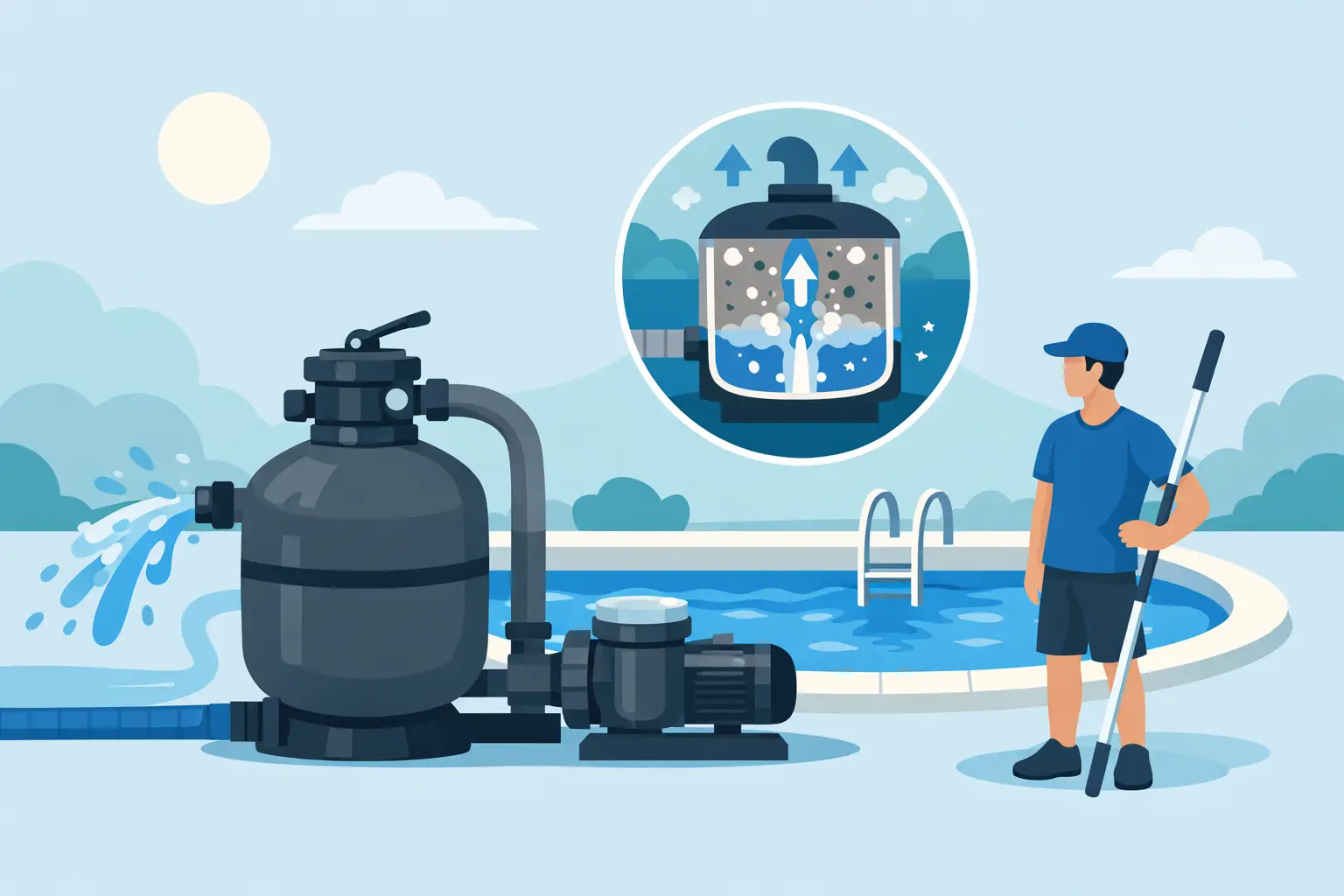
A pool can look clear on the surface and still be asking for attention at the equipment pad. If you are wondering how often should you backwash a pool filter, the short answer is this: not on a fixed weekly schedule, but when the filter pressure rises 8 to 10 psi above its clean starting pressure. That one number matters more than guesswork, and it can save you from cloudy water, poor circulation, and unnecessary wear on your system.
Backwashing is simple in theory. You reverse the water flow through the filter so trapped dirt and debris flush out to waste. But the right timing depends on your filter type, how much your pool gets used, the season, and what has recently blown, washed, or fallen into the water. For most homeowners, the goal is not to backwash more. It is to backwash at the right time.
How often should you backwash a pool filter in real life?
In real backyard conditions, many pools need backwashing anywhere from once every few weeks to once every couple of months. A heavily used pool in summer, especially one near trees or exposed to wind, may need it more often. A lightly used pool with balanced water and low debris may go much longer.
That is why calendar-based advice can steer homeowners wrong. Backwashing every Saturday may sound responsible, but it often is not. If your pressure has not climbed, the filter may still be working exactly as it should. In fact, a slightly dirty sand or DE filter often traps fine particles better than a freshly cleaned one.
The better approach is to know your clean pressure reading. After a full cleaning or fresh backwash, note the pressure on the gauge. That becomes your baseline. When the gauge rises 8 to 10 psi above that number, it is usually time to backwash.
Why pressure matters more than the calendar
A pool filter removes suspended debris by catching it as water passes through. As debris builds up, water has a harder time moving through the media. That resistance shows up on the pressure gauge.
Higher pressure does not always mean something is broken. Often it means the filter is doing its job. But once pressure climbs too far, circulation drops. Water moves more slowly, skimmers pull less effectively, and the whole system becomes less efficient. That can lead to dull water, algae risk, and extra strain on the pump.
This is where homeowners often get caught between two mistakes. One is waiting too long, letting the filter clog to the point that circulation suffers. The other is backwashing too often, which wastes water and can reduce filtration performance.
Filter type changes the answer
Not every pool filter is meant to be backwashed, so the first question is what kind of system you have.
Sand filters
Sand filters are the most common type associated with backwashing. They are durable, straightforward, and well suited for many residential pools. With a sand filter, backwashing is routine maintenance, but again, not something you should do just because a week has passed.
If your clean pressure is 12 psi, for example, you would usually backwash when it reaches around 20 to 22 psi. During peak swim season, that might happen more often. After a storm or a heavy pollen stretch, it can happen faster than usual.
DE filters
DE filters also use backwashing, though they require a little more care. After backwashing a DE filter, you typically need to recharge it with fresh DE powder so it can continue filtering properly. These filters catch very fine particles, which is great for water clarity, but they can also load up faster under dirty conditions.
With DE systems, pressure rise still matters. The same general 8 to 10 psi rule applies unless the manufacturer says otherwise.
Cartridge filters
Cartridge filters are different. They are not backwashed. Instead, you remove the cartridge and hose it off, then periodically deep-clean or replace it. So if you are searching how often should you backwash a pool filter, make sure your pool actually has a backwash-capable filter before adjusting valves or settings.
What makes a pool need backwashing sooner?
Pool use is a big one. More swimmers mean more sunscreen, body oils, hair, and fine debris entering the water. A family pool that gets used every afternoon in July will usually load the filter much faster than the same pool in April.
Weather matters too. Wind can carry dust, leaves, and pollen straight into the pool. Heavy rain can wash contaminants into the water and upset water balance at the same time. If your pool sits near trees, expect the filter to work harder during shedding seasons.
Water chemistry also affects the schedule. Poorly balanced water can create conditions where particles clump, algae begins to form, or scale starts building inside the system. In those cases, the filter is dealing with more than just routine dirt.
Vacuuming to waste versus vacuuming through the filter can also change timing. If you vacuum a lot of settled debris through the filter, pressure may rise quickly afterward.
Signs it may be time to backwash
The pressure gauge is the clearest sign, but it is not the only one. You may also notice weaker return flow, sluggish skimming, or water that starts looking less polished even though chemistry is close to normal.
If you have recently had a storm, a pool party, or an algae cleanup, it makes sense to check the gauge sooner rather than later. These events can load the filter quickly.
Still, be careful not to diagnose every water issue as a backwashing issue. Cloudy water can come from poor chlorine levels, pH imbalance, circulation problems, or early algae growth. Backwashing helps when the filter is dirty. It does not fix every pool problem by itself.
How to backwash without overdoing it
When it is time, follow your filter manufacturer instructions. In general, you shut off the pump, set the multiport valve to backwash, restart the pump, and run it until the sight glass or discharge water looks clear. Then shut the pump off again, move the valve to rinse if your system has that setting, run briefly, and return it to filter.
The key is not to let the process drag on. You are clearing the filter, not draining half the pool. Over-backwashing wastes water, can dilute your chemical balance, and in some areas adds unnecessary cost.
Afterward, note the pressure again. If it does not drop much, you may be dealing with a worn pressure gauge, channeling in the sand, a dirty DE grid assembly, or another issue that needs more than a standard backwash.
Common mistakes homeowners make
One common mistake is treating backwashing like a routine weekly chore no matter what the gauge says. That can work against you. Sand and DE filters often perform best with a light layer of captured debris in place.
Another mistake is ignoring the pressure gauge entirely. If the gauge is broken, replace it. It is one of the cheapest and most useful parts on the pad.
A third mistake is forgetting what clean pressure actually is. Without that baseline, the 8 to 10 psi rule does not help much. Take a photo after a clean cycle if that makes it easier to remember.
There is also the issue of timing after cleanup. If you have cleared algae or vacuumed a dirty pool, you may need to backwash more than once in a short period. That is not over-maintenance. That is the filter responding to an unusually heavy load.
A practical rhythm for most homeowners
If you want a simple rule to live by, use this one: check the pressure gauge weekly, especially in swim season, and backwash only when the reading climbs 8 to 10 psi over clean pressure. That gives you a schedule without forcing maintenance your pool does not need.
For many residential pools, that means less frequent backwashing than expected. For others, especially pools with heavy use or challenging surroundings, it may mean more attention during certain months and less during others. That is normal.
A well-kept pool is not about doing the most. It is about doing the right thing at the right time. For homeowners who want clear water, reliable equipment, and a backyard that always feels ready, that small shift in approach makes a noticeable difference.
If your pool water has been harder to manage lately, start with the gauge, trust the equipment, and let the filter tell you when it is time.