
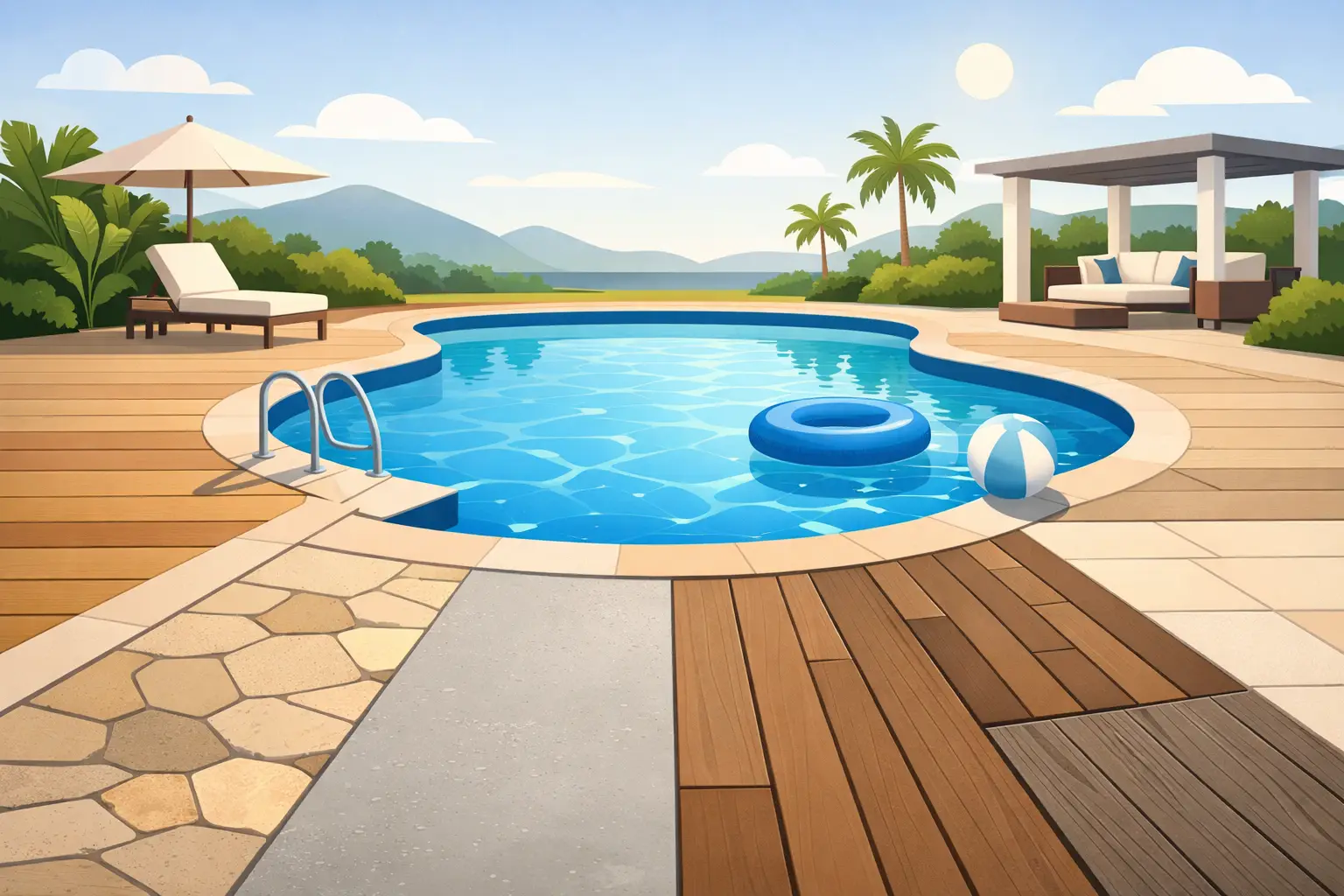
A pool deck can make a beautiful pool feel finished, or make a great pool harder to enjoy. Hot surfaces, slippery spots, constant staining, and mismatched style usually come down to one decision made early – the decking. When homeowners ask about the best pool decking materials, the real answer is not one material. It is the material that fits your climate, budget, design, and tolerance for upkeep.
Around a residential pool, decking does more than frame the water. It affects how the space feels under bare feet, how safe it is when kids run from the deep end to the patio, and how much maintenance the backyard asks from you every season. The right choice should look good on day one and still make sense years later.
What makes a pool deck material worth choosing
Pool decking has a harder job than a standard patio. It deals with water, sun, chemical splash, furniture movement, and frequent foot traffic. A material might look excellent in a showroom and still be a poor fit once it is exposed to full summer heat and regular pool use.
The first thing to consider is surface temperature. Some materials hold heat fast and become uncomfortable by midday, especially in southern climates and full-sun yards. Slip resistance matters just as much. A polished finish may look clean, but around a pool, texture matters more than shine.
Durability is the next filter. Pool decks expand, contract, get wet, dry out, and carry the visual weight of the whole backyard. Cracking, fading, and staining all show up quickly when the material was chosen for appearance alone. Maintenance also deserves an honest look. Some homeowners do not mind resealing or occasional refinishing. Others want to rinse the deck off and move on with the weekend.
Best pool decking materials for residential backyards
Concrete
Concrete remains one of the most common choices because it is versatile, cost-effective, and easy to customize. It can be broom-finished for traction, colored to warm up the look, or stamped to mimic stone. For many homeowners, concrete is the baseline option because it balances function and price better than most alternatives.
Its biggest advantage is flexibility. It works with modern pools, traditional layouts, and larger deck footprints where natural stone may push the budget too far. It is also one of the easier surfaces to shape around curves, tanning ledges, and integrated seating areas.
The trade-off is comfort and appearance over time. Standard concrete can crack, especially if soil shifts or installation is rushed. It can also get hot in direct sun. A lighter color helps, and the finish matters. Around a pool, plain gray slab concrete often feels more basic than the setting deserves.
Travertine
Travertine is one of the strongest premium options for pool owners who want a resort-style finish. It has a natural, upscale look without feeling flashy, and it stays cooler underfoot than many other hardscape materials. That one feature alone puts it high on many lists of the best pool decking materials.
It also performs well around water. The textured surface offers grip, and the natural variation gives the deck visual depth without making it look busy. Travertine works especially well when the goal is to create a backyard that feels relaxed, polished, and built to last.
The downside is cost. Material and installation are usually more expensive than concrete or pavers. Like any natural stone, quality varies, so sourcing matters. Homeowners should also expect sealing and occasional care to keep the surface looking clean and consistent.
Pavers
Pavers are popular because they combine design flexibility with practical repair advantages. If one section settles or a few pieces get damaged, you can often repair the area without tearing out the whole deck. That is a real benefit over poured surfaces.
From a style standpoint, pavers offer range. They can lean clean and contemporary or more classic and textured, depending on color, shape, and pattern. They also create a tailored look that suits homes where the pool deck needs to connect visually with a driveway, patio, or outdoor kitchen.
Still, not all pavers perform the same way around pools. Some darker colors run hot, and some smoother finishes can become slick. Joint maintenance also matters. Weed growth, shifting, or sand loss can affect the look over time if the installation is not done well.
Kool deck and other acrylic coatings
Acrylic-coated deck systems are often chosen to improve existing concrete rather than replace it. These coatings are designed to reduce surface temperature and add texture, making the deck more comfortable and slip-resistant. For homeowners with structurally sound concrete that just looks dated or feels too hot, this can be a smart middle ground.
The appeal is simple. You get a cooler walking surface and a more finished appearance without a full rebuild. This makes it especially useful in warm climates where barefoot comfort is a daily issue.
The limitation is that coatings are only as good as the slab beneath them. If the concrete has major cracking or movement, a coating will not solve the root problem. It is a surface upgrade, not a structural reset.
Natural stone
Beyond travertine, other natural stones such as limestone, bluestone, and flagstone can create a striking pool deck. The right stone gives the backyard a custom feel that manufactured materials rarely match. If the home has strong architectural character, natural stone can tie the whole exterior together.
This option is best for homeowners who care deeply about appearance and are comfortable paying for craftsmanship. Every stone has its own behavior. Some stay cooler than others. Some are more porous. Some require more sealing and more careful cleaning around pool chemicals.
That is why stone is less about choosing a category and more about choosing the specific stone well. The look may be timeless, but the wrong selection can mean higher upkeep than expected.
Wood
Wood decking has a warmth that hardscape materials cannot fully copy. Around certain pools, especially raised pools or designs that blend with landscaping, wood can make the space feel softer and more relaxed. It is visually inviting and naturally suited to outdoor living.
But wood asks for commitment. Moisture, sun, splashing, and foot traffic can wear it down quickly if it is not maintained. Boards may fade, splinter, warp, or become slippery with mildew. Even high-quality wood requires regular sealing or staining to hold up well near a pool.
For some homeowners, that maintenance is worth it because they love the look. For others, wood becomes the material they liked in photos more than in ownership.
Composite decking
Composite decking is often considered by homeowners who want the look of wood with less upkeep. It resists rot better than traditional lumber and does not require the same level of staining or refinishing. In the right setting, it can be a clean, practical choice.
It works especially well on elevated deck designs or pool areas where a framed deck structure makes more sense than a hardscape installation. Composite has improved in appearance over the years, and some lines offer better traction and cooler surface technology than older products.
Even so, not every composite product is ideal for poolside use. Some boards still get hot, and lower-grade products may feel less premium up close. The lesson here is simple: composite is a category, not a guarantee.
How to narrow down the best pool decking materials for your yard
The fastest way to make a smart choice is to rank your priorities before comparing finishes. If barefoot comfort is non-negotiable, that may move travertine or a coated concrete system to the top. If budget and flexibility matter most, concrete or pavers usually deserve a closer look. If you are building a premium outdoor space meant for entertaining, natural stone may justify the investment.
Climate should have a vote too. A deck that performs well in a milder region may feel harsh in full coastal or southern sun. Shade coverage, deck orientation, and how often the pool gets used all change the equation.
It also helps to think beyond installation day. The best-looking sample is not always the best ownership experience. Ask what the deck will feel like in July, how it handles splash-out and sunscreen, and what routine care will look like after year three. Those answers usually matter more than the brochure.
The choice that usually holds up best
For many residential projects, the strongest overall choices come down to concrete, pavers, and travertine. Concrete makes sense when value and customization lead the decision. Pavers are a smart fit when repair flexibility and tailored design matter. Travertine stands out when comfort, appearance, and a premium finish are the goal.
That does not make the other materials wrong. It just means the best answer is usually the one that matches the way you plan to live around the pool. A quiet family backyard, a high-traffic entertainment space, and a design-forward custom home do not need the same deck.
Coastal Cove Pools approaches decking the same way it approaches pool ownership as a whole – with a focus on long-term use, clean design, and choices that still feel right after the first season. The best pool deck is not the one with the most hype. It is the one you stop thinking about because it simply works, every time you step outside.