
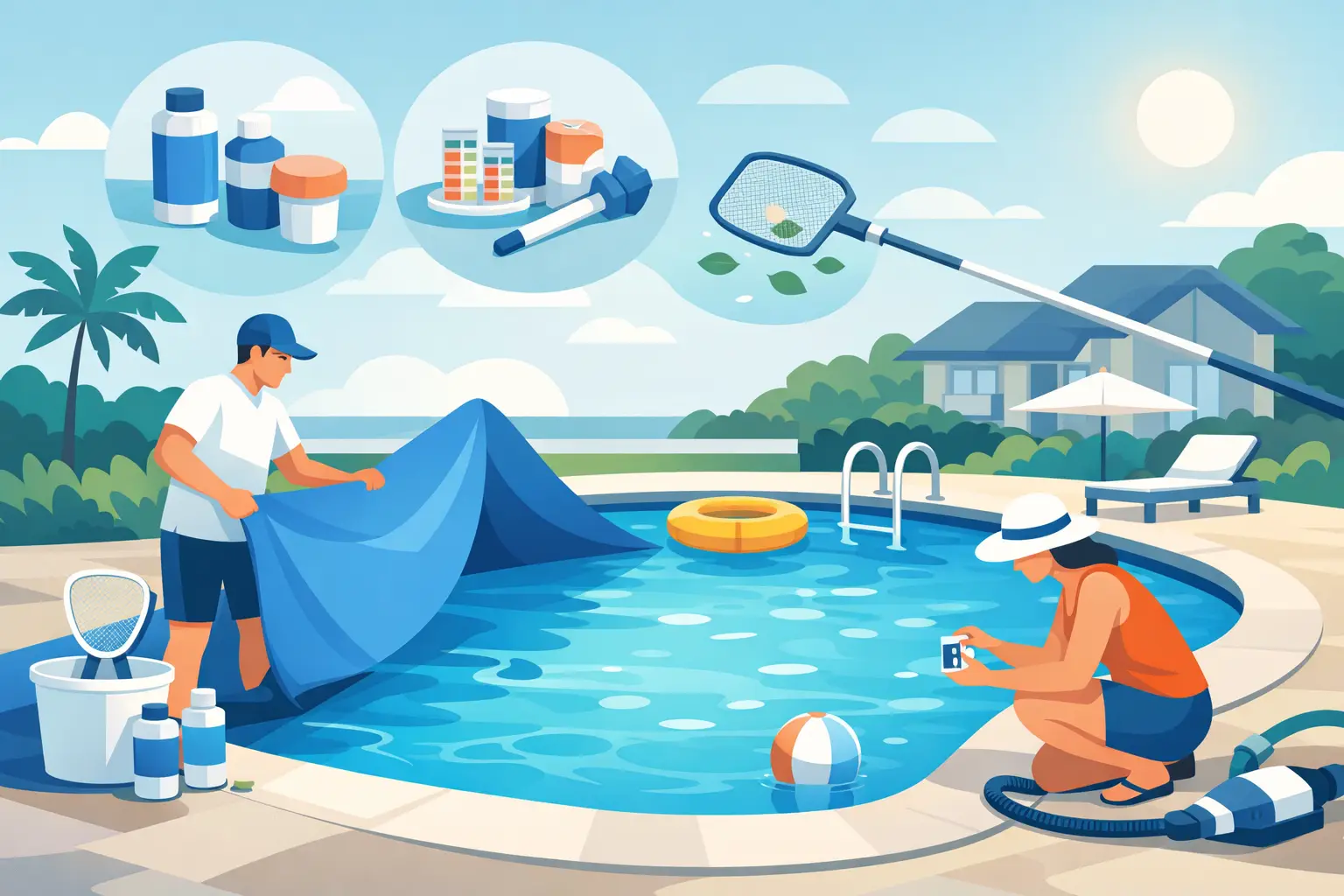
The first warm weekend has a way of making every pool cover feel heavier than it did in October. If you are figuring out how to open pool for summer without turning the job into a full-day headache, the difference usually comes down to order. Start clean, stay methodical, and do not rush the water chemistry.
A good opening is not just about getting the water clear enough to swim. It sets the tone for the whole season. When you open a pool carefully, you reduce strain on the equipment, avoid preventable algae problems, and make it easier to keep the water balanced once summer is in full swing.
How to open pool for summer without shortcuts
Pool opening tends to go wrong in predictable ways. People remove the cover before clearing debris, start the pump before the water level is right, or add chemicals before testing what is already in the water. That is how a simple opening turns into cloudy water, clogged baskets, or a filter that has to work harder than it should.
The better approach is steady and simple. Before you uncover anything, walk the pool area and check for obvious issues. Look for loose fittings, signs of winter damage, cracked unions, chewed wires, broken anchors, or deck drainage problems. If something looks off, address it before the system is running.
Then remove leaves and standing water from the cover. This part matters more than people think. If debris slides into the pool as the cover comes off, you start the season by adding organics back into the water. Use a cover pump if needed, clear the surface, and fold the cover away cleanly so it can dry before storage.
Once the cover is off, reinstall anything removed for winter. That usually includes ladders, handrails, return fittings, skimmer baskets, directional eyeballs, drain plugs, and pressure gauges if they were stored separately. Keep the pieces organized as you go. The opening moves faster when you are not looking for one missing plug while the sun is already heating the water.
Start with water level and circulation
Before powering on the equipment, check the pool water level. In most cases, it should sit around the midpoint of the skimmer opening. Too low, and the pump can pull air. Too high, and skimming becomes less effective. Either condition creates avoidable problems.
Next, inspect the pump, filter, heater, and valves. Replace drain plugs, lubricate o-rings if needed, and make sure valves are in the correct operating positions. Prime the pump according to the manufacturer instructions. If you have a multiport valve on the filter, verify the setting before startup. That detail is easy to miss and expensive to ignore.
When the system turns on, do not walk away immediately. Watch for leaks at the pump lid, filter clamp, unions, and heater connections. Listen for unusual sounds. A pump that is whining, surging, or struggling to catch prime is telling you something. Early attention can prevent a much bigger repair later.
If the water is very dirty from winter, circulation may need extra time before chemistry adjustments have their full effect. You cannot force a clear pool with chemicals alone if debris is still sitting in the water or the filter is not doing its job.
Clean first, then test
This is where patience pays off. Skim out leaves, vacuum settled debris, and brush the walls and floor before getting too aggressive with treatment. Opening water often looks worse once you start brushing, but that is normal. You are lifting fine material into suspension so the filter can catch it.
Backwash or clean the filter if the pressure rises quickly. Pools that open with a lot of fine debris can load up a filter fast. If you ignore that pressure increase, circulation suffers, and so does everything else.
After the water is circulating, test the chemistry. A reliable liquid test kit or professional water test is better than guessing. Strips can be useful for quick checks, but opening day is not the time to rely on rough estimates if the water is off.
Focus on the basics first: pH, total alkalinity, calcium hardness, and sanitizer level. If your pool uses stabilizer, test cyanuric acid too. The order matters because water balance affects how well chlorine performs and how comfortable the pool feels once it is ready for use.
What to adjust when opening the pool
There is no single chemical recipe that fits every opening. It depends on how the pool was closed, what got into the water over winter, the surface type, and your sanitizer system. Still, a few principles hold up across most residential pools.
If the sanitizer is low or absent, bring it up promptly. If the water is cloudy or showing visible algae, a stronger chlorine treatment may be needed. That does not always mean dumping in more product than necessary. It means testing, dosing appropriately, and allowing circulation and filtration time to work.
pH often drifts during the off-season. If it is too high, chlorine becomes less effective. If it is too low, the water can become aggressive to surfaces and equipment. Alkalinity helps stabilize pH, so adjust with that relationship in mind. Calcium hardness matters too, especially in plaster pools, where low hardness can create surface issues over time.
Shock is common at opening, but it is not magic. If the pool is relatively clean and winterized well, a moderate startup treatment may be enough. If the water is green, stained, or full of organics, you may need a more involved cleanup. That is where many homeowners waste time and money by treating symptoms instead of the actual balance problem.
Equipment checks that should not wait
Opening the pool is also the best time to catch equipment trouble before peak season. A system can technically run and still have issues that hurt performance or shorten its lifespan.
Check the filter condition and age. Sand, cartridge, and DE filters each have their own maintenance cycle, and an opening is a natural point to evaluate whether the media or element is still doing its job. Inspect the pump basket and impeller flow. Poor suction may point to blockage, air leaks, or worn seals.
If you have a heater, verify ignition and proper flow before you actually need it for a weekend gathering. Heaters often reveal problems at startup after sitting idle. The same goes for automation systems, timers, salt systems, lights, and water features. It is better to find a fault on a quiet Tuesday than on the first hot Saturday in May.
For homeowners with a saltwater pool, opening includes one extra layer of patience. Water temperature affects cell performance, and salt should not be adjusted blindly without testing the current level. If the cell is scaled or dirty, clean it only as recommended. Over-cleaning can shorten its life.
How long it takes to get swim-ready
One of the most common questions around how to open pool for summer is how quickly the water should be ready. The honest answer is that it depends.
A pool that was closed clean, covered well, and protected through winter may be swim-ready within a day or two after balancing and filtration. A pool with algae, heavy debris, or neglected equipment can take several days longer. Weather plays a role too. Warm sun helps, but pollen, spring storms, and tree debris can slow progress.
This is why early opening usually works in your favor. If you wait until the weather is already hot and the water has been warming under a dirty cover, you are more likely to open to algae growth. Opening a little earlier, while the water is still cooler, often makes startup easier and less expensive.
When a DIY opening makes sense and when it does not
Some homeowners are comfortable handling a seasonal opening on their own, especially if the pool is straightforward and the closing was done properly. If your water is mostly clear, the equipment is familiar, and you are confident with testing and startup, a DIY opening can be manageable.
But there are moments when bringing in a pool specialist makes more sense. If the water is green, the equipment is not priming, there are leaks around the pad, or you are dealing with a heater or automation issue, guesswork gets expensive. The same is true if you have a larger pool, attached spa, salt system, or a history of recurring chemistry problems.
Coastal Cove Pools works with homeowners who want the season to start cleanly, without the usual trial and error. For many pool owners, that is the real value – fewer false starts, less wasted product, and a backyard that feels ready when the weather finally turns.
A cleaner opening makes the whole season easier
The opening day mindset should be simple: do not chase speed at the expense of sequence. Remove debris before uncovering, restore water level before startup, confirm circulation before adjusting chemistry, and test before adding products. That order prevents most of the trouble people run into each spring.
A pool should feel like part of the home, not a project that keeps rewriting your weekend. Open it carefully, give the water time to respond, and let the season start the way it should – clear, calm, and ready for long afternoons outside.