
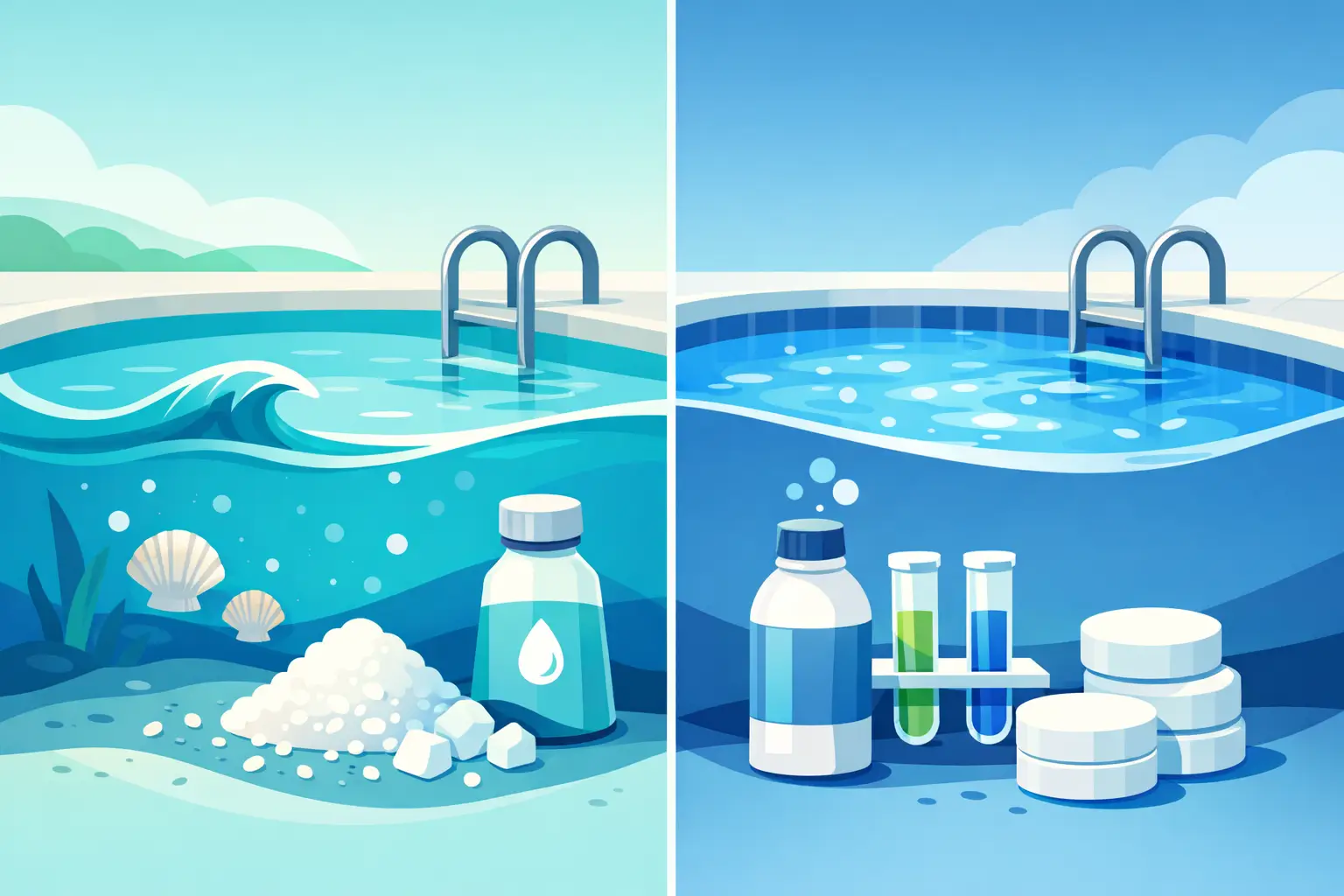
A pool can look perfect on Saturday and start drifting by Tuesday. That is usually when homeowners stop asking which system sounds better and start asking which one is easier to live with. When comparing saltwater vs chlorine pool maintenance, the real question is not which pool is cleaner. Both can keep water clear, safe, and comfortable. The difference is how that result is achieved, how often you need to intervene, and what kind of upkeep fits your home and routine.
For most residential owners, this decision comes down to lifestyle as much as chemistry. If you want a backyard pool that feels polished, predictable, and easy to enjoy, the maintenance side matters more than the sales pitch. Saltwater systems and traditional chlorine pools both require testing, balancing, cleaning, and equipment checks. Neither one is maintenance-free. They simply ask for attention in different ways.
Saltwater vs chlorine pool maintenance at a glance
A traditional chlorine pool uses liquid chlorine, tablets, or granular chlorine added directly to the water. A saltwater pool still uses chlorine too, but it creates that chlorine through a salt chlorine generator. That is the point many homeowners miss. Saltwater is not chlorine-free. It is a different delivery system.
That difference changes your weekly habits. In a chlorine pool, you are more directly responsible for adding sanitizer and keeping levels steady. In a saltwater pool, the generator does much of that work for you, which can mean a more stable day-to-day experience. But the convenience comes with equipment that needs inspection, cleaning, and eventual replacement.
If you are deciding between the two, think in terms of control versus automation. Chlorine pools are simpler in equipment. Saltwater pools often feel easier in daily care.
What weekly care actually looks like
No matter which system you choose, the basics remain the same. You still need to skim debris, brush surfaces, clean the filter, check circulation, and test water chemistry. pH, alkalinity, calcium hardness, and sanitizer levels all matter. Sun, rain, heat, swimmers, and organic debris can throw either system off balance.
With a chlorine pool, weekly care often includes testing chlorine levels and manually adding chemicals to maintain the proper range. During heavy use or hot weather, that may mean more frequent adjustments. If sanitizer drops too low, algae and cloudy water can develop quickly.
With a saltwater pool, chlorine is generated continuously while the system runs. That often gives homeowners a more even sanitizer level instead of the ups and downs that can happen with manual dosing. Even so, saltwater pools still need regular testing. The generator cannot fix poor pH balance, high calcium, or circulation problems on its own.
In practical terms, saltwater maintenance can feel lighter week to week, while chlorine maintenance can feel more hands-on but more straightforward.
The water feel homeowners notice
This is where saltwater pools get a lot of attention. Many swimmers describe the water as softer and less harsh on the eyes and skin. There is often less of the strong chemical smell people associate with public pools. That can be a real quality-of-life difference, especially for families who swim often.
A well-maintained chlorine pool can also feel great. Harsh water is usually a sign of imbalance, not simply the presence of chlorine. Still, saltwater systems tend to provide a more consistent swimmer experience when they are properly managed.
For homeowners focused on comfort and a resort-style backyard feel, that consistency can carry weight.
Cost is not just the startup price
Saltwater systems usually cost more upfront. You need the salt chlorine generator, and depending on the setup, you may need compatible equipment or some installation adjustments. Traditional chlorine pools are generally less expensive to start and easier to understand from day one.
Long term, the math gets more nuanced. Salt itself is relatively affordable, and a saltwater system can reduce how much packaged chlorine you buy over time. But the generator cell will wear out and eventually need replacement. That is a real ownership cost and one that should be part of the conversation early.
Chlorine pools usually have lower equipment costs but more ongoing chemical purchases. If you are using tablets, liquid chlorine, shock treatments, and stabilizers throughout the season, those recurring costs add up. Depending on local climate, pool usage, and water conditions, one system may be clearly cheaper for one household and not for another.
That is why broad claims about one being “less expensive” are often incomplete. The right answer depends on how long you plan to own the pool, how often it is used, and whether you prefer paying more upfront for convenience or spreading costs out over time.
Equipment and repair trade-offs
This is one of the clearest differences in saltwater vs chlorine pool maintenance. Saltwater pools rely on a generator cell and control system. That means more specialized equipment, more parts that can fail, and more attention to scale buildup on the cell plates. If calcium levels run high, the cell can become less efficient and need cleaning.
Salt can also be tough on certain materials if the pool and surrounding equipment were not selected or installed with that environment in mind. Metal fixtures, some natural stone, coping details, and nearby hardware may need extra consideration. This does not mean saltwater is a bad choice. It means system design and material compatibility matter.
Chlorine pools are mechanically simpler. There is no salt cell to clean or replace. That simplicity can make troubleshooting easier. For some homeowners, especially those who want fewer moving parts, that is a major advantage.
On the other hand, simplicity in equipment often means more direct involvement in chemical management. So the trade-off is clear – fewer specialized components versus more regular manual dosing.
Seasonal changes and heavy pool use
Summer entertaining, kids out of school, backyard parties, and heat waves all push a pool harder. This is where each system responds a little differently.
In a chlorine pool, heavy use can burn through sanitizer quickly. You may need to test more often, add chlorine more frequently, and shock the pool after storms or large swim days. If you stay on top of it, results are reliable. If you miss a few days, water quality can slide.
Saltwater pools can handle regular demand well because they generate chlorine steadily, but they are not unlimited. If the system output is too low, run times are too short, or the pool gets hit with a big bather load or storm debris, the water can still need supplemental treatment. Homeowners sometimes expect the generator to manage everything automatically. It will not.
The better way to think about it is this: saltwater can reduce routine effort, but chlorine still needs to be produced in the right amount for the conditions.
Which system is easier for homeowners?
If by easier you mean less frequent manual chlorine handling, saltwater usually wins. Many homeowners like not storing as many chlorine products and not having to add sanitizer as often. The system does more of the daily work in the background.
If by easier you mean simpler equipment, lower startup cost, and a familiar maintenance model, traditional chlorine often wins. There is less technology involved, and many service providers and homeowners are comfortable with the process.
The best fit often comes down to how you use your pool. If your goal is a refined, low-fuss swimming experience and you are comfortable with the added equipment cost, saltwater may be the better match. If you want a proven, direct approach with fewer specialized components, chlorine may make more sense.
When a service-led approach matters most
Pool care gets easier when the system matches the homeowner, the environment, and the equipment package from the start. That is especially true in regions where heat, rain, debris, or long swim seasons put extra stress on water balance. A saltwater system that is poorly sized can frustrate owners. A chlorine pool with inconsistent care can become just as frustrating.
This is where a local pool specialist can save money and headaches over time. Coastal Cove Pools sees this with residential owners who want the pool to feel like part of the home, not a second job. The right system is the one you will maintain properly, with equipment that suits the pool and a care plan that fits real life.
There is no prestige winner here. Clear water, stable chemistry, and reliable equipment matter more than labels. A well-maintained chlorine pool is better than a neglected saltwater pool every time.
If you are deciding between the two, focus less on which sounds more premium and more on how you want to own the pool month after month. The best pool system is the one that keeps your backyard ready when you are ready to use it.