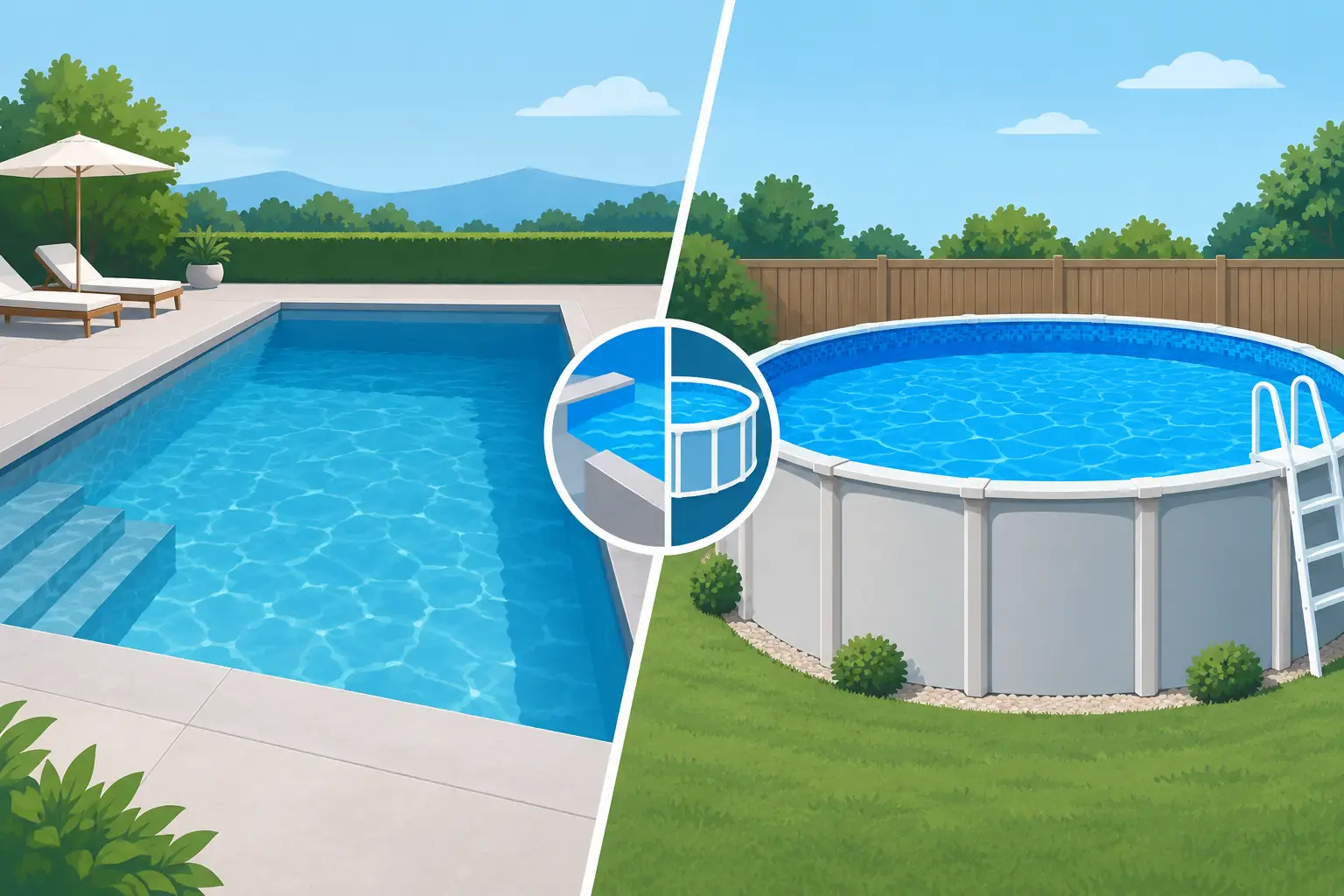
A pool decision becomes real the moment you picture where the lounge chairs will sit, how the kids will enter the water, and what the view from the kitchen window will look like. When comparing concrete versus vinyl pools, the better choice is rarely just about the initial price. It is about how you want to use the space, how much design freedom matters, and what level of ownership feels right for your home.
A pool should feel like it belongs in the backyard, not like it was dropped into it. The right material helps determine that result.
Concrete Versus Vinyl Pools at a Glance
Concrete and vinyl liner pools can both create a comfortable, beautiful place to swim, gather, and cool off. They differ most in construction, finish, shape options, maintenance needs, and the way costs unfold over time.
A concrete pool is built as a permanent, custom structure. Its shell is formed on site, then finished with plaster, pebble, tile, or another interior surface. It can be shaped around patios, mature trees, retaining walls, outdoor kitchens, and nearly any design concept the property can support.
A vinyl pool uses a manufactured liner that sits over a prepared structure. The liner creates the waterproof surface and gives the pool its soft, smooth feel. Vinyl pools are commonly built from established shapes and dimensions, though many layouts can still be tailored with steps, benches, depth changes, and surrounding features.
Neither is automatically better. A homeowner planning a tightly designed outdoor living space may see clear value in concrete. A family that wants a polished, enjoyable pool with a more controlled upfront investment may find vinyl to be the practical fit.
Choose Concrete for Custom Design and Permanence
Concrete is the material for homeowners who do not want the backyard to be limited by a standard pool shape. Freeform curves, long lap lanes, tanning ledges, deep ends, integrated spas, perimeter-overflow details, and custom entry points are all possible with a concrete build.
This flexibility matters on properties with unusual grades, narrow side yards, angled lot lines, or a specific architectural style. A rectangular pool can look sharp behind a modern home, while a softer freeform layout can create a relaxed resort feel. With concrete, the pool can be designed around the home instead of asking the home to accommodate the pool.
Concrete also has a sense of permanence that appeals to many buyers. The structure is substantial, and the finish can be selected to complement decking, stonework, and landscaping. Tile at the waterline or on steps can add another level of detail. For homeowners building a long-term outdoor environment, that freedom is a major advantage.
The trade-off is cost and construction time. Concrete pools typically require a larger initial investment, and custom work takes time. Site access, excavation conditions, drainage, permits, and finish selections all affect the final schedule and budget. A good design process identifies these variables before construction is underway.
Concrete Pool Maintenance Expectations
Concrete surfaces are durable, but they are not maintenance-free. Their texture can be more porous than vinyl, which means water balance and brushing deserve consistent attention. Proper circulation, sanitation, and chemistry help protect the finish and keep the water comfortable.
Over the life of the pool, the interior finish will eventually need renewal. The timing depends on the finish type, local water conditions, usage, and maintenance habits. This is not a reason to avoid concrete. It is simply part of owning a custom, finished surface.
Homeowners who value complete design control and plan to care for the pool as a lasting home feature often find that trade-off worthwhile.
Choose Vinyl for Comfort and Budget Control
Vinyl liner pools have earned their place for a simple reason: they offer a comfortable swimming experience with a lower entry cost than many custom concrete projects. The liner is smooth underfoot, gentle for swimmers, and available in colors and patterns that can give the water a crisp blue, deep blue, or more natural tone.
For families, the soft surface can be especially appealing. There is no rough plaster texture, and the pool can still include practical features such as wide steps, shallow lounging areas, handrails, benches, and safety covers.
Vinyl pools generally move from concept to completion more quickly than concrete pools, although site conditions and permitting still matter. Their construction can be a smart path for homeowners who want to prioritize the essentials: a well-built pool, efficient equipment, attractive decking, and room in the budget for landscaping or an outdoor seating area.
The main limitation is shape flexibility. Vinyl pools can look refined and intentional, but they work best when the design stays within liner-friendly dimensions and forms. If your vision requires a highly irregular outline, dramatic radius changes, or a fully integrated raised spa, concrete may offer more freedom.
Vinyl Liner Replacement Is Part of Ownership
A vinyl liner does not last forever. Eventually, it will need replacement due to age, fading, tears, staining, or ordinary wear. The replacement cycle varies based on sun exposure, water chemistry, use, and care, but it should be included in long-term planning.
That future expense is not necessarily a drawback. It is a predictable ownership item, much like refinishing a concrete interior. The difference is that a liner replacement is a more visible, defined event, while concrete maintenance may involve periodic surface care and a later full finish renewal.
Vinyl also requires careful water chemistry. Improper chemistry can shorten liner life, and sharp objects or rough treatment can damage the surface. With thoughtful use and regular care, a vinyl pool can provide years of easygoing backyard enjoyment.
Cost Means More Than the Installation Quote
The initial budget matters, but it should not be the only number guiding the decision. A lower-priced pool that does not meet your design goals can feel like a compromise every time you step outside. On the other hand, paying for a fully custom concrete pool may not make sense if a clean, well-planned vinyl design gives your family everything it needs.
Concrete usually costs more upfront because it involves more site-built labor, more finish options, and more customization. Vinyl often offers a more accessible starting point, which can preserve budget for fencing, lighting, furniture, a pergola, or upgraded equipment.
Long-term costs deserve an honest look as well. Concrete owners should plan for finish maintenance and eventual resurfacing. Vinyl owners should plan for liner replacement. Both pool types need circulation equipment, filtration, sanitation, water testing, seasonal service where applicable, and occasional repairs.
The best comparison is not concrete versus vinyl in isolation. It is the complete outdoor project, the expected years of ownership, and the experience you want when the work is done.
Appearance, Resale, and Daily Use
A well-designed pool can strengthen the appeal of a home, especially in markets where outdoor living is part of the lifestyle. Still, a pool is not a guaranteed dollar-for-dollar return on investment. Its value is often personal: more weekends at home, more reasons to invite friends over, and a backyard that feels finished.
Concrete can carry a stronger custom look, particularly when paired with high-end tile, coping, and architectural hardscaping. It may be the better fit for a home where the pool is meant to be the centerpiece of a larger outdoor renovation.
Vinyl can look equally inviting when the proportions are right and the surrounding space is thoughtfully finished. Clean decking, good lighting, coordinated landscaping, and quality equipment do more for the final impression than material alone.
Think about daily use, too. If the pool will be a gathering place for young children, a smooth vinyl liner may be appealing. If you want a deep diving area, an unusual shape, or a built-in spa that matches the pool precisely, concrete may make more sense. If you expect to stay in the home for decades, either option can be a good investment when it matches your habits and maintenance comfort level.
Questions Worth Answering Before You Build
Before choosing a pool type, get clear on the role the pool will play. Is it primarily for family swimming, entertaining, exercise, visual impact, or all four? How much of the yard should remain open? Are you planning an outdoor kitchen, fire feature, shade structure, or major landscape work at the same time?
Also consider the property itself. Soil, drainage, access for equipment, setbacks, utility locations, and elevation changes can influence both cost and design. A professional site review is more useful than choosing a pool style from photos alone.
Finally, decide where you are flexible. Some homeowners will adjust shape to keep the budget focused on a great patio and outdoor living area. Others will gladly invest more for a pool with custom lines and details. Knowing that priority early prevents costly changes later.
Coastal Cove Pools approaches the decision as part of the full backyard experience, not a one-size-fits-all product choice. The goal is a pool that suits the property, supports the way you live, and remains enjoyable long after the first swim.
The right pool is the one that makes you want to step outside more often. Start with the life you want in the backyard, then choose the material that gives that vision room to last.