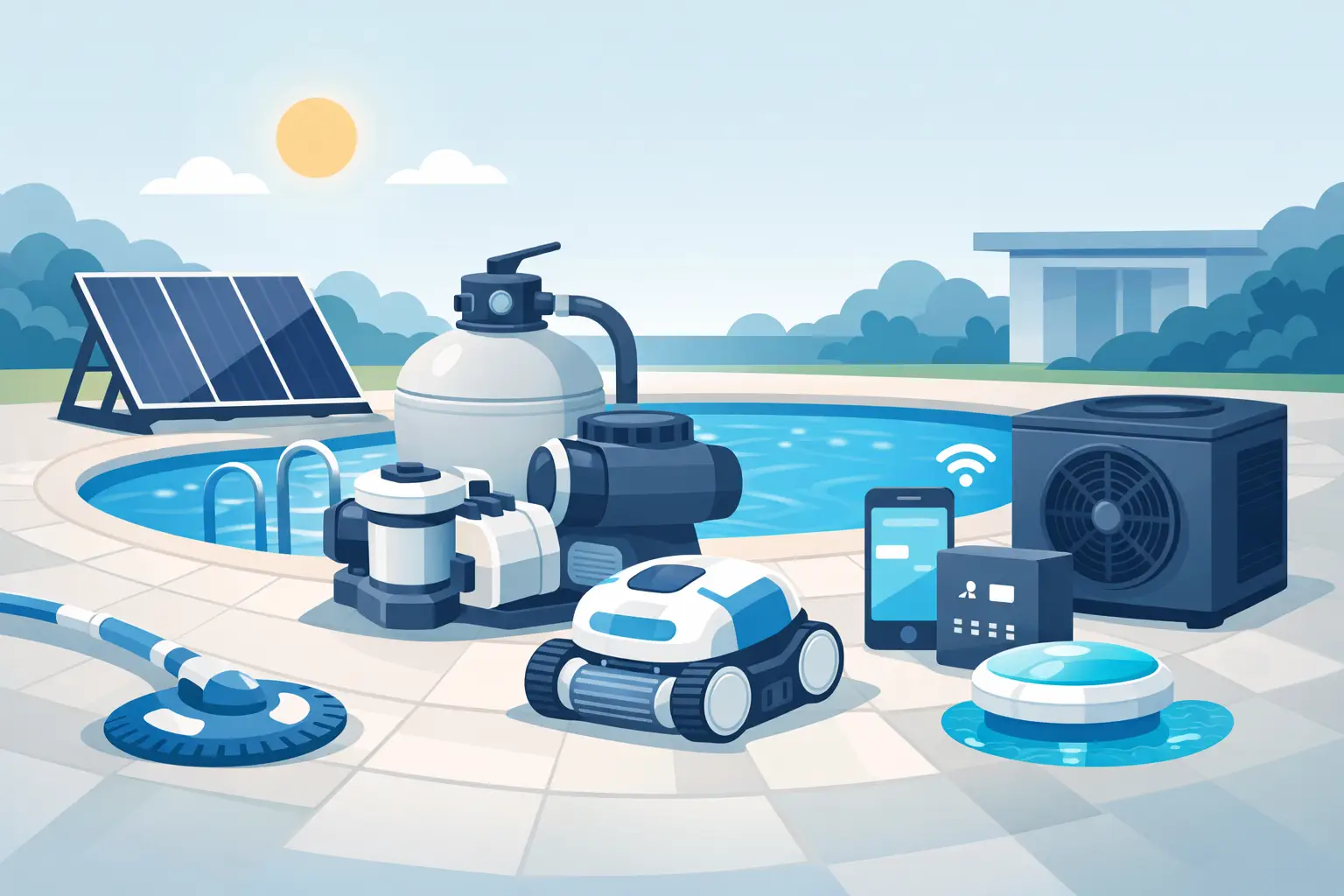
A noisy pump, uneven heating, weak circulation, or water that never quite stays clear usually means the pool is asking for more than routine service. A smart guide to pool equipment upgrades starts there – not with gadgets, but with the parts of your system that affect comfort, cost, and reliability every day.
For most homeowners, upgrades are less about adding features and more about getting the pool to feel easier to own. Lower power bills matter. Quieter operation matters. So does knowing the system will keep up in peak summer, before guests arrive, or after a storm pushes extra debris into the water. The right upgrade can make the pool look the same while changing the ownership experience completely.
Why a guide to pool equipment upgrades matters
Pool equipment tends to age quietly. It still runs, just less efficiently. The pump gets louder. The filter needs more attention. The heater takes longer to do its job. By the time a component fully fails, homeowners are often making rushed decisions under pressure.
That is why timing matters. Upgrading before failure gives you room to choose equipment based on performance, energy use, and long-term value instead of replacing whatever broke with the fastest available option. It also gives you a chance to look at the system as a whole. A new heater paired with poor circulation, for example, will not deliver the result most homeowners expect.
The best approach is to think in terms of system balance. Pumps, filters, sanitizing equipment, automation, and heating all affect one another. When one part improves, another may need adjustment to keep the pool running properly.
Start with the equipment you already have
Before choosing any upgrade, look at the current setup honestly. Age matters, but condition matters more. A ten-year-old pump that has been properly maintained may still be serviceable, while a newer salt cell in a poorly sized system may already be underperforming.
A few questions usually reveal where the real opportunity is. Is the pool expensive to run? Does it require more hands-on attention than it should? Are there recurring water quality issues? Does the system struggle during heavy use or hot weather? If the answer is yes to any of these, the upgrade path becomes easier to identify.
It also helps to separate need from want. A color-changing light may be appealing, but if the pump is outdated and the filter is undersized, the better investment is usually mechanical first, cosmetic second. That order tends to protect both your budget and your day-to-day experience.
The pump is often the first place to upgrade
If your pool still uses an older single-speed pump, this is usually the clearest place to start. Variable-speed pumps have changed the economics of pool ownership. They use less electricity, run more quietly, and allow better control over circulation.
That matters because pools do not need full-power operation all day. A variable-speed pump can run longer at lower speeds, which often improves filtration while reducing energy use. Homeowners notice the difference on utility bills, but they also notice it in the atmosphere around the yard. A quieter equipment pad changes the feel of the space.
There are trade-offs. The upfront cost is higher than a like-for-like replacement, and programming matters. A poorly configured variable-speed pump can still underperform. But in many residential pools, this upgrade pays off in comfort and efficiency faster than almost any other.
Filtration upgrades can reduce work, not just improve water
A filter upgrade is easy to overlook because it is not visible when you are enjoying the pool. Still, it plays a major role in water clarity and maintenance demands.
If your water is often dull, if cleaning cycles feel too frequent, or if the system struggles after heavy swimmer use, the filter may be undersized or simply dated. Moving to a larger cartridge filter is a common improvement for homeowners who want strong filtration with less routine backwashing and less water waste. In other cases, a sand or DE filter may still be the right fit, depending on maintenance preferences and how the pool is used.
This is one of those areas where it depends. Some homeowners want the sharpest possible water clarity and do not mind more involved upkeep. Others want a cleaner, simpler ownership routine with fewer service interruptions. The best filter is not always the most aggressive one. It is the one that fits the way you actually use the pool.
Smarter sanitizing equipment can steady water quality
If keeping chemistry balanced feels unpredictable, sanitizing equipment may deserve attention. Salt chlorine generators are a common upgrade because they create a more consistent sanitizing routine and can make water feel gentler to swim in. They also reduce the constant need to handle and store traditional chlorine products.
That does not mean salt systems are maintenance-free. Cells need inspection and eventual replacement, and the system must be properly sized. An undersized salt system on a heavily used pool often leads to frustration. The same goes for pools with high bather load, frequent parties, or intense sun exposure.
Other options, such as UV or ozone add-ons, can support water quality but should not be treated as complete replacements for proper sanitation. They work best as part of a broader system, not as a shortcut. Good circulation, filtration, and balanced chemistry still carry the load.
Pool heaters and heat pumps change how often you actually swim
A pool that is technically open but too cold to enjoy is not delivering much value. Heating upgrades are often less about luxury than use. If you want earlier spring swims, more comfortable evenings, or a longer season for family time and entertaining, heating equipment can make a major difference.
Gas heaters offer fast heat and are often the better choice when you want quick temperature recovery before a weekend or event. Heat pumps are generally more energy-efficient over time in the right climate, especially when the goal is maintaining steady water temperature rather than heating rapidly from cold.
The trade-off is straightforward. Gas usually wins on speed. Heat pumps often win on operating cost in moderate conditions. Your region, usage pattern, and expectations matter more than blanket claims. A homeowner who swims often and wants predictable comfort may justify a different setup than someone who heats the pool only occasionally.
Automation is one of the most practical upgrades available
Automation can sound optional until you live with it. Being able to control pump schedules, heating, lighting, and sanitation settings from a phone or wall panel removes a lot of friction from pool ownership.
This is especially useful for busy households and second-home owners. Instead of walking out to the pad and manually adjusting equipment, you can monitor and manage the system with far less guesswork. It also helps service planning because run times and settings stay more consistent.
Not every pool needs a top-tier automation package. In some cases, a simpler controller is enough. But if your current setup feels pieced together, or if you are already upgrading major components, adding automation at the same time often makes sense. It creates a cleaner system instead of layering modern equipment onto outdated controls.
Do not ignore the smaller upgrades
Some of the best improvements are not the biggest line items. LED pool lighting reduces energy use and improves the look of the water at night. A better cleaner can cut down on manual vacuuming. An autofill can protect water level consistency. A new timer or control panel can solve operational issues that seem bigger than they are.
These upgrades are rarely as urgent as a pump or filter replacement, but they can improve the ownership experience in ways homeowners feel immediately. If your goal is a more polished backyard environment, these details matter.
Upgrade in phases if needed
Not every pool needs a full equipment overhaul. In fact, phased upgrades are often the smarter route. Replacing the pump this season, then updating filtration or automation later, can spread cost while still improving performance.
The key is planning the sequence. Some upgrades work better together, and some older systems limit what can be added later without extra labor. If the long-term goal is a quieter, more efficient, easier-to-manage pool, the equipment choices should support that path from the start.
This is where an experienced local pool partner helps. Coastal Cove Pools works with homeowners who want equipment decisions to feel clear, not technical for the sake of being technical. The best result is not more equipment. It is a pool that feels better to own.
When it is worth upgrading instead of repairing
Repair still has its place. If a component is relatively new, the issue is isolated, and the rest of the system is in good shape, repair can be the right call. But repeated repairs on aging equipment usually cost more in the long run, especially when efficiency and reliability are already slipping.
A good rule is to look past the immediate invoice. If a repair buys only limited time, if replacement parts are becoming harder to source, or if the equipment is driving up utility and maintenance costs, an upgrade is usually the better investment. That is especially true for core equipment that runs daily.
The right pool equipment upgrade should make ownership quieter, simpler, and more enjoyable. If a change only adds complexity or solves the wrong problem, it is probably not the right one. Start with how you want the pool to feel, then build the system that supports that.