
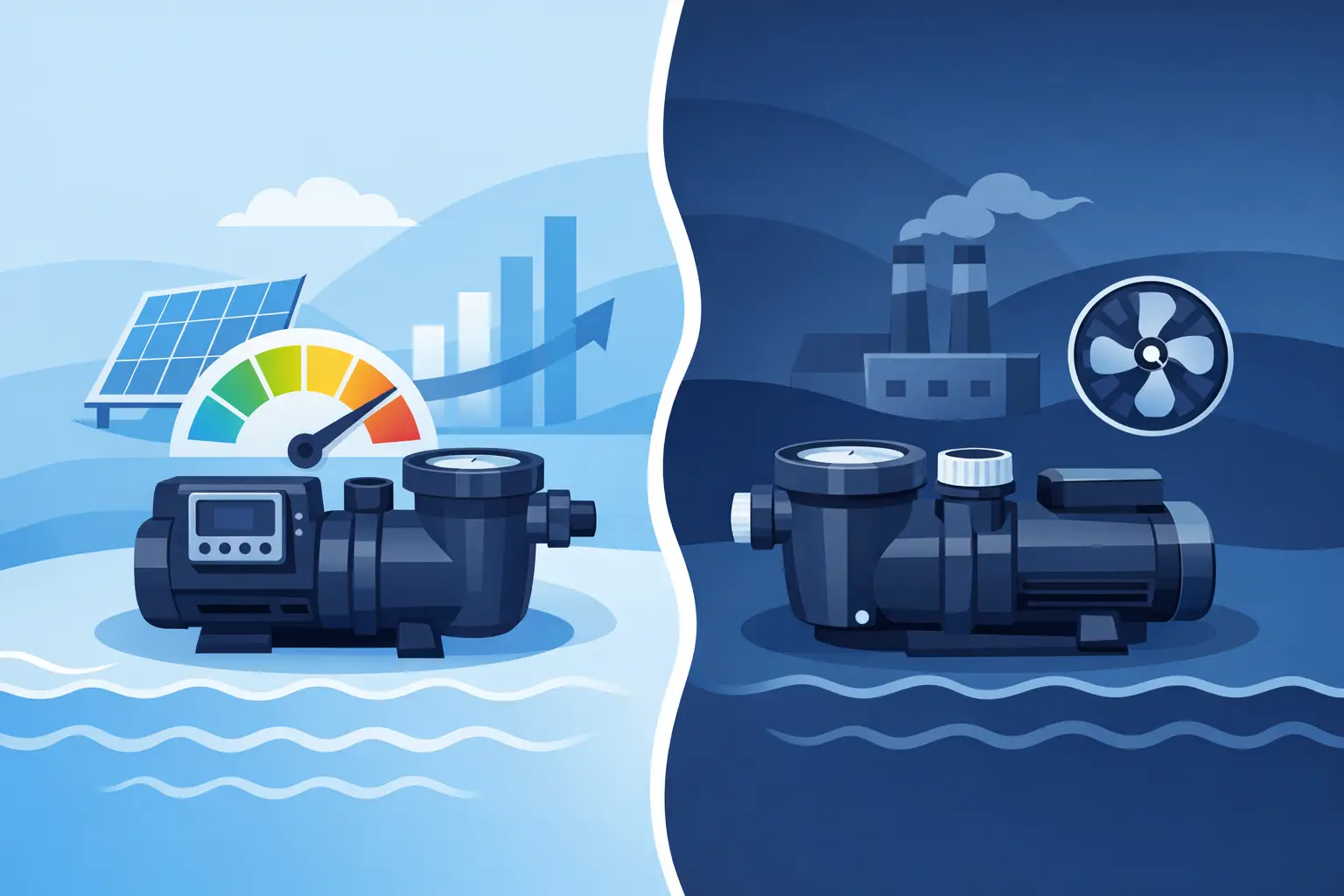
The difference between a peaceful pool day and a pool that feels expensive to own often comes down to equipment you barely notice. In the variable speed vs single speed pump decision, the pump matters more than most homeowners expect because it affects your electric bill, noise level, water circulation, and day-to-day comfort in the backyard.
For a residential pool, this is not just a technical choice. It is a lifestyle choice. A pump runs the system that keeps the water clear, moves chemicals through the pool, supports features like waterfalls or cleaners, and helps your pool feel ready when you want to use it. If the pump is loud, wasteful, or poorly matched to the pool, you tend to feel it every month.
Variable Speed vs Single Speed Pump: What Changes?
A single speed pump works at one setting only. It turns on, runs at full power, and turns off. There is no middle ground. That simple design made single speed pumps common for years, and in some older pools they are still in place.
A variable speed pump can run at different motor speeds depending on what the pool needs. It might run lower and slower for daily circulation, then ramp up for vacuuming, heating, spa use, or water features. That flexibility is the main difference, and it shapes almost every other benefit or drawback.
In practical terms, a single speed pump treats every task like the biggest task. A variable speed pump adjusts to the job.
Energy Use Is Usually the Deciding Factor
For most homeowners, energy cost is where this comparison becomes clear. A single speed pump uses much more electricity because it always operates at full output. Even when your pool only needs steady circulation, the pump keeps drawing power as if it is doing maximum work.
A variable speed pump is more efficient because lower speeds use dramatically less energy. That matters because pool pumps often run for long periods. Slower operation over a longer window can circulate water effectively while using far less electricity than short bursts at full speed.
This is why many homeowners see a meaningful drop in operating cost after upgrading. The upfront price is higher, but over time the lower utility expense often makes the variable speed option easier to justify. If you plan to stay in the home and keep the pool for years, this part of the equation deserves real attention.
That said, savings depend on how often the pool runs, local power rates, pool size, and whether the pump is programmed correctly. A premium pump only pays off when it is matched and set up well.
Noise Changes the Backyard Experience
Noise is often underestimated until you live with the wrong pump. A single speed pump tends to be louder because it always runs at full RPM. If equipment sits near a patio, outdoor kitchen, bedroom wall, or entertaining area, that constant mechanical sound can become part of the background in a way homeowners do not enjoy.
Variable speed pumps are generally much quieter, especially at lower settings. In many backyards, that changes the feel of the space. You hear the water feature instead of the equipment. You can sit outside, talk, or relax without the pump announcing itself.
For homeowners building a backyard around comfort and clean design, quieter equipment is not a small perk. It supports the whole point of having a pool at home.
Performance Is Not Just About Power
A common assumption is that more speed always means better performance. That is not how pool systems work. Good circulation is about proper flow, appropriate run time, and compatibility with the rest of the equipment.
A single speed pump delivers strong flow, but often more than the pool needs for basic filtration. That can be inefficient rather than helpful. A variable speed pump allows a more controlled approach. Lower speeds can improve filtration by moving water steadily through the system, while higher speeds are available only when needed.
This flexibility becomes even more useful if your pool has added features. Heaters, spas, in-floor cleaners, attached water features, and automation systems often benefit from a pump that can respond to different demands. A variable speed model can shift output based on those modes instead of forcing one setting for every function.
Still, there are cases where simple equipment works. If you have a smaller pool with minimal features and a straightforward plumbing layout, the performance gap may feel less dramatic from a user standpoint. The cost difference may become the bigger question.
Upfront Cost vs Long-Term Cost
This is where the trade-off becomes real. Single speed pumps usually cost less to purchase. If you are focused on the cheapest immediate replacement, they can look appealing.
Variable speed pumps cost more upfront. The motor and controls are more advanced, and installation may involve programming or setup adjustments. But judging only the purchase price can be shortsighted. The real ownership cost includes electricity, wear on the system, and how well the pump fits the pool over time.
For many residential owners, a variable speed pump is the stronger long-term value. It can reduce monthly utility costs, lower noise, and provide more control. Over several seasons, that often matters more than the initial savings of a single speed model.
If you are selling soon or dealing with a very limited budget, the equation can shift. But if you are improving the pool as part of your home lifestyle, the longer view usually makes more sense.
Rules and Efficiency Standards Matter
In many cases, this decision is not purely personal preference. Energy regulations have changed how pumps are sold and installed in the US, and many pool owners find that variable speed options are now the practical path when replacing equipment.
That does not mean every pool gets the same answer, but it does mean older assumptions about pump replacement may be outdated. If your current pump fails, the most obvious one-for-one swap may not be the best fit or even the standard route anymore.
This is one reason professional guidance matters. Pool equipment decisions are connected to code considerations, system sizing, and installation details that can affect both performance and compliance.
Which Pump Fits Your Pool?
The better question is not which pump is best in general. It is which pump fits the way your pool is used.
A variable speed pump usually makes sense for homeowners who want lower operating costs, a quieter yard, better control, and a system that can support heaters, spas, cleaners, or automation. It also tends to align better with a premium outdoor-living setup where convenience and comfort matter as much as basic function.
A single speed pump may still appeal in a narrow set of situations, especially when replacing older equipment on a simple pool and keeping immediate costs down is the top priority. But even then, the lower purchase price should be weighed against years of higher power use and less flexibility.
The right answer also depends on pump sizing. Bigger is not automatically better. An oversized pump can create unnecessary cost and pressure issues, while an undersized one can struggle to support features or proper circulation. The model has to match the plumbing, filter, pool volume, and attached equipment.
Installation and Setup Matter More Than Homeowners Expect
Even the best pump can disappoint if the installation is rushed or the programming is wrong. Variable speed pumps especially need thoughtful setup. The speed schedule should reflect the pool’s actual needs rather than a generic factory setting.
That means looking at filtration time, cleaner requirements, heater flow needs, and feature usage. A pool that runs a spa every weekend needs a different setup than a quiet lap pool used mainly for daily circulation. Fine-tuning makes the difference between owning advanced equipment and actually benefiting from it.
This is also where service-based support has value. A pump is not just a box on a pad. It is part of a system that affects water quality, equipment lifespan, and overall pool experience.
The Better Choice for Most Homeowners
In the variable speed vs single speed pump conversation, most residential pools are better served by variable speed technology. The lower energy use, quieter operation, and greater control fit how homeowners want a pool to feel – easier to maintain, more pleasant to live with, and less expensive to operate over time.
Single speed pumps are simpler, and simplicity has its place. But simple is not always better when it creates higher monthly costs and less flexibility in a space meant for comfort.
If you are replacing a pump, building a pool, or upgrading older equipment, the smartest move is to choose based on the whole backyard experience, not just the price tag on day one. A pool should feel easy to own, and the right pump helps get you there.