
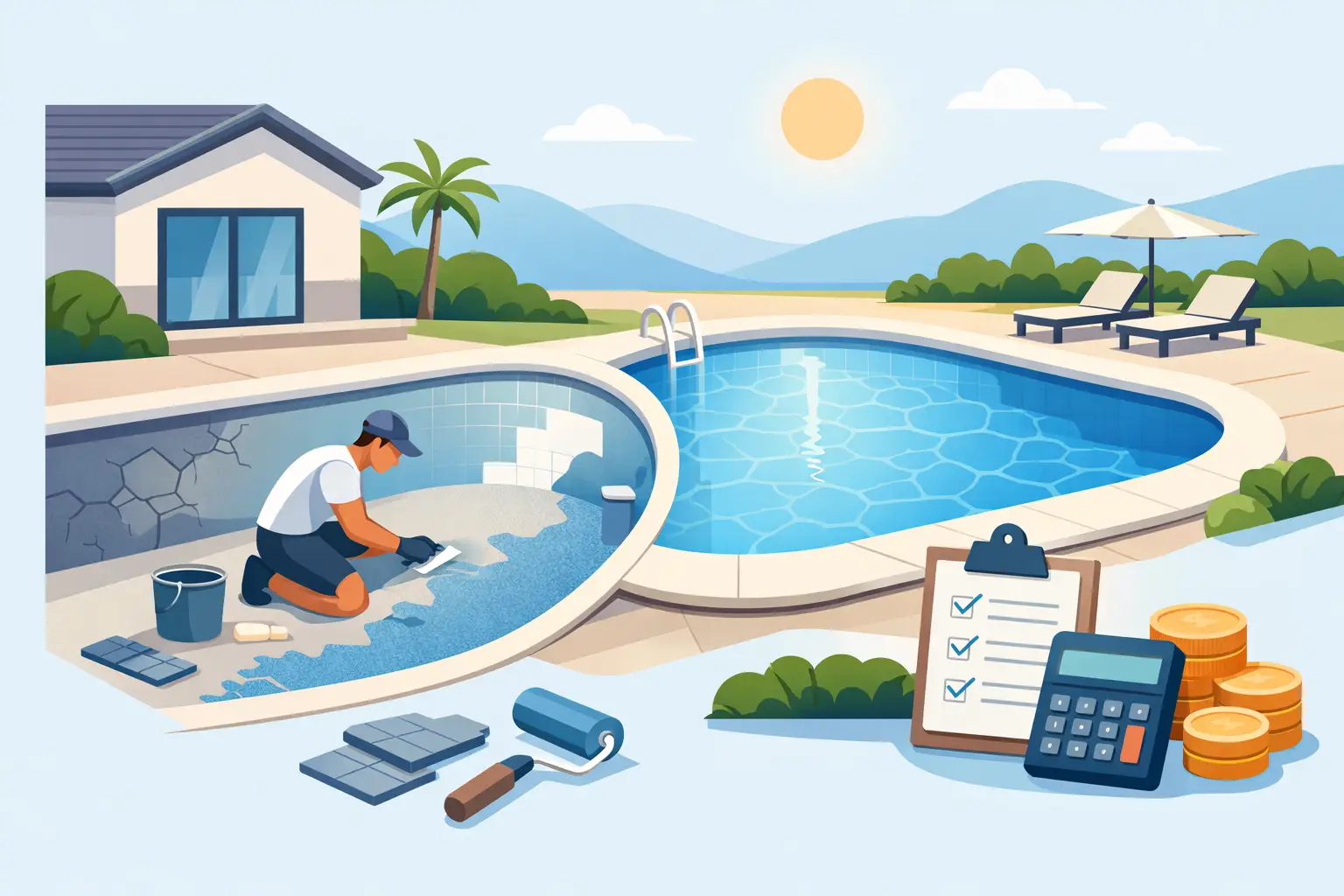
A pool can look tired long before its structure has a real problem. Rough spots underfoot, persistent stains, flaking plaster, and a finish that no longer looks clean can change the feel of the entire backyard. This homeowner guide to pool resurfacing explains when the work is needed, what choices affect the result, and how to make a sound decision for a pool you plan to enjoy for years.
When Pool Resurfacing Is the Right Move
Resurfacing replaces the finished interior layer of a concrete or gunite pool. It is not the same as a quick stain treatment, a tile repair, or a full structural renovation. The goal is to restore the surface that holds water, protects the shell, and gives the pool its color and texture.
Most plaster finishes last roughly 7 to 15 years, though water chemistry, climate, use, and maintenance habits can shorten or extend that range. An older pool does not automatically need resurfacing. The condition of the finish matters more than its age.
Look closely for widespread roughness, peeling, cracking, pitting, hollow-sounding areas, or stains that remain after professional cleaning. Small cosmetic flaws may be manageable. But when bare spots, recurring algae in porous areas, or uncomfortable surfaces become common, resurfacing is usually the better long-term answer.
A loss of water should be evaluated separately. Surface cracks can be part of normal finish wear, but a leak may come from plumbing, fittings, the skimmer, or the pool shell. A responsible contractor should identify the source before applying a new finish. Fresh material over an unresolved leak is an expensive temporary fix.
A Homeowner Guide to Pool Resurfacing Options
The right finish should fit the way you use the pool, the look of the home, and the level of maintenance you are prepared to provide. A bright-white finish can feel classic and clean, while darker finishes often create a deeper, more reflective water color. Neither is automatically better. Darker colors can show scale, fading, and chemistry-related variation differently than lighter finishes, so discuss expectations before selecting a color from a small sample.
Standard plaster
Traditional white plaster remains a practical option for homeowners who want a straightforward, timeless finish at a lower initial cost. It creates a clean blue-water appearance and works with many architectural styles. Its trade-off is durability. Plaster is generally less resistant to staining and etching than premium aggregate finishes, especially when water chemistry is neglected.
Quartz finishes
Quartz finishes blend plaster with colored quartz aggregate. They offer more color flexibility and a harder surface than standard plaster. For many homeowners, quartz is the middle ground: more durable and decorative than plaster without moving to the highest price tier.
Pebble and exposed aggregate finishes
Pebble finishes use small natural or manufactured aggregate to create a textured, durable surface. They are popular in resort-style backyards because they add depth and visual character to the water. They also tend to last longer than plaster when properly cared for.
Texture is the key consideration. A quality pebble finish should feel comfortable, but it will not feel as smooth as polished plaster. Ask to see completed pools, not only sample boards, and consider how children, older relatives, and frequent swimmers will experience the surface.
Polished aggregate and specialty finishes
Polished aggregate finishes can deliver a smoother, more refined look while retaining much of the durability associated with aggregate materials. Specialty finishes may also include glass or other decorative elements. These options can create a striking water color, but they require careful installation and a realistic budget. The best choice is not always the most elaborate one. It is the finish that looks right in your yard and performs well under normal use.
What the Resurfacing Process Looks Like
A properly planned resurfacing project is disruptive for a short period, but it should not feel chaotic. The work typically begins with draining the pool and inspecting the existing surface. The crew then removes loose or damaged material, prepares the shell, addresses approved repairs, and applies the new finish.
After application, the pool is filled without interruption. This matters because stopping the water line partway up the pool can leave a visible mark in some finishes. Once full, the startup period begins. New surfaces need a controlled approach to brushing and water balancing while the finish cures.
The exact timeline depends on the pool size, weather, finish type, repairs, permitting requirements, and any added work. A simple resurfacing project may move quickly, while a project that includes tile replacement, coping repairs, lighting upgrades, or equipment work will take longer. Ask for a written schedule that distinguishes the installation phase from the curing and startup phase.
Do not treat startup as an optional aftercare step. The first few weeks influence how the new surface looks and wears. Brushing removes plaster dust and helps prevent uneven curing. Water chemistry must be managed carefully, with special attention to pH, alkalinity, calcium hardness, and sanitizer levels. The contractor should explain who handles this period and what the homeowner should expect.
What Drives Pool Resurfacing Costs
Pool resurfacing costs vary widely because the finish is only one part of the scope. Pool size and shape matter, but so do surface preparation, access to the backyard, the condition of the existing shell, local labor costs, drainage needs, and the extent of repair work.
A basic plaster finish will usually have the lowest upfront price. Quartz, pebble, polished aggregate, and decorative materials increase the cost, as do upgrades such as waterline tile, new drains, handrail replacement, crack repairs, or equipment improvements. A rectangular pool with easy access is a different project from a freeform pool behind a narrow side yard with aging tile and visible surface damage.
When comparing proposals, do not focus only on the final number. Confirm what is included. A clear estimate should identify the finish type and color, preparation method, repair allowances, waterline tile scope, startup service, cleanup, and warranty terms. If an estimate is much lower than the others, find out whether it excludes preparation, repairs, drainage, or necessary startup care.
It can also be smart to combine related work while the pool is empty. Replacing worn tile, updating lights, repairing coping, or improving circulation equipment may be more efficient during resurfacing than as separate projects later. That does not mean every upgrade belongs in the same budget. Prioritize work that protects the pool or avoids reopening finished areas soon after the project is complete.
Choosing a Contractor You Can Trust
Resurfacing is detail-driven work. The finish is visible every day, and mistakes are difficult to hide once the pool is filled. Choose a pool specialist with a clear process, proof of comparable work, proper licensing and insurance for your area, and a willingness to explain what they find beneath the old surface.
Ask how the crew handles cracks, hollow areas, bond-coat preparation, and weather delays. Ask who performs the startup and how long the new finish is covered. It is also reasonable to ask whether the company uses its own trained crews or subcontractors and who will be your point of contact during the job.
A good contractor will not promise that natural aggregate, water color, or hand-applied materials will look identical in every square foot. Variation can be normal. What matters is that the finish is installed correctly, the expectations are clear, and any concerns are addressed directly.
Coastal Cove Pools approaches resurfacing as part of the larger pool experience, not as a cosmetic patch. The surface, water quality, equipment, and surrounding space should work together so the backyard feels ready for a relaxed afternoon or a full house of guests.
Protecting the New Surface
Your new finish needs consistent care, not complicated care. Keep water chemistry balanced, maintain proper circulation, brush when needed, and address scale or metal stains early. Avoid using harsh tools or chemicals without confirming they are appropriate for your finish.
The biggest long-term risk is often neglected water balance. Low pH can etch a surface. High calcium levels can leave scale. Metals in the water can stain. Poor circulation can encourage algae, especially in textured finishes and shaded areas. Regular testing and dependable service protect both the appearance of the pool and the investment beneath it.
Before signing a contract, stand beside the pool at the time of day you use it most, consider the water color you want to see, and choose a finish you will still appreciate after the first impression fades. A well-planned resurfacing project gives the backyard a fresh start – and makes it easier to enjoy the pool without noticing every flaw under the waterline.