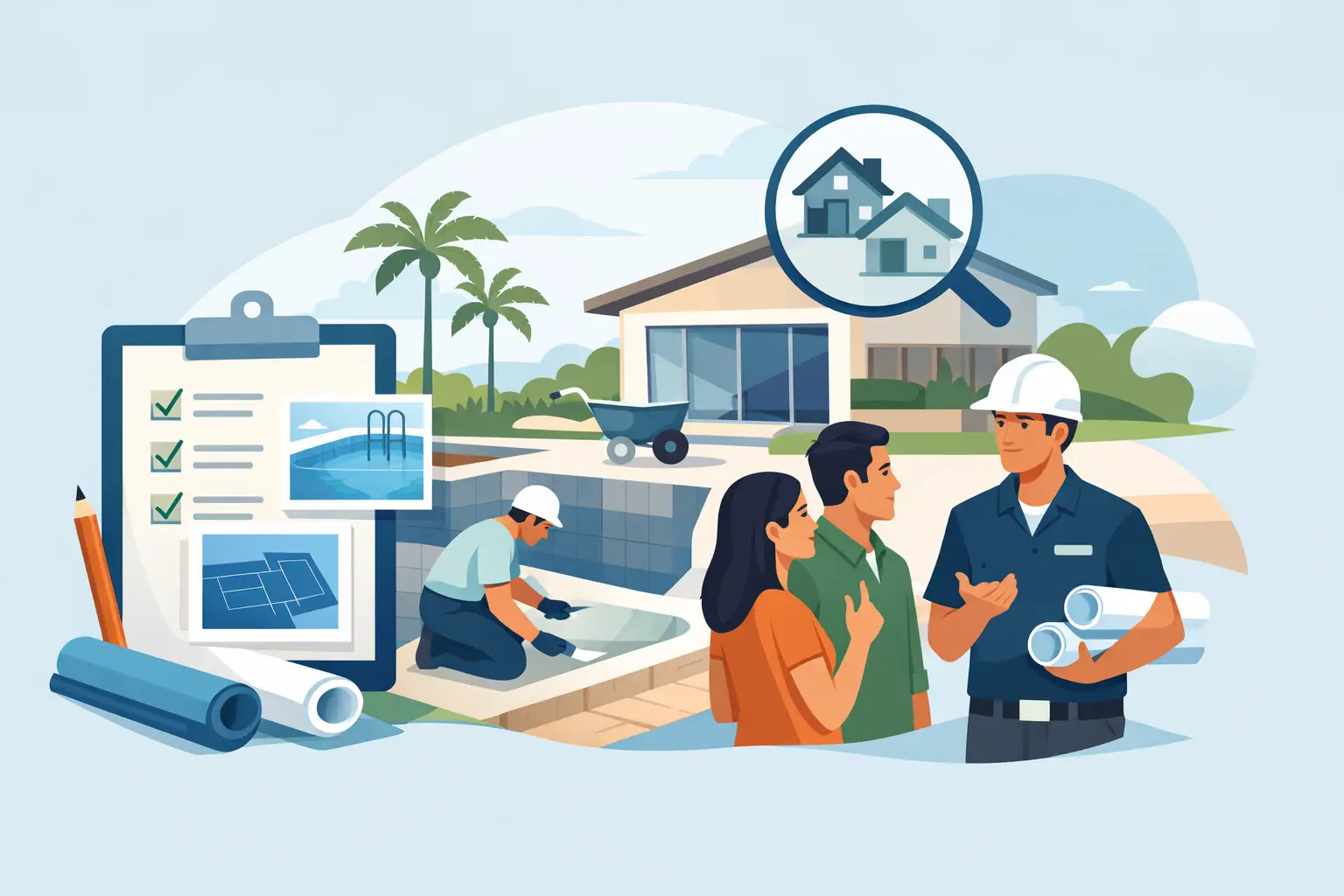
A pool quote can look great on paper and still lead to months of delays, change orders, and frustration once the digging starts. That is why learning how to choose a pool builder contractor matters before you compare shapes, tile, or tanning ledges. The right builder protects your budget, your timeline, and the long-term enjoyment of your backyard.
A residential pool is not a simple purchase. It is a construction project, a design decision, and an ongoing ownership commitment. Homeowners usually feel the pressure in two places at once – they want the pool to look exceptional, and they want the process to stay controlled. A good contractor helps with both. A weak one can make even a beautiful plan feel expensive and stressful.
How to choose a pool builder contractor starts with fit
The first mistake many homeowners make is treating all pool companies like they offer the same service with different prices. They do not. Some builders are strong on design but weak on communication. Some move fast on excavation but leave homeowners guessing about scheduling, permits, or startup. Some are set up for high-volume jobs and others are better for custom residential work.
Before you compare bids, get clear on the kind of project you want. If your goal is a polished outdoor living space that feels like a private retreat, you need a contractor who understands the full picture, not just the shell. That includes layout, equipment choices, finish quality, drainage, decking, and how the pool will actually live in your yard day after day.
This is where fit matters more than pitch. A builder may be reputable and still not be the right choice for your home, budget, or expectations.
Start with credentials, but do not stop there
Licensing, insurance, and local compliance are the baseline. They matter, but they are only the start. Any builder you consider should be properly licensed for pool construction in your area and able to show proof of insurance without hesitation. If that part feels vague or delayed, move on.
After that, look at experience that matches your job. A contractor who mostly installs basic layouts may not be the best choice for a sloped lot, a tight backyard, or a more customized design. Ask how many similar projects they have completed recently, not just how long they have been in business. Years in business can be useful, but recent relevant work tells you more.
It also helps to ask who actually manages the project. Some companies sell the job well and then hand most of the experience to subcontractors with limited oversight. That does not automatically mean poor quality, but it does mean you should understand who is accountable when something shifts off schedule or a detail gets missed.
Look closely at communication style
A pool build is rarely perfect from start to finish. Weather changes. Materials get delayed. Inspections can shift the schedule. What separates a solid contractor from a frustrating one is often communication.
Pay attention to how the company handles the early conversations. Are they clear when they explain the process? Do they answer questions directly? Do they acknowledge trade-offs, or do they promise everything will be easy, fast, and cheaper than expected? A builder who is realistic early is usually easier to work with later.
You are not just hiring craftsmanship. You are hiring project management. That means updates, expectations, approvals, and problem-solving. A homeowner should not have to chase basic answers during a major backyard build.
Ask what the timeline really depends on
Many buyers ask, “How long will it take?” The better question is, “What could affect the timeline?” That invites a more honest answer.
A strong contractor should be able to explain the usual sequence, where delays commonly happen, and what parts are within their control. If the answer sounds overly polished or absolute, be cautious. Good builders know that construction has variables. Great builders know how to prepare clients for them.
Compare proposals for clarity, not just price
When homeowners shop builders, the lowest bid often gets the most attention. That can be expensive later. One proposal may look cheaper because it leaves out key items, uses lower-grade equipment, or leaves too much undefined.
A good proposal should clearly explain what is included, what is excluded, and what could trigger added cost. That means excavation assumptions, equipment specifications, interior finish, decking scope, electrical details, and any site-specific issues that could affect the job. If you cannot tell exactly what you are paying for, you are not comparing bids fairly.
This is also the point where allowances and vague language deserve scrutiny. Terms like “standard equipment” or “as needed” can hide major differences in quality or final cost. Ask for specifics. The more detailed the proposal, the easier it is to judge value.
Cheap can cost more later
There is a reason some bids come in much lower. Sometimes the company has lower overhead or a simpler design approach. Sometimes the savings are real. But sometimes a low number is only a way to get the contract signed before change orders begin.
That does not mean the highest bid is automatically the safest. It means pricing should make sense in relation to scope, materials, and service. A pool is a long-term feature of your home. Reliability tends to age better than a bargain.
Review past work like a homeowner, not a spectator
Photos help, but they are not enough. Almost any company can assemble a clean gallery of finished pools. What you need to know is how those projects came together and how they perform after handoff.
Ask to see examples that resemble your yard, style, or level of customization. If possible, ask how long ago the project was completed. A beautiful finish on day one matters, but so does durability after a season or two of use.
Customer reviews can also be useful, especially when patterns show up. Look for comments about communication, punch-list follow-through, startup support, and how the company handled issues. A builder does not need a perfect record to be trustworthy. What matters is whether they respond professionally and consistently.
Ask about ownership after construction
One of the most overlooked parts of how to choose a pool builder contractor is what happens after the build is done. Homeowners often focus so much on excavation and finishes that they forget they will soon own the system.
That means pumps, filters, heaters, automation, water chemistry, cleaning routines, and seasonal care. A builder should be able to explain startup, basic maintenance expectations, warranty coverage, and who to call if equipment needs attention. If they act like their role ends the day the water goes in, that is worth noting.
For many homeowners, the best partner is not just a company that can build the pool. It is a company that understands the full lifecycle of pool ownership and helps make it manageable.
Watch for red flags during the sales process
You can learn a lot before you ever sign a contract. Pressure to commit quickly, vague answers about permits, reluctance to provide documentation, or repeated changes in who you are dealing with are all signs to slow down.
Another red flag is a contractor who does not ask many questions about your property or how you want to use the pool. Good builders know that family use, entertaining, aesthetics, maintenance preferences, and budget all shape the right design and equipment choices. If the conversation feels generic, the project may end up that way too.
It is also smart to be careful with builders who overpromise on speed. Homeowners naturally want summer-ready timelines, but construction honesty is more valuable than sales urgency.
The best choice usually feels steady, not flashy
Most people expect the winning contractor to stand out because of an impressive presentation or aggressive pricing. Sometimes the better signal is simpler than that. The right builder usually feels organized, transparent, and calm. They answer clearly. They set realistic expectations. They treat the project like a serious investment, not a quick sale.
That approach tends to serve homeowners well, especially when the goal is more than installing a pool. For many families, this is about creating a better way to spend time at home – weekends outside, easier entertaining, and a backyard that feels finished. Coastal Cove Pools understands that a pool is not just a construction job. It is a lifestyle decision that should be handled with care from the first conversation forward.
Take your time with the decision. A good contractor will respect that. The right pool builder should make the process feel more certain, not more complicated.