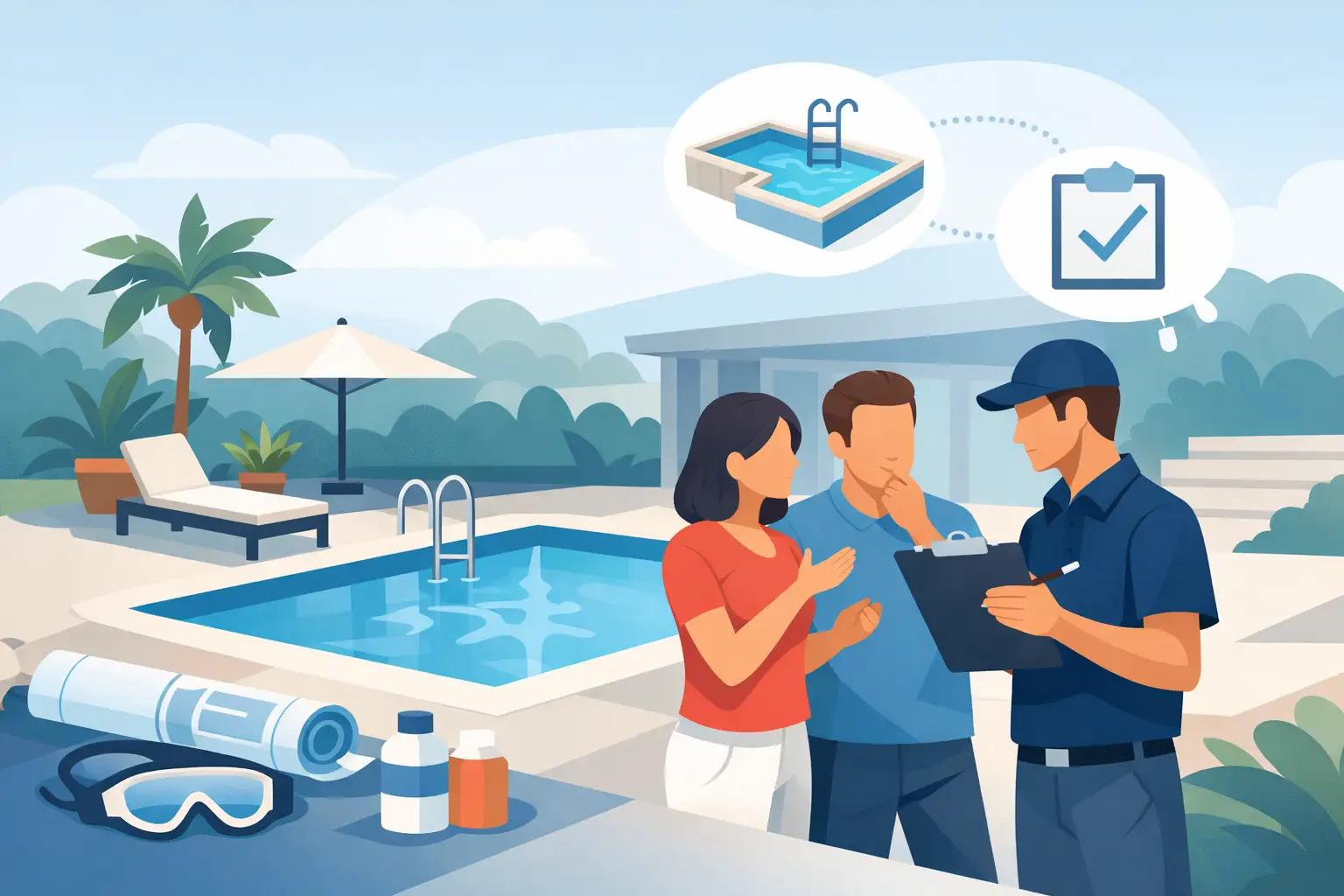
A backyard pool usually looks simple on paper. Then the consultation starts, and suddenly you are making decisions about layout, drainage, access, equipment, finish materials, safety, and long-term care. That is exactly why a pool consultation checklist for homeowners matters. It keeps the meeting focused on your property, your budget, and the way you actually want to live outside.
The best consultations do not start with shape or tile color. They start with how the space needs to work. A family with young kids will use a pool differently than a couple building a quiet outdoor retreat. A homeowner planning frequent entertaining may care more about deck flow, seating areas, lighting, and easy maintenance than about maximum swim depth. Before the appointment, get clear on your priorities so the conversation does not drift toward features that look impressive but do not fit your home.
It helps to walk your yard before anyone arrives. Notice where the sun hits in the afternoon, where water already collects after rain, how close neighbors feel, and what parts of the yard you want to preserve. If you have a view, that matters. If you want the pool visible from the kitchen or living room, that matters too. Good pool planning is not just about dropping a shell into open space. It is about connecting the pool to the house and to daily routines.
What to bring to a pool consultation checklist for homeowners
Come prepared with the basics, even if you do not have every answer. A property survey, site plan, HOA guidelines, and any inspiration images can move the discussion forward quickly. If you know your ideal budget range, say it early. That does not box you in. It helps the consultant recommend a realistic scope instead of building around assumptions.
You should also know what level of project you are considering. Are you adding a new pool, renovating an older one, replacing equipment, or improving the surrounding deck and outdoor living area? Those are very different conversations. When homeowners keep the goal too broad, they often leave the consultation with pretty ideas but no clear path.
Timing belongs on your checklist too. If you want the pool ready by summer, by a holiday, or before a home sale, mention that upfront. Construction schedules, permitting, inspection windows, and material lead times can shift what is possible. A good consultation balances your target date with what the property and local process will allow.
Questions about the site and layout
Your yard will make some decisions for you. That is not a bad thing, but it does mean the consultation should include real discussion about site conditions. Ask what the lot allows in terms of pool size, setbacks, drainage, utility lines, elevation changes, and access for construction equipment. A design that works on one property may be a poor fit on another just a few blocks away.
Placement is one of the biggest decisions because it affects everything that follows. Ask where the pool should sit in relation to the house, patio, fence line, and existing landscaping. A few feet in one direction can change privacy, usable deck space, and the visual balance of the yard. It can also affect excavation complexity and the cost of moving soil or rerouting utilities.
This is also the moment to ask about the surrounding experience, not just the water itself. Will there be enough room for lounge chairs, dining, a shade structure, or a grill area? Can people move comfortably through the space when the pool is in use? Many homeowners focus on the pool basin and realize too late that the deck feels cramped or disconnected.
Budget questions that prevent expensive surprises
A clean proposal matters, but the consultation is where cost assumptions should start getting tested. Ask what is included in the base project and what commonly gets priced separately. Homeowners often hear one number and assume it covers excavation, permits, decking, fencing changes, electrical work, drainage improvements, startup, and finishing touches. Sometimes it does. Often it does not.
Be direct about allowances and upgrades. If you are discussing finishes, tile, lighting, automation, water features, or heating, ask what level of product is being shown. A consultation can feel affordable when the conversation stays conceptual, then shift fast once real selections are added. That does not mean the builder is being evasive. It means pools are highly customizable, and details drive price.
It is also smart to ask where budgets tend to stretch. On some properties, poor access adds labor. On others, retaining walls, drainage work, or electrical upgrades become the issue. The point of the meeting is not to get a perfect final number on the spot. It is to understand where your investment is fixed, where it is flexible, and where surprises are most likely.
Equipment, maintenance, and the ownership side
A beautiful pool that is hard to maintain will wear on you fast. That is why your pool consultation checklist for homeowners should include a serious conversation about equipment and care. Ask what pump, filter, heater, sanitizer, and automation options make sense for your pool size and usage. Bigger or more expensive is not always better. The right setup depends on how often you use the pool, whether you heat it regularly, and how hands-on you want to be.
Maintenance deserves plain language. Ask what routine service will look like, how often water chemistry needs attention, what seasonal care involves in your area, and what the expected operating costs may be. A polished backyard should still feel practical after the first month of ownership. If a feature adds beauty but increases upkeep more than you want, it is better to know early.
Equipment location matters too. Ask where the pad will sit, how visible it will be, and how much sound it will generate. Homeowners tend to focus on the pool view and forget that pumps, heaters, and plumbing lines need a home. A smart equipment layout protects aesthetics without making service access difficult.
Safety, code, and daily peace of mind
Every consultation should cover safety in a direct way. That includes fencing, gates, alarms, covers, depth transitions, lighting, and slip-resistant surfaces around the pool. Requirements vary by location, and the details matter. The safest plan is the one that meets code and still works naturally for your household.
Families with children may want clear sightlines from inside the home. Pet owners may care more about barrier design and access points. Homeowners who entertain at night should ask about deck lighting, step visibility, and circulation through the yard after dark. Safety is not a side topic. It shapes the way the space feels every day.
You should also ask who handles permits, inspections, and coordination with any required authorities or associations. A consultation should make responsibilities clear. When that part is vague, delays and frustration tend to follow.
Design choices that hold up over time
It is easy to get pulled toward trends during a consultation. Some are worth it. Some date quickly. Ask which design choices tend to age well in your market and which ones are more personal preference. Simple lines, durable finishes, and balanced materials usually outlast novelty.
That does not mean the pool has to feel plain. It means the design should suit the home and the property first. A dramatic feature may look great in a photo but feel oversized in a smaller backyard. A dark interior finish may create a striking water color but also change heat absorption and the visual feel of the pool. Every choice has a trade-off.
If the pool is part of a larger outdoor living plan, ask how future elements can be phased. Maybe you build the pool now and add an outdoor kitchen later. Maybe you leave room for a spa, pergola, or expanded landscaping. A thoughtful consultation creates a yard that can evolve without feeling patched together.
How to tell if the consultation is actually good
A strong consultation is not just friendly. It is specific. You should leave with a clearer sense of what your yard allows, what your priorities cost, what the process looks like, and what questions still need answers. If the meeting stays vague, rushes through site realities, or leans too heavily on sales language, that is useful information too.
Look for a consultant who listens before recommending. The right partner should ask how you want to use the space, explain trade-offs without pressure, and point out issues that may affect design or budget. That kind of honesty is often the difference between a smooth project and a frustrating one.
Coastal Cove Pools approaches consultation the way homeowners need it handled – clear, grounded, and centered on the property in front of you. That is what turns a backyard idea into a plan that feels right when the work is done.
A pool should make home feel better, not more complicated. Go into the consultation ready to ask real questions, and the right answers will be easier to spot.