The best pool fencing does not make a backyard feel closed off. It creates a clear, dependable boundary around the water while preserving the open, relaxed feeling that made a pool worth building in the first place. For families, it is a critical safety feature. For homeowners who entertain, it is also part of the landscape, sightlines, and daily experience of the space.
A fence should never be treated as a final detail added after every other decision is made. Its location affects decking, planting, furniture zones, gate access, and how naturally the pool fits into the yard. Plan it early, and it can feel like a purposeful part of a polished outdoor retreat.
Pool Fencing Is a Layer of Protection
A pool barrier helps limit unsupervised access to the water, particularly for young children and visiting guests. That matters even in homes where the pool is always covered, where family members are strong swimmers, or where adults are attentive. Daily routines change. A gate gets left open. A guest may not know the rules of the yard.
Fencing is one layer in a larger safety plan. Alarms, self-closing gates, pool covers, secure doors, clear household rules, and active adult supervision all have a role. No barrier replaces supervision around water, but a well-designed fence creates valuable time and distance between a child and the pool.
Local and state requirements often set the minimum standards for barrier height, gate operation, opening sizes, climbable features, and clearances at the ground. Your homeowners association, insurer, or municipality may have additional rules. These requirements can vary significantly, so the right approach is to confirm them before materials are ordered or footings are set. A fence that looks complete but fails inspection is an expensive problem to correct.
Choose a Fence for How You Use the Yard
There is no single best material for every home. The right pool fence balances safety, local code, maintenance expectations, privacy, budget, and the character of the property.
Aluminum for a clean, open boundary
Aluminum fencing remains a popular choice because it is durable, low-maintenance, and visually light. Slim pickets define the pool area without blocking views across the yard. It works especially well when a homeowner wants the pool to remain connected to a larger lawn, outdoor kitchen, or entertaining area.
The trade-off is privacy. Aluminum fencing makes the pool easy to see from outside the enclosure. For many homeowners, that visibility is a benefit because it makes monitoring simpler. For others, it may call for layered landscaping beyond the fence line.
Glass for uninterrupted sightlines
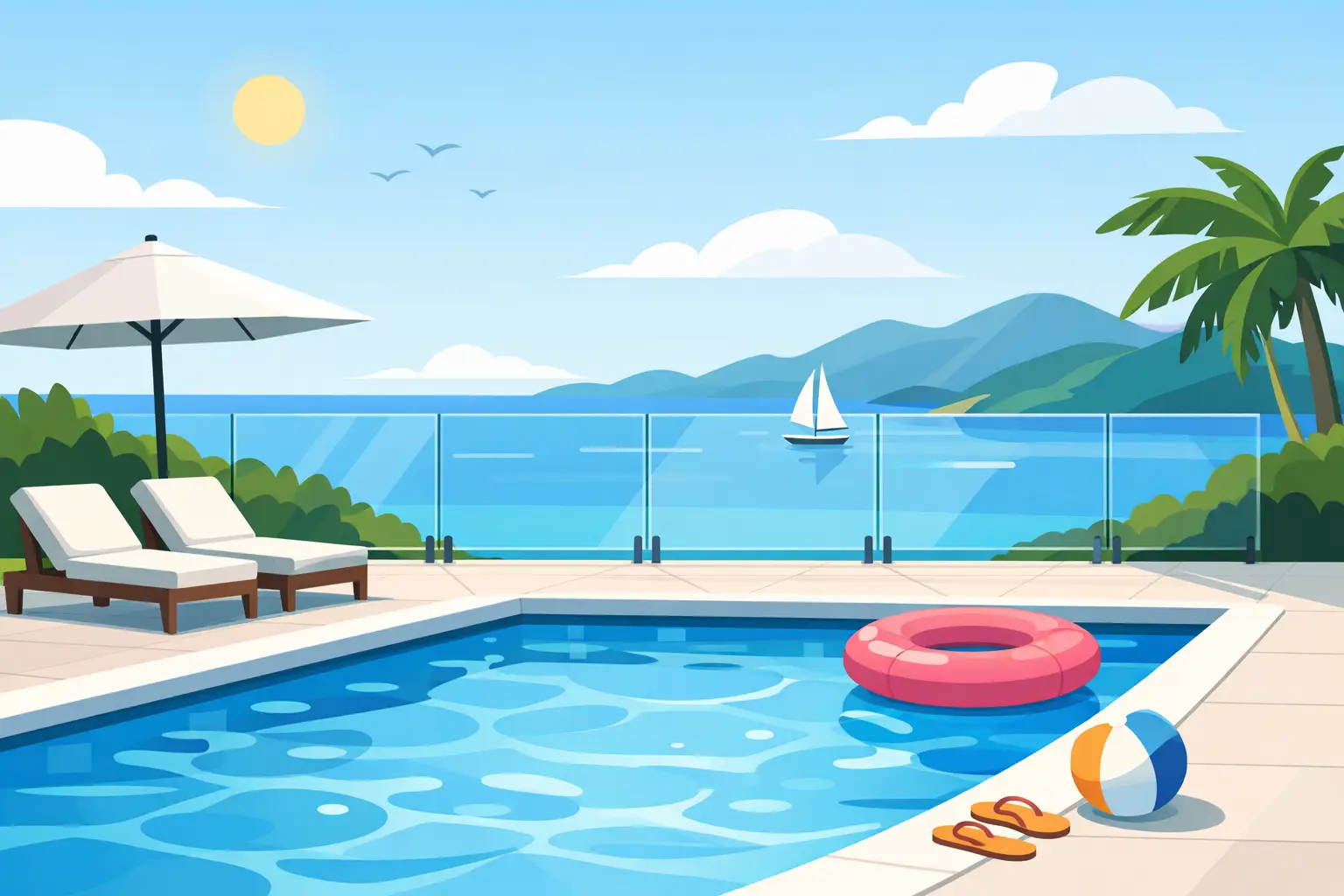
Glass pool fencing has a refined, resort-style look that can make a compact space feel larger. It is especially effective along a view corridor, near water, or beside a patio where traditional pickets would interrupt the visual flow. With the right hardware and layout, it can feel almost invisible from a distance.
It also asks more of the budget and the maintenance routine. Glass shows fingerprints, water spots, and pollen more readily than other materials. It needs professionally planned panels and hardware, particularly where slopes, wind exposure, or changes in grade are involved. The payoff is a highly polished finish for homeowners who place a premium on a clear view of the pool.
Mesh for flexible family safety
Removable mesh fencing is often chosen by families with young children because it can create a dedicated barrier close to the pool. When installed correctly, it provides a practical safety layer without permanently dividing the entire backyard. Some systems can be removed when they are no longer needed, although the decision to remove one should be made carefully and with safety in mind.
Mesh is functional rather than architectural. It may not deliver the same permanent, tailored appearance as aluminum or glass, but it can be the right answer for a household that needs a strong child-safety measure now. A quality installation, secure latching, and proper tension matter more than a low initial price.
Privacy materials for enclosed outdoor rooms
Vinyl, composite, masonry, and wood can provide privacy and help form an intimate pool courtyard. They can be useful on property lines or where neighboring homes sit close together. These materials may also reduce wind and create a stronger sense of separation between the pool and other areas of the property.
The key question is placement. A solid fence immediately around the pool can make supervision harder and the space feel tighter. It can also create code concerns if its design offers footholds or if gates are not properly secured. Often, the best result is a combination: a code-compliant pool barrier near the water and a privacy fence or landscape screen farther out.
Gate Details Matter More Than Most Homeowners Expect
A pool gate is used constantly. It is not a place to compromise on hardware or installation quality. Gates should be self-closing, self-latching, and positioned so the latch is out of easy reach for small children, in accordance with applicable requirements. They should close reliably from every opening position, not only when pushed shut with care.
The direction of the gate swing matters too. In many situations, a gate that opens away from the pool area adds another small measure of protection. Your installer can help determine the required configuration for the site and local rules.
Think about the everyday path through the yard. If the gate sits between the kitchen and the grill, it will be opened dozens of times during a gathering. If it is tucked into a narrow passage, people may be tempted to prop it open while carrying towels or food. Good pool fencing supports the way the household moves through the space without encouraging shortcuts.
Plan the Fence Line With the Whole Backyard in Mind
The fence line should provide a safe enclosure while leaving enough room for circulation, loungers, cleaning equipment, and maintenance access. A barrier installed too close to the water can make a deck feel cramped and complicate service. One placed too far away may consume a large portion of the yard and raise the cost of materials and installation.
Look closely at existing features before choosing the layout. Retaining walls, raised planters, furniture, grills, storage boxes, low rooflines, and dense shrubs can create climbable conditions or interfere with required clear areas. Mature landscaping may be beautiful, but it should not create an easy route over a barrier or prevent a gate from operating correctly.
This is also the time to consider equipment access. Pool technicians need a practical route to pumps, filters, heaters, and automation panels. The fence should secure the water without turning routine maintenance into a difficult job. A small, well-placed service gate can make a meaningful difference over the life of the pool.
Design for Maintenance, Not Just Installation Day
Salt air, coastal humidity, splash-out, irrigation, UV exposure, and shifting soil all affect outdoor materials. Even a premium fence needs occasional attention. Aluminum should be checked for loose fasteners, damaged finish, and alignment. Glass hardware should be inspected for movement and cleaned with products suited to the panels and fittings. Mesh systems need periodic checks for tension, anchors, and latch performance.
Do not let landscaping hide small problems. Trim plants away from gates and fence panels, clear debris from hinges, and check that every latch engages fully. If a gate begins to drag or close slowly, address it promptly. Minor adjustments are simpler than repairs after a season of wear.
A thoughtful fence also protects the investment around it. Choosing corrosion-resistant hardware, placing posts carefully, and coordinating drainage can help prevent staining, movement, and premature replacement. The details may not be the first thing guests notice, but they are what keep the enclosure looking composed year after year.
A Safer Backyard Can Still Feel Like an Escape
Pool fencing is not a concession that takes away from the outdoor-living experience. When it is planned with the deck, landscaping, and traffic flow, it makes the space easier to enjoy with confidence. The pool remains the focal point. The barrier simply gives the water the respect it deserves.
At Coastal Cove Pools, the strongest pool environments are planned as complete spaces, not as a collection of separate purchases. Give the fence the same early attention as the pool finish, lighting, and patio layout, and it can protect the people you love while keeping every day by the water feeling easy.