
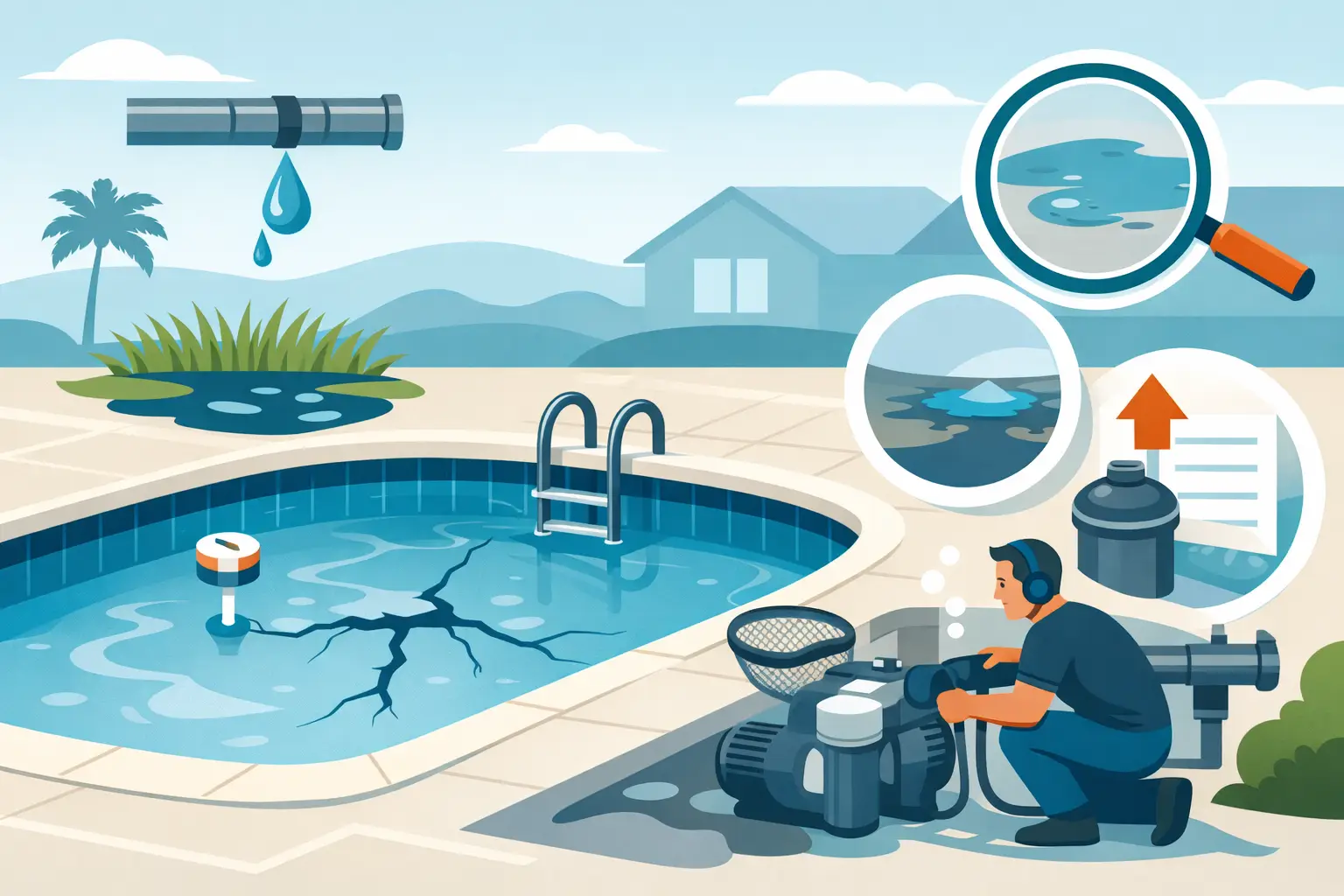
A pool should make the backyard feel easier to enjoy, not create a running question about where the water went. The most useful pool leak detection signs are often quiet at first: a waterline that falls faster than usual, a damp patch beside the deck, or a pump that needs more attention than it used to.
Water naturally leaves every outdoor pool through evaporation and splash-out. Wind, heat, sun exposure, pool use, and a heated spa can all change the rate. A leak is different. It is a persistent loss that can affect water chemistry, equipment performance, surrounding soil, and eventually the finish, deck, or structure of the pool.
The earlier it is identified, the more likely the repair stays focused and manageable.
Pool Leak Detection Signs to Take Seriously
One sign alone does not always prove a leak. Several signs appearing together deserve a closer look, especially when they continue through normal weather changes and periods of low pool use.
1. The water level keeps falling
A visible drop in water level is the sign most homeowners notice first. If you are adding water every few days to keep the skimmer working properly, do not assume summer evaporation is the only explanation.
As a general rule, outdoor pools can lose water during hot, dry, windy weather. But a loss that seems excessive, continues after temperatures moderate, or occurs when the pool is covered may point to a leak. Mark the waterline with a piece of tape or a washable pencil mark on the skimmer tile, then check it at the same time each day. Consistency matters more than one day’s reading.
Pay attention to whether the water drops to a certain level and then stops. If it settles around the skimmer, a return fitting, a light, or another wall penetration, that location can provide a valuable clue.
2. You are refilling the pool more often than usual
A hose in the pool now and then is normal. Repeated refilling is not something to ignore, particularly if it has become part of the weekly routine. Beyond the cost of water, frequent top-offs dilute the chemicals you have already balanced. That can lead to more testing, more adjustments, and more time spent managing a pool that should feel dependable.
Fresh water can also change calcium hardness, alkalinity, and sanitizer demand depending on the local water supply. When the pool is losing water, the chemistry may seem unusually difficult to hold steady because the water is constantly being replaced.
3. The pump loses prime or returns blow air
A pool leak is not always below the waterline. Leaks on the suction side of the circulation system can allow air into the plumbing when the pump is running. You may see air bubbles under the pump lid, weak return flow, or bubbles entering the pool through the return jets.
The pump may also lose prime after shutting off, struggle to catch prime when it starts, or make a louder, strained sound. These symptoms can come from a worn pump-lid O-ring, a loose fitting, a low water level, or a plumbing issue. The distinction matters, so it is best not to assume the pipe is the problem before the simpler equipment checks are made.
4. There are wet spots or soft soil near the pool
A consistently soggy area around the pool, equipment pad, or nearby landscaping is worth investigating. Leaking water can travel underground before it reaches the surface, so the wet spot is not always directly above the leak. Green patches of grass that grow faster than the rest of the yard can be another clue.
Not every damp area signals a pool issue. Irrigation lines, rain runoff, and drainage problems can create similar conditions. Still, if the area remains wet during dry weather or becomes more noticeable when the pool equipment is operating, it should be evaluated.
5. Cracks, movement, or settling appear around the deck
Concrete and pavers can develop cracks over time, especially in climates with shifting soil or temperature changes. A crack by itself does not confirm a pool leak. The concern rises when there is new settling, widening gaps, loose coping, or soil washing out near the deck.
Escaping water can disturb the material beneath the pool shell or hardscape. Left unresolved, a small plumbing or structural leak can contribute to larger repair work later. This is one reason a water-loss issue should be addressed before it becomes a visible backyard disruption.
6. Your pool needs more chemicals than it used to
If sanitizer levels, pH, or other readings seem harder to maintain despite a consistent care routine, a leak may be part of the picture. Water loss does not create every chemistry problem. Heavy use, sunlight, debris, algae activity, and incorrect dosing are common causes too.
But when excessive water replacement happens alongside unexplained chemical demand, it is sensible to look at both. The goal is not to chase chemistry with more products while an underlying water-loss issue continues.
7. The water loss changes when the equipment runs
This is one of the more telling pool leak detection signs. If the pool loses noticeably more water while the pump is on, the issue may involve return-side plumbing, a filter, a heater, or another pressurized component. If it loses more while the system is off, the leak may be in the shell, skimmer, suction plumbing, fittings, or a feature that holds water even when circulation stops.
This pattern is useful information, not a final diagnosis. A professional can use it to narrow the inspection and determine whether testing should focus on plumbing, the pool structure, or equipment.
8. You can see damage at a fitting, light, or skimmer
Inspect visible areas around the skimmer throat, return fittings, pool lights, steps, and tile line. Missing grout, cracked plaster, separation around a fitting, or a damaged seal can allow water to escape. These areas experience movement, pressure, and exposure over time, making them practical places to inspect.
Do not attempt electrical repairs around a pool light. If the light niche or conduit appears to be involved, leave that evaluation to a qualified pool professional. Safety comes before a quick fix.
How to Rule Out Normal Evaporation
The bucket test is a simple at-home comparison that can help separate evaporation from a likely leak. It does not identify the leak location, but it gives you a clearer reason to call for service.
Fill a bucket with pool water and place it on a pool step so the water inside the bucket is close to the same level as the water outside. Mark both waterlines. Turn off any autofill feature, avoid swimming, and let the pool sit for 24 hours. Compare the two marks.
If the pool water outside the bucket drops more than the water inside, the pool may be losing water beyond normal evaporation. For another layer of information, repeat the test with the circulation system running. A different result can help indicate whether the issue is tied to equipment operation.
Keep the conditions as similar as possible. Do not run a waterfall, spillover spa, or water feature during the test unless you are intentionally testing the pool under its usual operating conditions. Those features increase evaporation and can make the result harder to interpret.
What Not to Do When You Suspect a Leak
Avoid draining the pool to see if the problem disappears. In many areas, an empty pool can shift or even lift because of groundwater pressure. Draining can also create surface damage and complicate the repair process. The appropriate water level depends on the pool type, the suspected leak, and the planned testing method.
It is also wise to avoid repeated applications of leak-sealing products before the source is known. Some products may offer a temporary result in limited situations, but they can also mask a problem, affect equipment, or delay the right repair. A small visible crack may be cosmetic, while a hidden plumbing issue needs a different solution entirely.
If the water level is approaching the bottom of the skimmer, protect the circulation equipment. Running a pump with inadequate water can cause damage. Turn the system off if needed and arrange an inspection rather than trying to keep it operating at all costs.
When a Professional Inspection Makes Sense
Call for leak detection when water loss is consistent, the bucket test points beyond evaporation, the equipment is drawing air, or the surrounding area shows signs of moisture or settling. A proper evaluation may include pressure testing plumbing lines, inspecting fittings and equipment, using electronic listening tools, or testing dyes around suspected structural areas.
The best repair depends on what is actually leaking. A failed pump seal is a very different project from a broken underground line, a damaged skimmer, or a separation in the pool finish. Clear diagnosis prevents unnecessary excavation and helps protect the rest of the pool system.
For homeowners who value a polished, ready-to-enjoy backyard, prompt attention is part of good pool ownership. Coastal Cove Pools can help turn an uncertain water-loss issue into a clear next step, so the pool can return to what it is meant to be: the easiest place to spend the afternoon.