
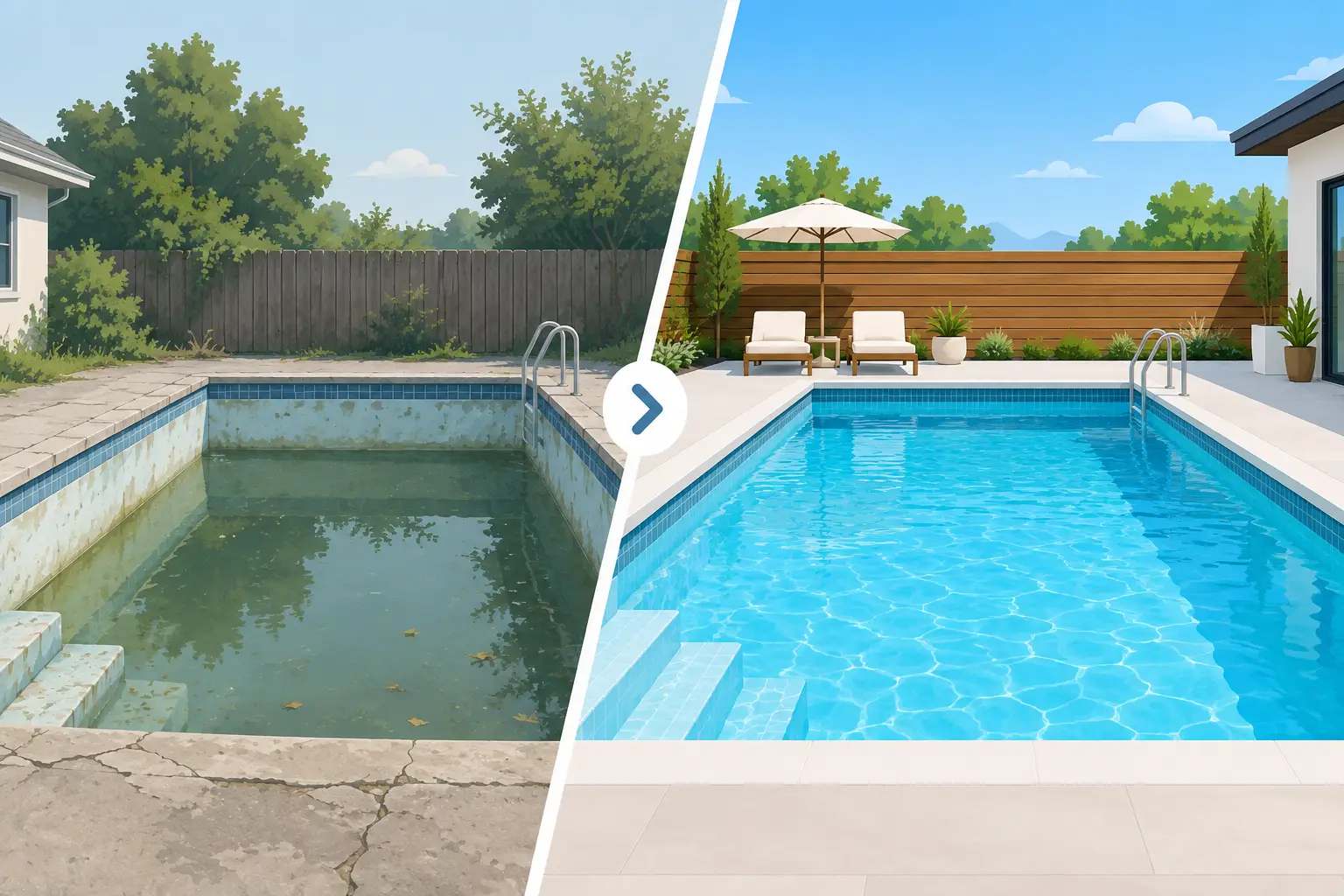
A faded pool can make the entire backyard feel dated, even when the home itself is well kept. This pool renovation before and after example shows how a focused update can turn a worn outdoor space into a place for weekend swims, relaxed evenings, and easy entertaining.
The goal is not to make every pool look brand-new at any cost. It is to make the right improvements for the way your household uses the space. Sometimes that means a full visual reset. Other times, it means solving a leaking finish, unreliable equipment, or an awkward deck layout while improving the look along the way.
Pool renovation before and after example: A typical transformation
Consider a 15-year-old rectangular pool behind a family home. The shell is structurally sound, but the white plaster has become rough and stained. The waterline tile is cracked in several places. A narrow concrete deck leaves little room for lounge chairs, and one aging pool light creates a harsh glare after dark. The equipment still runs, but it is loud, inefficient, and increasingly difficult to repair.
Before the renovation, the pool is usable. That is often the tricky part. Homeowners may put off improvements because nothing has failed completely. Yet the backyard no longer feels inviting. Guests stay on the patio instead of gathering by the water. The owners spend more time managing small maintenance frustrations than enjoying a swim.
After renovation, the pool has a medium-blue aggregate finish, clean porcelain waterline tile, and updated coping that creates a sharper edge between water and deck. The deck has been expanded with slip-resistant pavers, creating distinct space for two chaise lounges, a small dining table, and a clear path around the pool. Warm LED lighting changes the mood at night, while quieter variable-speed equipment reduces day-to-day noise and energy use.
The pool footprint has not changed. The experience has.
That distinction matters for budgeting. A renovation does not always require moving walls, changing depth, or adding a spa. A well-planned finish, tile, deck, lighting, and equipment package can make an existing pool feel like it belongs to a completely different home.
What changes the “after” result most
A good before-and-after project begins with the features people see first, but it should not stop there. Surface materials establish the visual direction. Function determines whether the upgrade continues to feel good after the first season.
Interior finish and water color
The pool finish is the largest uninterrupted surface in the backyard, so it has an outsized effect. White plaster creates a classic, bright look but can show staining and wear more readily over time. Quartz and pebble-style finishes offer more texture, depth, and durability, though they generally cost more and may feel less smooth underfoot.
Color selection affects the water as much as the pool shell. Soft blue and pale gray finishes tend to create a clean coastal look. Deeper blue, charcoal, and darker blends can produce dramatic water color, but they may show dust, scale, or debris more easily depending on local conditions and landscaping.
The best choice depends on sun exposure, the architecture of the house, and the level of maintenance a homeowner expects. A finish sample viewed indoors will not tell the whole story. It should be considered in natural light beside the selected tile and coping.
Tile, coping, and the pool edge
Waterline tile does practical work by protecting the finish around the water’s edge, but it also gives the pool its visual line. Replacing dated patterned tile with a simple glass, porcelain, or ceramic selection can immediately make an older pool feel more current.
Coping deserves equal attention. Bullnose coping reads traditional and comfortable. Square-edge stone or porcelain can feel more tailored and contemporary. The material must also work with the deck, drainage plan, and local weather conditions. A beautiful edge that becomes slippery or difficult to maintain is not the right upgrade.
Deck space that matches real use
Many older pools were built with just enough deck to walk around the water. That may have worked when the pool was new, but it often falls short for families and homeowners who want to host.
In the example above, expanding the deck does more than add square footage. It gives the backyard zones: a place to dry off, sit, eat, and supervise children without crowding the pool edge. Pavers, textured concrete, travertine, and porcelain each offer a different look, feel, price point, and maintenance profile.
Drainage must be part of the conversation. A deck renovation should direct water away from the home and avoid creating low spots where runoff collects. This is one of the less glamorous decisions that protects the investment long after the new surface is installed.
Lighting and equipment that disappear into the experience
New LED pool lights can make evening swimming more comfortable and make the water a feature after sunset. One carefully placed light may be enough for a small pool. Larger or irregularly shaped pools may benefit from multiple lights to reduce dark corners and glare.
Equipment upgrades are less visible, but homeowners notice them quickly. A variable-speed pump, updated filtration, automated controls, and properly sized sanitation equipment can make routine care simpler. Not every renovation needs every technology option. The right equipment package depends on pool volume, plumbing condition, local utility costs, and how hands-on the owner wants to be.
Start with condition, not just inspiration
Photos are useful for identifying a style, but renovation decisions should begin with an on-site evaluation. A pool can look tired because of surface staining when the real issue is water chemistry. It can also look like it needs only plaster when there are cracked bond beams, deteriorating plumbing, or deck movement that should be addressed first.
A thorough assessment typically looks at the shell, finish, tile, coping, deck, plumbing, electrical components, and equipment. It also considers safety features such as drains, handrails, fencing, and lighting. Older pools may need code-related updates when work is performed, and requirements vary by location.
This is where experienced coordination saves headaches. Choosing finish colors before confirming a repair scope can lead to changes later. Installing a beautiful new deck before resolving drainage or plumbing access can create unnecessary expense. The cleanest result usually comes from planning the work in the order it needs to happen, not in the order it looks most exciting.
Set a renovation budget around priorities
Pool renovations range from targeted repairs to full backyard reinventions. The final cost depends on the pool’s size, material condition, access to the yard, selected finishes, equipment needs, and whether the deck or landscape is included.
For some homeowners, the priority is restoring a safe, smooth interior finish and dependable circulation. For others, the pool is part of a broader outdoor-living project that includes a larger deck, shade structure, seating area, and landscape lighting. Both approaches can be worthwhile when they match the property and the way the space will be used.
It helps to separate needs from upgrades. Repairs to a failing finish, broken tile, plumbing, or electrical system should be evaluated first. Style selections such as premium tile, water features, and expanded decking can then be considered with a clear understanding of the base project.
Avoid choosing solely by the lowest initial number. A renovation is exposed to water, chemicals, sun, and changing temperatures every day. Material quality, preparation, installation practices, and follow-up support affect how the project performs over time.
A renovation should make ownership easier
The strongest after photos show more than a new color palette. They show a backyard that works better. There is room for people to gather. The pool feels comfortable underfoot. The equipment is manageable. The water looks clear because the system and care routine support it.
That last point is easy to overlook. New plaster and tile deserve proper startup care, and every pool finish has water-balance needs that protect its appearance. Equipment settings, circulation time, cleaning habits, and chemical management should be understood before the project is complete. A renovated pool still needs consistent stewardship, just as a new one does.
For homeowners who want a polished coastal backyard without turning pool care into a second job, the planning conversation should include the years after construction, not only reveal day. Coastal Cove Pools approaches renovation as part of the full ownership experience: a place to cool off, gather, and enjoy at home.
A useful next step is simple: stand in your backyard at the time you use it most. Notice where people sit, where the light falls, what feels crowded, and what you avoid using. Those details often point to the renovation choices that will matter long after the before-and-after photo is taken.