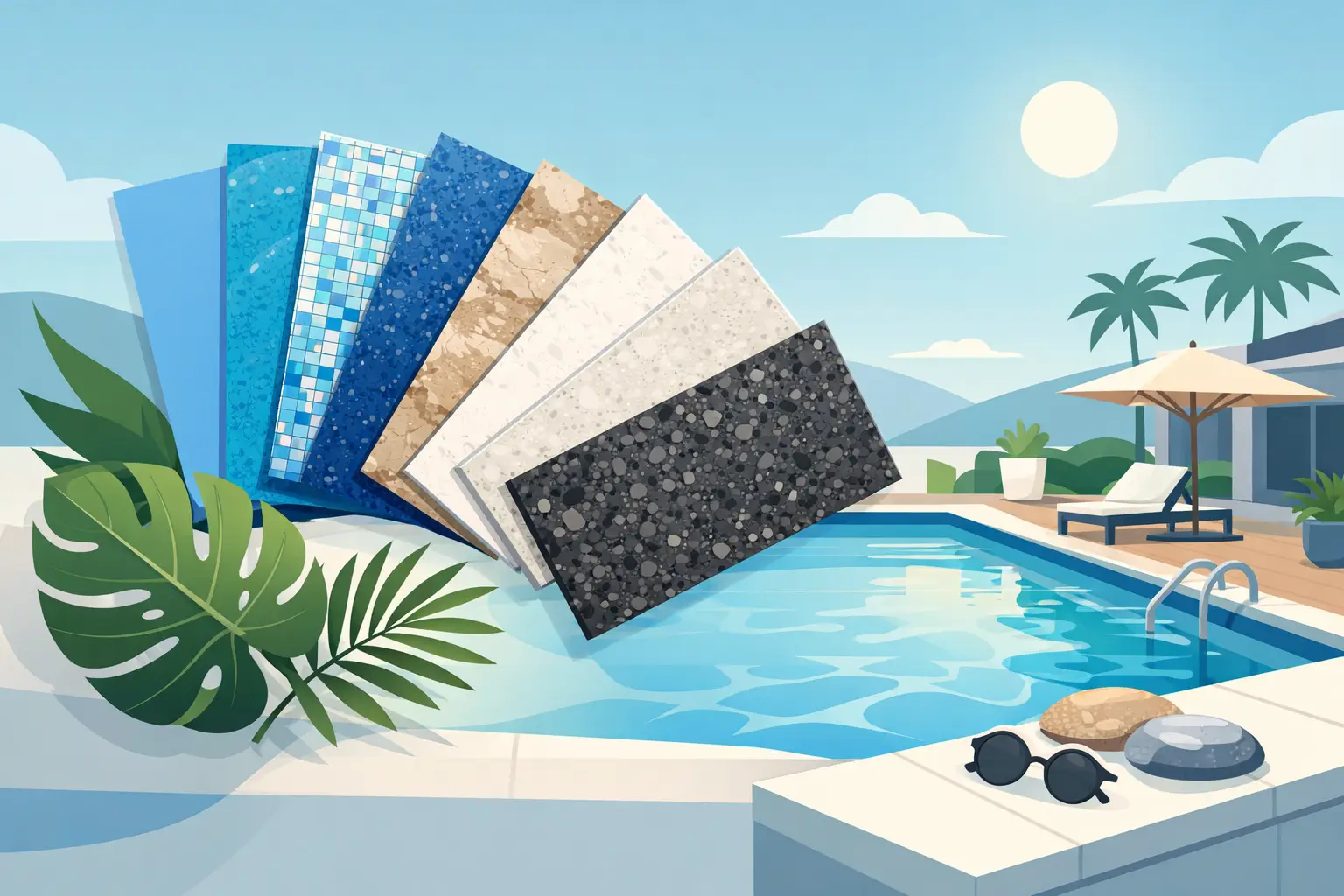
A pool finish decides more than color. It affects how the water looks at noon, how the floor feels under bare feet, how often you will think about repairs, and how your backyard holds up as a long-term investment. When homeowners ask about the best pool finishes for homeowners, they are usually asking a bigger question: what will still look right and perform well years after the project is done?
That answer depends on budget, style, maintenance tolerance, and how you want the pool to feel in daily use. A finish that looks sharp in a photo may not be the right fit for a family pool with constant traffic. A premium finish may be worth it for longevity, but not every yard needs the highest-ticket option. The best choice is the one that fits the way you actually live.
What makes the best pool finishes for homeowners
Most homeowners end up weighing the same four factors. First is appearance. Finish color and texture shape the entire look of the water, from bright Caribbean blue to a darker lagoon tone. Second is comfort. Some finishes feel smooth and soft, while others have more texture underfoot.
Third is durability. Pool surfaces take constant exposure from chemicals, sun, brushing, and circulation. Some finishes age faster or show wear earlier. Fourth is upkeep. Certain materials are more forgiving with water chemistry, while others demand closer attention to avoid staining, etching, or scale.
If you are deciding between finishes, it helps to think beyond install day. Ask what the surface will look like after five summers, not just five minutes after the pool is filled.
White plaster
White plaster remains the standard entry point for many residential pools. It has a clean, classic look and usually comes with the lowest upfront cost. For homeowners building a pool while watching the full project budget, plaster keeps the finish simple and familiar.
The appeal is straightforward. White plaster gives water a bright blue look, works with almost any coping or decking material, and feels relatively smooth when new. For traditional backyard designs, it still fits well.
The trade-off is longevity and sensitivity. Plaster tends to show wear sooner than upgraded finishes, especially if water chemistry slips out of range. It can stain, mottle, or etch over time. In many markets, homeowners should expect a shorter service life than aggregate finishes. If you want the most affordable option and understand that resurfacing may come sooner, plaster can still be a practical choice.
Quartz finishes
Quartz is often the middle ground that makes sense. It blends plaster with quartz aggregate, creating a surface that is more durable than standard plaster while keeping a refined appearance. For many homeowners, this is where value and performance start to meet.
A quartz finish usually offers more color options than white plaster and tends to resist staining and etching better. It also holds up well in active family pools where the surface sees regular use. The texture is typically a little more pronounced than plaster, but still comfortable for most swimmers.
The main consideration is cost. Quartz sits above plaster in price, and while it usually earns that difference over time, it is still not the top-end option in the category. For homeowners who want an upgraded finish without moving fully into premium aggregate pricing, quartz is a smart lane.
Pebble finishes
Pebble finishes are often at the top of the conversation because they combine a high-end look with strong durability. They use small natural stones set into the surface, creating depth, variation, and a more custom water color. In the right backyard, a pebble finish can make the whole pool feel more like a resort feature than a standard installation.
This is one of the strongest answers to the phrase best pool finishes for homeowners, especially for buyers who plan to stay in the home and want long-term performance. Pebble surfaces generally outlast plaster and many quartz products when properly installed and maintained. They are also better at hiding minor imperfections and natural variation, which can help the pool age more gracefully.
Texture is the thing to think about carefully. Some pebble finishes feel noticeably rougher than plaster-based surfaces, especially on steps, tanning ledges, or shallow lounging areas where people stand more than they swim. There are smaller-pebble and polished versions that soften that feel, but the surface character is still part of the package. If comfort underfoot matters as much as durability, ask to compare samples in person.
Polished aggregate
Polished aggregate takes the durability of exposed stone and refines the feel. These finishes are ground or polished after installation, which creates a smoother surface and a more upscale appearance. Homeowners who want the strength of aggregate without the rougher texture often land here.
The visual effect is sharp and clean. Water color can look rich and dimensional, and the finish tends to read as premium without feeling flashy. It pairs especially well with modern outdoor spaces, clean decking lines, and darker tile selections.
The obvious trade-off is price. Polished aggregate is usually one of the more expensive choices. Still, for homeowners investing in a full backyard environment rather than just a pool shell, the added cost often aligns with the overall goal. It is a finish people usually choose once, with the expectation that it will hold its look for years.
Glass bead finishes
Glass bead finishes bring shimmer and color depth that other materials do not quite match. Mixed into the surface, the beads can reflect light in a way that gives the water a brighter, more luminous appearance. In full sun, the effect can be striking.
This finish appeals to homeowners who care deeply about aesthetics and want a custom visual result. It works well in design-forward pools where the finish is part of the statement, not just a background material.
That said, this is not always the most practical choice for every household. Installation quality matters a lot, and the pricing can climb quickly depending on the blend and design. Some homeowners love the look enough to justify it. Others decide the premium is better spent elsewhere, such as automation, decking, or outdoor living features.
Tile interiors
A full tile interior is the luxury end of the pool finish spectrum. It delivers a highly custom look, broad design flexibility, and strong durability when done correctly. Tile can create everything from crisp contemporary lines to old-world detail, depending on the material and pattern.
For most residential homeowners, the question is less about performance than cost and complexity. Full tile interiors are expensive, labor-intensive, and unforgiving of poor installation. They also require thoughtful material selection so the finish fits the climate, chemistry demands, and overall design of the backyard.
For a certain kind of home, tile is absolutely the right choice. But it is not the default recommendation for most families simply looking for a great-looking, low-drama pool surface. It is a premium design decision, not just a finish upgrade.
How to choose the right finish for your pool
The easiest mistake is choosing only by color sample. A small chip never tells the full story. Water depth, sunlight, surrounding hardscape, and the texture of the material all change how the finish reads once the pool is filled.
If your priority is lowest upfront cost, white plaster is usually the answer. If you want a balanced upgrade with better resilience, quartz often makes the most sense. If your focus is long-term durability and a premium natural look, pebble or polished aggregate usually leads the field.
It also helps to match the finish to the pool’s purpose. A play pool used by kids every weekend may benefit from a comfortable, forgiving surface. A pool built for visual impact and entertaining may justify a more design-driven material. A vacation-style backyard where the pool is the centerpiece may call for a finish with more depth and character.
Cost matters, but so does replacement timing
Homeowners often compare finish prices without thinking enough about lifecycle cost. A lower-cost finish can be the more expensive choice if it needs resurfacing sooner or demands more correction from avoidable chemistry issues. On the other hand, paying for the highest-end finish does not always create value if the rest of the project does not call for it.
This is where local guidance matters. Climate, water conditions, pool usage, and installation quality all affect how a finish performs. Coastal Cove Pools sees this choice for what it is: not just a color decision, but a long-term surface decision tied to ownership experience.
The finish should match the way you live
The best-looking pool on day one is not always the best pool to own. A finish should fit your home, your maintenance expectations, and the kind of backyard time you want to have. Some homeowners want classic and simple. Others want a richer, more custom water color that changes the entire feel of the yard.
A good finish disappears into the experience. It feels right, looks right, and does not become a constant source of second-guessing. When you choose with durability, comfort, and daily use in mind, the pool becomes what it should be – an easy part of home life, not another surface to worry about.