
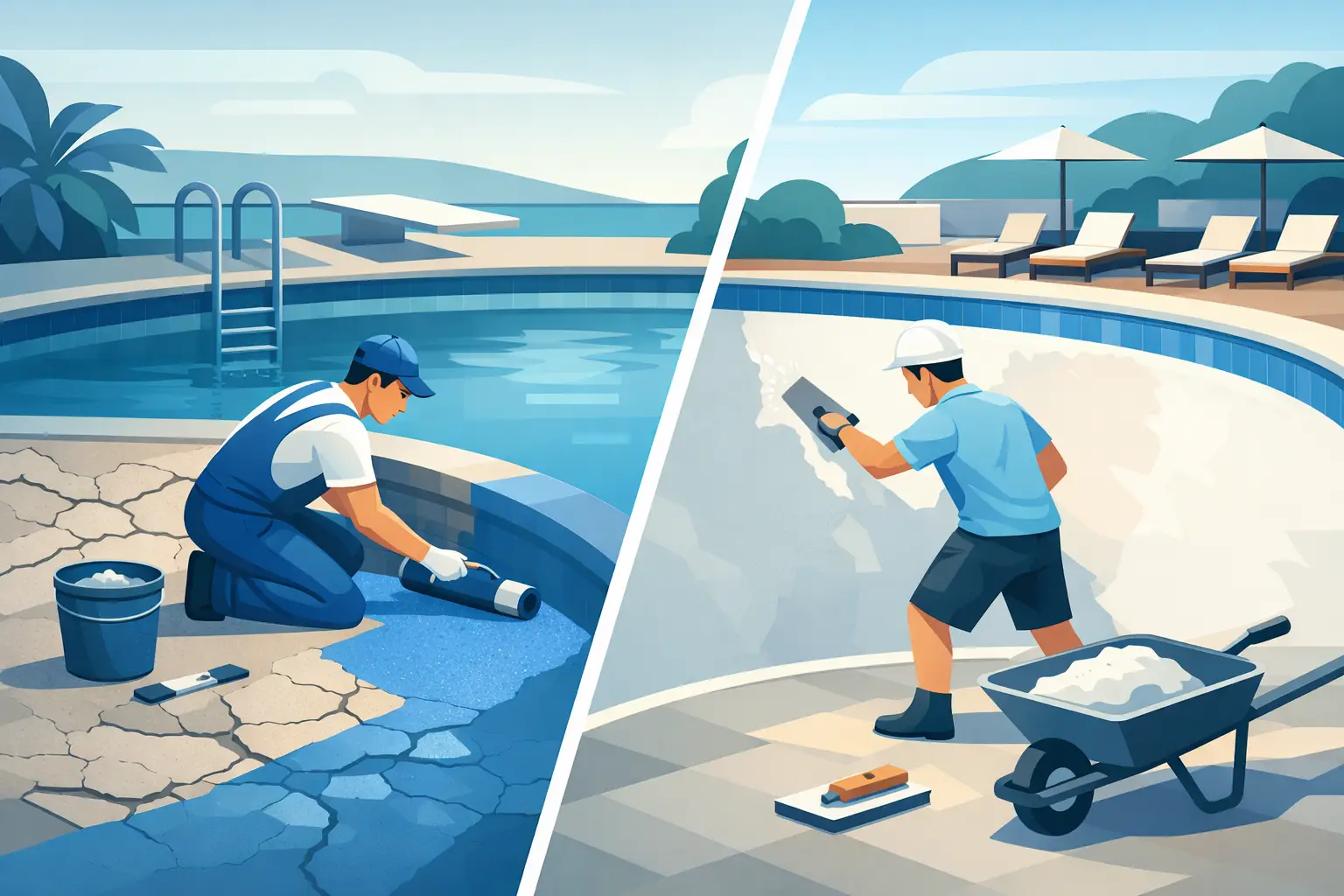
A pool can look fine from the patio and still be telling you it is time for a new surface. Rough spots on the steps, stains that no longer brush out, small cracks, or a finish that feels worn underfoot usually lead homeowners to the same question: what is the real pool resurfacing vs replastering cost, and which option actually fits the pool you have?
The short answer is that replastering is one type of resurfacing, and it is usually the lower-cost path if your pool is a traditional plaster pool and the shell is in good condition. Full resurfacing is a broader category. It can include new plaster, aggregate finishes, tile, or other interior coatings, and the price range moves accordingly. That is why two estimates can look far apart even when both contractors say they are “resurfacing” the pool.
What pool resurfacing vs replastering cost really means
Homeowners often use these terms as if they mean the same thing. Contractors do not always use them the same way.
Replastering usually refers to removing or preparing the old interior plaster and applying a new plaster-based finish. In most residential pools, that means white plaster or a plaster mix with additives for color or durability. It is a finish-specific term.
Resurfacing is the wider term. It can mean replastering, but it can also mean upgrading to pebble, quartz, polished aggregate, or in some cases tile. If you are comparing quotes, this difference matters more than the wording itself. One estimate may be pricing a basic plaster refresh, while another includes a premium finish with a longer expected life and a different look in the water.
Typical cost ranges for resurfacing and replastering
For a standard in-ground residential pool in the US, replastering often lands somewhere around $5,000 to $10,000. Larger pools, more prep work, difficult access, or upgraded plaster blends can push that higher.
Pool resurfacing cost has a wider range because the finish options vary. A basic resurfacing with standard plaster may overlap with replastering costs. Quartz or pebble finishes often run from about $7,000 to $15,000 or more. Glass bead blends and full tile interiors can move well beyond that.
Those are broad planning numbers, not quote numbers. A compact play pool and a large custom pool with a spa, tanning ledge, and waterline repairs are not priced the same way. In a service-led market, labor quality and prep standards also affect the number. Lower bids can look attractive until surface prep is rushed and the finish fails early.
Why the cheapest finish is not always the lowest cost
A standard plaster finish usually costs less upfront. That makes it appealing if you want a clean reset without turning the project into a full aesthetic upgrade.
But lower upfront cost does not always mean lower long-term cost. Plaster can have a shorter service life than premium aggregate finishes, especially when water chemistry has been inconsistent over the years. If you expect to stay in the home for a long time, a finish with better durability may make financial sense even if the initial estimate is higher.
That is the real cost conversation. It is not just what you pay now. It is how long the finish lasts, how it looks as it ages, and how much maintenance discipline it will demand.
What drives the price up or down
Pool finish pricing is rarely just about square footage. The condition of the existing pool matters just as much.
If the old surface is bonded well and the shell is sound, prep may be relatively straightforward. If there is delamination, hollow spots, bond failure, crack repair, or evidence of leaks, the project becomes more than a finish update. Repairs add labor, materials, and time.
The finish itself is another major cost factor. White plaster is usually the most budget-friendly option. Quartz adds durability and a more refined look. Pebble finishes cost more but are often chosen for texture, longevity, and a resort-style appearance. Tile sits in a different tier altogether.
Access also changes the price. A backyard with easy equipment access is simpler to service than a narrow lot with elevation changes, limited entry, or strict neighborhood requirements. Regional labor rates, permit needs, startup chemicals, and whether the coping or tile line also needs work can all shift the final number.
Add-ons that quietly change the estimate
Some resurfacing jobs stay focused. Others uncover adjacent issues that are hard to ignore once the pool is empty.
Waterline tile replacement, coping repairs, skimmer work, light niche updates, main drain cover replacements, and equipment adjustments can all be sensible to do at the same time. They also increase the cost. This is not necessarily bad news. In many cases, handling those items during resurfacing is more efficient than draining the pool again later for a separate repair.
For homeowners trying to protect budget, this is where a clear scope matters. You want to know what is essential now, what is optional, and what is simply smart timing.
When replastering makes sense
Replastering is often the right move when the pool already has a plaster surface, the structure is sound, and the goal is to restore a clean, smooth finish without changing the entire design direction.
It also makes sense when resale timing is part of the equation. A fresh plaster surface can make the pool look cared for and move the outdoor space back into that polished, ready-to-enjoy category buyers notice. If the rest of the backyard is in good shape, that visual reset can go a long way.
There are trade-offs. Standard plaster is more vulnerable to staining, etching, and visible wear over time than some premium finishes. It also depends heavily on proper startup and balanced water chemistry. If your maintenance habits have been inconsistent, plaster may not forgive that as well as other surfaces.
When a broader resurfacing upgrade makes sense
A broader resurfacing project makes sense when you want longer life, a different water color, a more premium feel, or a finish better suited to heavy use. This is common in family pools, entertainment-focused backyards, and homes where the pool is central to the outdoor living setup.
It is also worth considering if the current surface has reached the point where a like-for-like replacement feels shortsighted. If you already plan to update tile, coping, lighting, or the surrounding deck, a better interior finish may align more naturally with the rest of the upgrade.
This is where style and economics overlap. A pebble or quartz finish may cost more, but it can also shift the pool from dated to current in a noticeable way. For homeowners who view the backyard as part of the home’s lifestyle value, not just a maintenance item, that can be the right investment.
How to compare estimates without getting lost
The cleanest way to compare pool resurfacing vs replastering cost is to ask each contractor exactly what surface is being installed, how the old finish will be prepared, what repairs are included, and what startup process follows the refill.
If one proposal says resurfacing and another says replastering, that alone tells you very little. The meaningful differences are in prep, materials, included repairs, and workmanship standards. A lower number may exclude tile work, crack repair, or startup care. A higher number may include items that protect the finish and reduce the chance of problems after completion.
This is one of those projects where clarity is worth money. The finish you choose is what you will see every day, and the quality beneath it is what determines whether it stays attractive.
The better question is not just cost
There is a reason homeowners get stuck on this decision. Both options can be right.
If your pool needs a straightforward refresh, replastering may be the practical move. If you want a more durable finish, a stronger visual upgrade, or a longer horizon before the next major surface project, resurfacing with a premium material may justify the extra spend. Coastal Cove Pools sees this choice for what it is: not just a repair line item, but part of how the backyard feels and performs over time.
The better question is not which option is cheapest. It is which option fits the way you use the pool, how long you plan to own the home, and how much value you place on a finish that still feels good season after season.