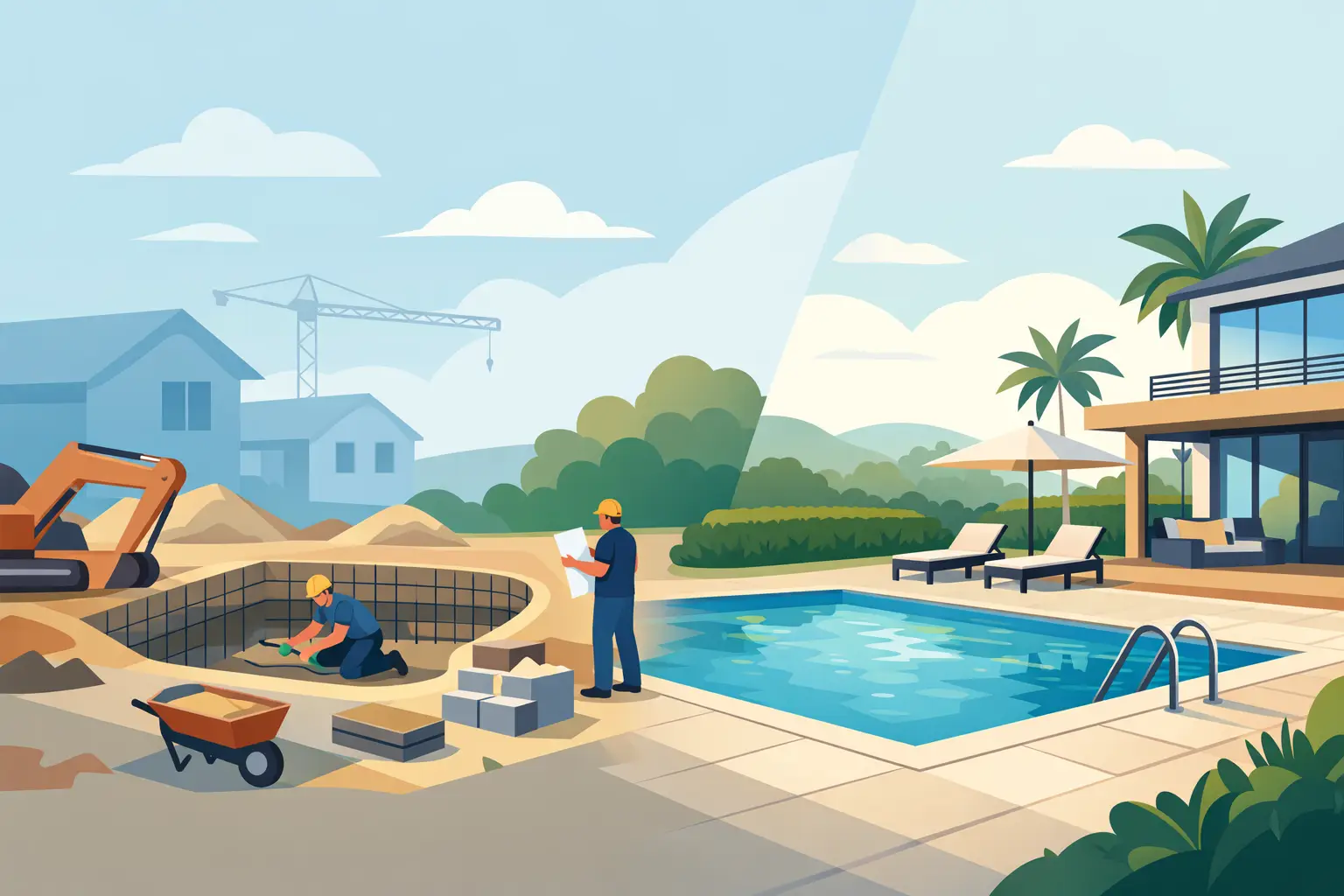
A backyard pool usually starts as a picture in your head. Quiet mornings, kids in the water after school, friends staying outside longer because the space finally feels finished. Residential pool construction is the stage where that picture either becomes a smart, lasting upgrade or an expensive lesson in shortcuts.
The difference is rarely the tile color or the shape of the tanning ledge. It comes down to planning, site conditions, workmanship, and how well the build fits the way you actually live. A pool should look good on day one, but it also needs to perform through heavy use, hot weather, changing water conditions, and years of maintenance.
What residential pool construction really involves
From the outside, people tend to see the fun parts first – the waterline tile, the deck, the finish, the lighting at night. The construction process is much more technical than that. It starts with the lot, not the finish materials.
Slope, drainage, soil movement, access to the backyard, utility lines, setback rules, and existing hardscape all affect what can be built and how it should be built. A design that looks perfect on one property can be the wrong call on another. That is why early decisions matter so much. If the layout ignores drainage, if equipment placement is an afterthought, or if the pool is oversized for the yard, the project can feel compromised before the shell is even complete.
Good construction also means thinking past the installation itself. The pool has to be serviceable. Equipment needs room. Plumbing runs need to make sense. Decking and grading should help move water away from the pool and home, not create standing water or erosion problems later.
Start with the lot, not the wish list
Most homeowners begin with a dream setup. That makes sense. You want the clean rectangle, the spa spillway, the sun shelf, the outdoor kitchen, maybe a fire feature. But the lot sets the terms.
A smaller backyard may call for tighter design discipline so the pool does not crowd every other use of the space. A sloped property may need retaining work, drainage planning, or a different structural approach. If access is limited, construction logistics can change timeline and cost. Even neighboring structures and trees can influence placement, safety, and cleanup over time.
This is where restraint is a strength. The best projects are not always the ones with the most features. They are the ones that feel balanced. Enough swim space. Enough deck space. Enough room to move, lounge, entertain, and maintain the yard without feeling boxed in.
Design choices that affect daily life
A pool is a visual upgrade, but it is also a daily-use system. That means design needs to do two jobs at once. It should look right with the house and work right for the people using it.
Families with young kids may care more about shallow play areas, steps that are easy to enter, and sightlines from the house. Homeowners focused on entertaining may want more deck space, integrated seating, lighting, and an attached spa. Buyers thinking long term often care about a timeless shape and finish selection that will still feel current years from now.
There is always a trade-off somewhere. A larger tanning ledge reduces open swim area. More water features can mean more maintenance and more equipment complexity. Darker finishes can create a dramatic look, but they also change water temperature and appearance. None of these are wrong choices. They just need to match the homeowner, the property, and the level of upkeep that feels realistic.
The hidden value of solid construction standards
The parts you do not see matter most. Excavation accuracy, steel placement, plumbing layout, shell integrity, equipment sizing, and drainage planning are what give a pool its long life.
This is also where homeowners can get into trouble when they compare proposals only by price. Lower bids sometimes leave out details that protect the project over time. That can show up later as poor circulation, inconsistent heating, hard-to-service equipment pads, settling issues, or surfaces that age faster than expected.
Reliable residential pool construction should account for how the pool will be used in real conditions, not just how it photographs after startup. Heavy family use, seasonal debris, regional weather, sun exposure, and water chemistry all put pressure on the system. A good build anticipates that.
Permits, timing, and the part homeowners underestimate
Most people expect construction to involve permits and inspections. Fewer expect how much timing can shape the experience.
Permit review, utility marking, weather, material availability, and inspection schedules can all influence the build calendar. Some phases move quickly. Others depend on third-party approvals or trade coordination. That does not always mean something is wrong. It means the project needs active management and realistic communication.
This is one reason local experience matters. Builders who work regularly in the same region usually understand the approval flow, common site issues, and what tends to slow projects down. That does not eliminate delays, but it reduces avoidable ones.
Homeowners also underestimate decision timing. Finish selections, decking, coping, tile, and equipment options should be made early enough to avoid holding up progress. The smoother the decision path, the cleaner the construction process tends to be.
Why equipment choices matter after the build
The pool shell gets the attention, but equipment determines much of the ownership experience. Pumps, filters, heaters, automation, sanitation systems, and plumbing design affect noise, efficiency, water quality, and the day-to-day feel of owning a pool.
A homeowner who wants simple operation may benefit from automation that controls lighting, circulation, and temperature from one interface. Someone who values lower upkeep may want equipment selected with service access and maintenance simplicity in mind. If you plan to swim into cooler months, heating strategy matters from the start, not after the fact.
There is no universal best setup. It depends on pool size, usage, budget, and expectations. Spending wisely here often has a bigger impact on long-term satisfaction than stretching for one more decorative feature.
Construction is only part of ownership
A finished pool is not a finished responsibility. Water quality, cleaning, equipment checks, seasonal adjustments, and occasional repairs are all part of the real cost of ownership.
That should not discourage anyone from building. It should shape the way the project is planned. If you want a pool that feels like an easy extension of the home, the maintenance side needs to be part of the conversation early. Some homeowners are happy to stay hands-on. Others want straightforward systems and dependable service support. Either way, the pool should be built with real ownership habits in mind.
That is part of what separates a good experience from a frustrating one. The best pool projects do not stop at installation. They make sense six months later, three summers later, and after the first equipment issue that needs attention.
How to evaluate a residential pool construction partner
The right builder is not just selling a design. They are managing a complex outdoor project that affects your property, your budget, and your daily life.
Look for clarity, not hype. A strong construction partner should be able to explain how your lot affects the design, where trade-offs exist, what is included in the scope, and what ownership will look like once the water is in. Clean communication matters. So does consistency. If the process feels vague before the contract, it usually does not get clearer once work begins.
It also helps to pay attention to how the builder talks about maintenance and long-term performance. Anyone can sell the dream. The better partners are willing to discuss circulation, service access, drainage, and upkeep without making it sound glamorous. That is usually a sign they care about the full life of the pool.
For many homeowners, this is where a service-led company stands apart. Coastal Cove Pools reflects that local, relationship-based approach – build it well, set realistic expectations, and stay connected to the ownership side after construction.
A pool should fit the home and the pace of your life
The best backyard pools do not feel dropped into place. They feel like they belong there. The proportions work with the house. The finish choices support the setting. The layout makes the yard easier to enjoy, not harder to manage.
That is why residential pool construction works best when it is approached as both a building project and a lifestyle decision. You are not just adding water to a backyard. You are shaping how the home is used, how weekends feel, and how the outdoor space supports the people living there.
If the plan is thoughtful, the workmanship is disciplined, and the long-term care is part of the conversation from the start, a pool can become one of the few home upgrades that changes both value and daily life in a way you actually feel.