
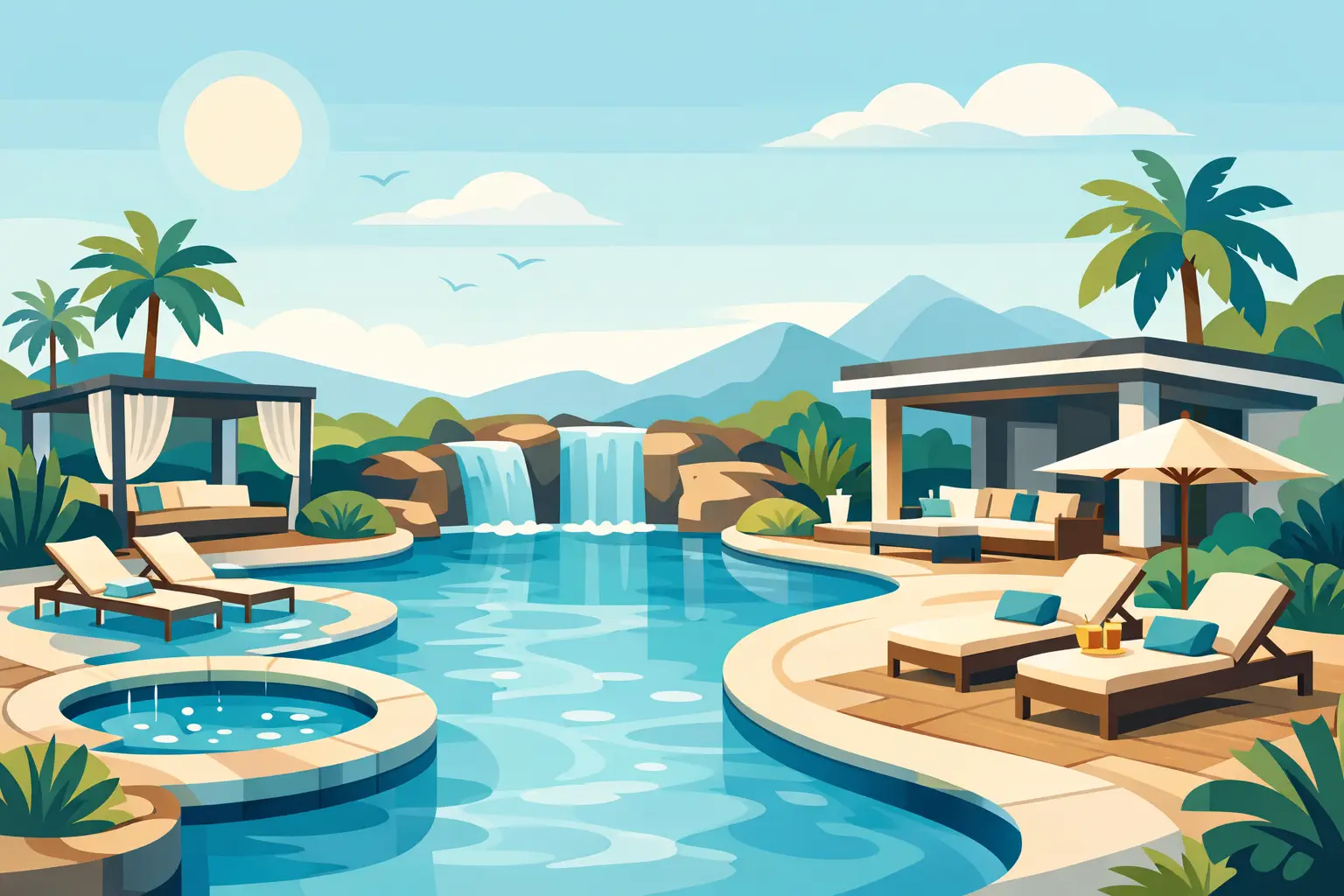
A backyard feels more like a resort when the pool is designed for the hours around the swim, not just the swim itself. The strongest resort style backyard pool design trends create places to cool off, gather, relax in the shade, and enjoy the view from inside the home. The goal is not to copy a hotel pool. It is to build an outdoor space that fits your property, your routine, and the way you want to spend a Saturday afternoon.
For homeowners, that distinction matters. A dramatic feature may look great in a photo, but a well-planned pool earns its place through comfort, circulation, manageable upkeep, and lasting materials. The best designs feel polished without feeling overbuilt.
Resort Style Backyard Pool Design Trends That Last
The pool as one part of an outdoor room
Current pool design starts with a broader question: what should happen around the water? Instead of placing a pool in the middle of a large, open deck, homeowners are creating distinct zones for swimming, dining, grilling, lounging, and quiet conversation. The pool becomes the anchor, while the surrounding hardscape and furnishings give the backyard a purpose from morning through evening.
This approach works especially well for families and frequent hosts. A dining area near the kitchen keeps meals practical. A lounge zone lets guests stay comfortable without needing to sit at the pool edge. A small conversation area can create a more intimate destination at the far end of the yard.
It also helps a backyard feel larger. Clear pathways and intentional seating prevent the common problem of a beautiful pool surrounded by space that has no real function. On a compact lot, one flexible lounge-and-dining area may be more useful than trying to force several small zones into the plan.
Baja shelves designed for real use
Sun shelves, also called tanning ledges or Baja shelves, remain a favorite because they serve several people at once. Young children can play in shallow water under supervision. Adults can sit with their feet in the pool. In-pool loungers can create a true resort feel without taking over the deck.
The design decision is in the details. A shelf that is too shallow can be uncomfortable for seated use, while one that is too large may reduce the swimming area more than expected. Placement matters, too. A shelf with afternoon sun is appealing in cooler months, but homeowners in hotter climates may prefer an umbrella sleeve or nearby shade structure.
A tanning ledge is most successful when it supports how the household will actually use the pool. It should not be added simply because it appears in every inspiration photo.
Waterlines with texture and restraint
All-blue interiors are still timeless, but many homeowners are moving toward layered finishes that give water more depth. Waterline tile is a central design tool. Soft whites, sandy neutrals, sea-glass greens, muted blues, and handmade-look tile can bring a coastal influence without making the pool look themed.
Texture matters as much as color. A subtle variation in tile can catch sunlight and make the water feel more dimensional. Large-format porcelain can create a cleaner, more contemporary look. Glass tile offers reflection and sparkle, but it can raise the budget and may need more careful attention to water balance and cleaning.
The right choice depends on the home. A crisp, modern exterior may call for simple tile and restrained color. A traditional home can carry more pattern or warmth. The key is choosing finishes that complement the architecture rather than competing with it.
Integrated spas and quieter water features
Spas are increasingly built into the pool composition rather than treated as separate additions. A raised spa can become a focal point, especially with a tile face, spillway, or a seating wall nearby. A flush spa can feel more minimal and preserve long sightlines across the yard.
Water features are becoming more selective as well. A broad sheet of water, a simple scupper, or a low spillover often has more staying power than several competing fountains. The sound of moving water can make a backyard feel private and calm, but it should be considered alongside nearby bedrooms, neighbors, and the home’s outdoor entertaining areas.
More water features also mean more plumbing, pumps, and surfaces to maintain. A single well-designed feature often delivers the atmosphere homeowners want with fewer long-term demands.
Shade built into the plan
A resort pool is not useful if everyone has to retreat indoors by noon. Shade has moved from an accessory to a core part of the pool design. Pergolas, cabanas, covered patios, adjustable louvers, oversized umbrellas, and planted tree canopies all have a place, depending on the property.
Permanent structures offer dependable relief and can define an outdoor kitchen or lounge. They also require early planning for permits, drainage, setbacks, electrical needs, and views from the house. Umbrellas are less permanent and easier to reposition, but they need sturdy bases and proper placement to hold up in wind.
The most comfortable spaces often mix both. A covered area handles peak sun and rain, while movable shade gives flexibility at the tanning ledge or poolside seating. Planning shade early prevents the awkward afterthought of trying to squeeze it around an already finished deck.
Fire features with a clear purpose
Fire bowls, fireplaces, and fire pits continue to bring evening appeal to pool environments. Their role has shifted from pure decoration to creating a reason to stay outdoors after the sun goes down. A fire feature near a seating area can make the backyard feel useful beyond swim season.
Placement is everything. Fire should be positioned away from overhanging structures, soft furnishings, and active pool traffic. It should also work with prevailing wind, local rules, and the sightlines from the home. A fire bowl placed only for symmetry can become a feature no one uses. A simple fire pit where people naturally gather can become the center of the yard.
Lighting that guides rather than overwhelms
Good pool lighting is felt before it is noticed. Underwater LEDs make evening swimming possible, while low landscape lighting helps people move safely between the house, pool, gate, and seating areas. Soft illumination under steps, benches, coping edges, and planting can create depth without turning the yard into a stage set.
Color-changing pool lights are popular, particularly for parties and holidays. For everyday use, warm white lighting is usually the more relaxed choice. Homeowners should also consider how lights look from indoor living areas. A pool should glow at night, not glare through the windows.
Lighting plans benefit from layers. Safety lighting, task lighting near cooking or dining areas, and ambient landscape lighting each do a different job. Combining them thoughtfully creates a more polished result than relying on bright fixtures alone.
The Practical Side of a Resort-Ready Pool
The most valuable trends are the ones that remain enjoyable after the first season. That brings equipment, drainage, and maintenance into the design conversation early. Automation can simplify scheduling for pumps, lights, heat, and water features. Variable-speed equipment can improve efficiency. Saltwater systems are often chosen for the feel of the water, though they still require regular testing and proper balance.
No equipment package eliminates the need for care. Tile, stone, water features, and surrounding landscaping all affect how often a pool needs attention. Dense landscaping can create privacy and a lush resort look, but plants should be selected and positioned with leaf drop, root growth, irrigation, and access for service in mind.
Deck materials deserve the same practical thinking. Natural stone can be beautiful but may need sealing and can become hot under direct sun. Porcelain pavers offer consistency and durability. Textured concrete can be cost-effective and slip-resistant, though its appearance and comfort depend heavily on finish quality. The best surface is the one that suits the climate, budget, and level of maintenance you are comfortable with.
A strong pool plan also leaves room for the unglamorous essentials: equipment access, drainage paths, safety barriers, and space to cover or service components. These decisions protect the investment and keep the finished yard from becoming harder to own than expected.
Designing for Your Version of Escape
Resort style does not require a huge yard or a long list of features. It comes from a clear point of view. Some homeowners want a calm, architectural retreat with a quiet spa and clean-lined decking. Others want a social backyard with shallow water, generous seating, shade, and room for kids to move freely. Both can feel elevated when the plan is cohesive.
Start with the moments you want your pool to support: coffee beside the water, family afternoons, dinner with friends, nighttime swims, or a private place to reset. Those moments should shape the layout before finishes and features are selected.
Coastal Cove Pools approaches a pool as a long-term part of home life, not a one-day reveal. The best backyard is the one that still feels like an easy escape after the novelty has worn off – cool water, comfortable shade, and a place that makes it natural to spend more time at home.