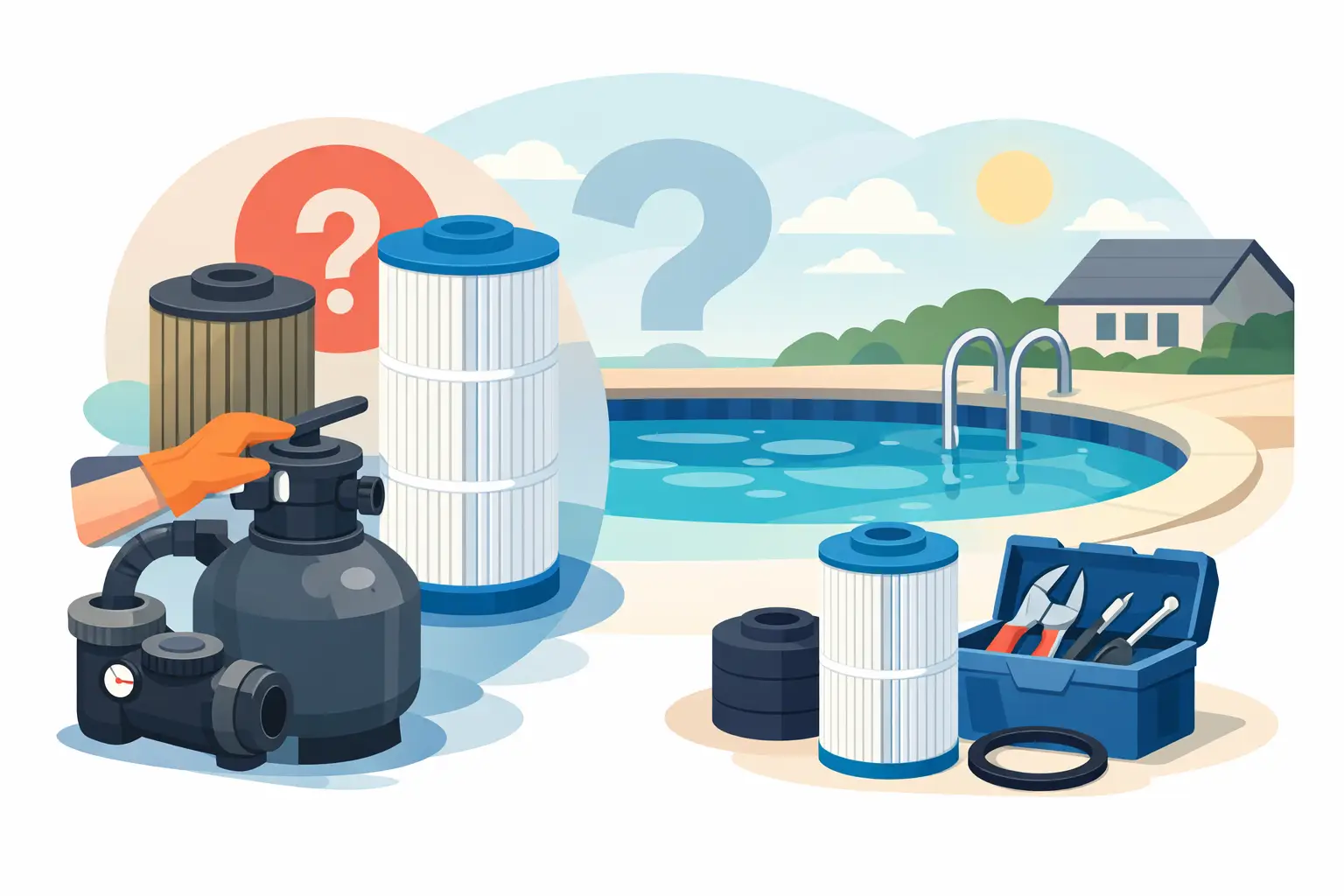
A pool can look fine from across the patio and still be working far too hard behind the scenes. If you are asking when should pool filter be replaced, the answer is rarely a date on the calendar. It is usually found in how the system holds pressure, how quickly the water clears, and whether cleaning the filter still makes a difference.
A clean, reliable filter protects the part of pool ownership that matters most: stepping outside to clear water, a comfortable swim, and a backyard that feels ready when friends or family arrive. Knowing the difference between a filter that needs cleaning, new media, or full replacement can prevent unnecessary expense and avoid the frustration of persistent cloudy water.
Start by Separating the Filter From Its Media
Homeowners often use “pool filter” to describe the entire filtration setup. In practice, there are several parts with different service lives. The filter tank, clamp, pressure gauge, internal grids or laterals, and the filter media may not wear out at the same time.
A cartridge filter uses one or more pleated cartridges to capture debris. A sand filter uses specialized pool-filter sand, while a diatomaceous earth, or DE, filter uses fabric grids coated with DE powder. The cartridge, sand, DE grids, and DE powder are the working materials that do most of the filtering. These typically need attention well before the tank itself.
That distinction matters. Replacing a cartridge is routine maintenance. Replacing a cracked tank, damaged manifold, or failing multiport valve is an equipment repair decision. Before replacing anything, identify which component is no longer doing its job.
Signs Your Pool Filter Is Near the End
The clearest signal is a filter that no longer recovers after proper cleaning. A cleaned cartridge should allow normal water flow and bring pressure closer to its usual clean reading. A backwashed sand or DE filter should do the same. If pressure remains high, circulation stays weak, or water stays dull despite balanced chemistry, the media or internal components may be worn, clogged, or damaged.
Watch for these four practical signs:
- Pressure rises unusually fast after cleaning. If the gauge climbs back to the cleaning range within a few days, the filter may be loaded with oils, scale, fine debris, or failing media.
- The pool remains cloudy even with balanced water. Cloudiness can be caused by algae, low sanitizer, or circulation issues, but a filter that cannot capture fine particles is often part of the problem.
- You see debris returning through the pool returns. Sand in the pool can point to broken laterals in a sand filter. DE returning to the pool can indicate torn grids, a damaged manifold, or a seal issue.
- The filter has visible damage. Cracks, a warped clamp, leaking seams, broken internal parts, or a pressure gauge that behaves erratically deserve prompt attention.
A single symptom does not always mean replacement. For example, low flow may come from a blocked skimmer basket, pump basket, valve setting, or an air leak on the suction side. That is why a basic system check comes before buying a new filter.
When Should Pool Filter Be Replaced by Type?
The right interval depends on filter style, swimmer load, nearby trees, water chemistry, and how consistently the pool is maintained. The following timeframes are useful planning ranges, not guarantees.
Cartridge filters
Most cartridge filter elements last about one to three years. A lightly used pool with gentle cleaning practices may get more life from a quality cartridge. A busy family pool, heavy sunscreen use, frequent storms, hard water, or repeated algae cleanup can shorten that life significantly.
Replace cartridges when the pleats stay flattened, the bands break down, the end caps crack, or cleaning no longer restores flow and pressure. Do not use a pressure washer or harsh tools on cartridge pleats. They can tear the material and shorten the cartridge’s usable life.
Sand filters
The filter tank may last 10 years or longer when it is protected from damage and maintained correctly. The sand inside typically lasts three to five years, though some pools need new sand sooner. Over time, the sharp edges of the sand grains wear down. The filter then becomes less effective at trapping fine particles, even if it still appears to circulate normally.
If a sand filter is channeling, repeatedly producing cloudy water, or sending sand into the pool, it needs inspection. Sand in the water is more often a broken lateral or standpipe problem than worn-out sand alone. Replacing the sand without checking the internals can leave the real issue unresolved.
DE filters
DE powder is added after backwashing or cleaning as part of normal operation, but the grids and internal assemblies have their own lifespan. DE grids often last five to 10 years, depending on care and chemistry. Holes, torn fabric, broken frames, and brittle plastic parts are replacement signs.
A DE filter can provide excellent water clarity, but it needs careful handling. Excessive pressure, improper reassembly, or a damaged grid can send DE back into the pool. For homeowners who want crystal-clear water with a more hands-on maintenance routine, it can be a strong option. For those who prefer simpler service, a large cartridge filter may be a better fit.
Do Not Let the Pressure Gauge Make Every Decision
Every pool should have a known clean operating pressure. After the filter has been thoroughly cleaned and the pump is running normally, note the gauge reading. Many systems need cleaning when pressure rises about 8 to 10 psi above that baseline.
That number tells you when the filter needs service, not automatically when it needs replacement. A high reading means water is meeting resistance. It could be a dirty cartridge, a filter needing backwash, a closed valve, or a gauge that is no longer accurate. If the gauge reads zero while the pump is running, or never changes under any condition, replace the gauge before using it to diagnose the filter.
Also pay attention to flow at the returns. A pool with a normal pressure reading but weak return flow may have a circulation issue elsewhere. Good diagnosis looks at the whole system, not one number.
A Simple Check Before You Replace Anything
Start with the easy items. Empty the skimmer and pump baskets, confirm the water level is high enough for the skimmer to draw properly, and make sure valves are in their intended positions. Check for air bubbles in the pump lid or returns, which can signal an air leak that reduces circulation.
Next, clean the filter according to its type. Rinse cartridges thoroughly and use an appropriate cleaner only when oils or scale are present. Backwash sand and DE filters for the proper length of time, then recharge a DE filter with the correct amount of powder. Let the system run and compare pressure, flow, and water clarity over the next day or two.
If performance remains poor after these steps, inspect the filter internals or have a pool professional do so. This is especially worthwhile before replacing a sand filter tank or changing filter types. A new filter should match the pool’s pump flow, plumbing, and expected bather load. An oversized pump paired with an undersized filter creates avoidable pressure and maintenance problems.
Repair, Replace Media, or Upgrade the Whole Filter?
A repair makes sense when the tank is sound and the issue is limited to a gauge, o-ring, clamp, valve gasket, grid, lateral, or cartridge element. Replacing media makes sense when the system is structurally healthy but filtration quality has declined with age.
Full filter replacement is the better call when the tank is cracked, the housing has UV damage, parts are no longer available, or repairs are becoming frequent. It can also be an opportunity to improve the ownership experience. A larger cartridge filter, for example, may reduce cleaning frequency for a family that uses the pool often and wants more time enjoying the patio instead of maintaining equipment.
There is a trade-off. Larger or higher-performance filters can cost more upfront, and DE systems require more involved servicing. The best choice is not always the most powerful option. It is the one that fits the pool, the equipment pad, and the level of maintenance you want to take on.
Protect the New Filter From an Early Failure
Filtration works alongside water chemistry, not in place of it. Keep sanitizer, pH, alkalinity, and calcium hardness in their recommended ranges. Poor chemistry can create scale that clogs cartridges and damages internal parts, while recurring algae can overwhelm any filter.
Run the pump long enough to circulate the full pool volume, especially during warm weather and periods of heavy use. Remove leaves and debris before they break down in the water. And avoid waiting until the pool looks cloudy to clean the filter. Routine attention is less disruptive than recovering from a water-quality problem before a weekend gathering.
A filter does not need to be replaced simply because it has reached a certain birthday. It needs replacement when its condition and performance show that cleaning or repair is no longer restoring clear, dependable circulation. A careful inspection now keeps the water inviting later – and keeps your backyard ready for the kind of easy, resort-style time at home it was built to provide.