
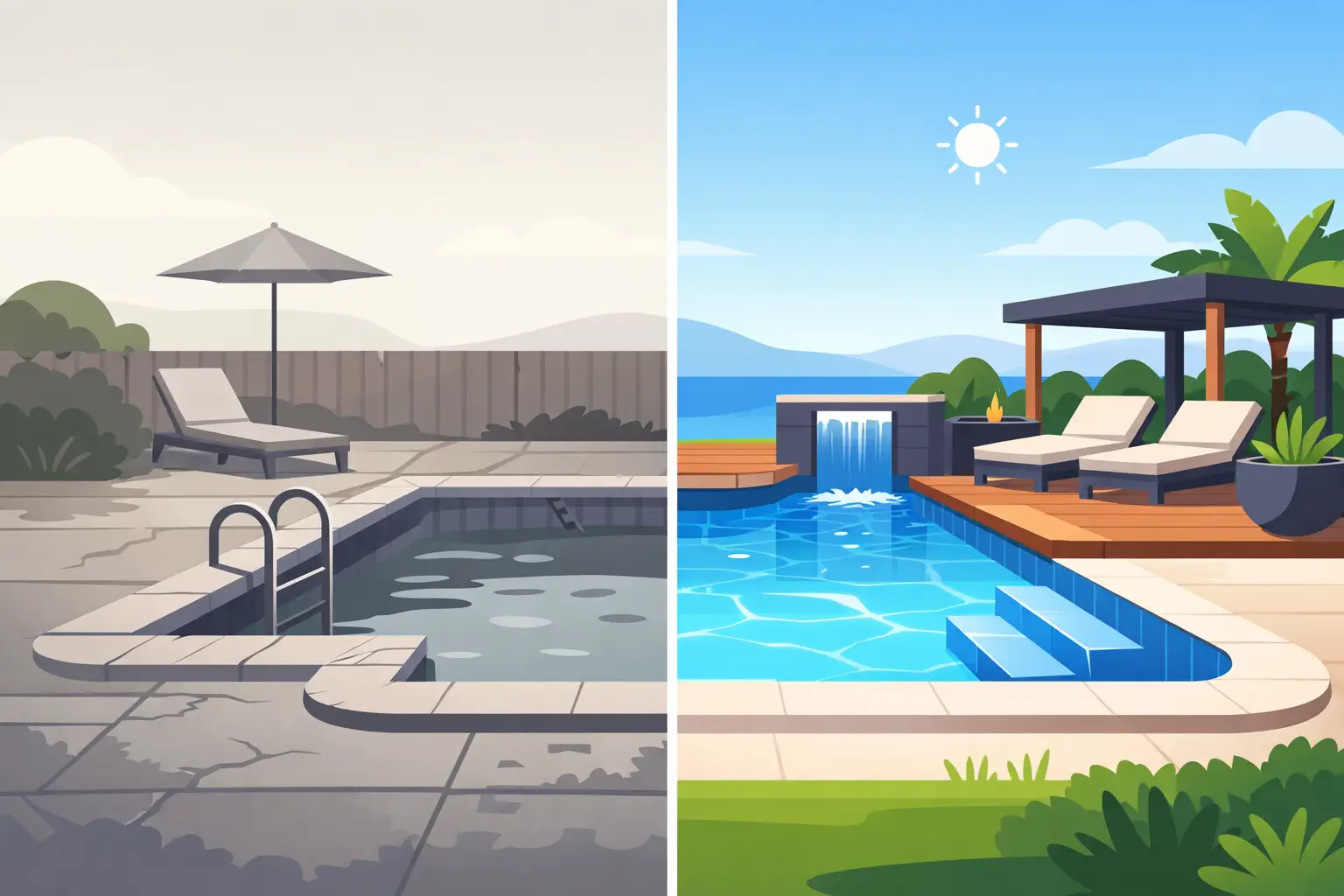
A faded pool surface, a noisy pump, and a deck that gets too hot to cross can make a backyard feel unfinished, even when the pool still holds water. A thoughtful pool remodel before and after is not just a cosmetic change. It is a chance to make the space easier to use, more comfortable to own, and better suited to the way your household actually spends time outside.
The most successful transformations begin with a clear definition of the problem. Some pools need a fresh finish and updated waterline tile. Others need new plumbing, equipment, decking, lighting, or a safer entry. The visual change gets attention, but the real value comes from matching the remodel scope to the pool’s condition and your priorities.
Pool Remodel Before and After: Start With How You Use It
Before choosing tile colors or looking at finish samples, look at the backyard on an ordinary weekend. Are kids jumping in every afternoon? Is the pool mostly used for quiet exercise? Do you host dinners outside and wish the pool felt like part of the gathering space? Those answers should guide the project.
A family pool may benefit most from safer steps, a shallow lounging area, better lighting, and equipment that is simpler to operate. A pool built around entertaining may call for a refreshed deck, cleaner lines, a spillover feature, or a more coordinated patio layout. If the goal is a calm, resort-style escape, the difference may come from a refined finish color, softer lighting, and a less cluttered equipment area.
This is where before-and-after expectations need to stay realistic. A remodel can dramatically change the character of an existing pool, but it cannot always change its footprint without moving into a larger renovation. Reshaping a pool, changing depths, or relocating plumbing can be worthwhile, but it adds time, cost, and construction complexity. A good plan separates the must-have improvements from the upgrades that can wait.
What Usually Creates the Biggest Visible Change
The interior finish is often the single most noticeable part of a pool remodel. Plaster that has stained, etched, roughened, or lost color can make otherwise clean water look tired. A new finish restores the pool’s visual foundation and influences how the water appears in sun and shade.
Color selection deserves more thought than many homeowners expect. Light finishes can create a bright, clear-water look, while deeper tones can bring more contrast and a richer blue or green appearance. The final result depends on depth, surrounding surfaces, daylight, landscaping, and the water itself. A sample viewed dry at a showroom will not look exactly the same under several feet of water.
Waterline tile also has an outsized impact. It creates a clean transition between the pool shell and the water, and it can either update a dated design or support a more timeless one. Tile should be chosen with the deck, coping, and home exterior in mind. A trendy pattern may look striking now, but a restrained material palette often has better staying power.
Decking can be equally transformative because it affects both appearance and use. Cracked concrete, worn coatings, uneven pavers, and poor drainage take away from a remodeled pool fast. New deck material can improve traction, reduce heat underfoot, and create a clearer connection between the water, seating, and outdoor living areas. It is also the right time to review drainage so water moves away from the pool and home as intended.
The Improvements You Do Not See Right Away
A beautiful after photo does not show the work happening behind the scenes. Yet equipment and circulation upgrades often provide the most meaningful day-to-day improvement.
An aging single-speed pump, inefficient filter, unreliable heater, or worn valves can make ownership more demanding than it needs to be. Modernized equipment can improve circulation, reduce noise, simplify routine operation, and support more consistent water quality. Automation can be useful for homeowners who want straightforward control of schedules, temperature, lights, and water features, though the best setup depends on how much control you want and how often you are away from home.
Plumbing deserves close attention when a pool has chronic leaks, weak returns, poor circulation, or equipment that has been patched repeatedly. Replacing a visible surface without addressing a persistent mechanical issue can lead to disappointment later. The right remodel sequence handles structural and functional concerns before finishes go in.
Lighting is another practical upgrade with an emotional payoff. Older pool lights can be dim, unreliable, or limited in color and control. Updated lighting can make evening swimming safer and turn a dark backyard into a space people want to use after sunset. The goal is not to overlight the pool. It is to create enough illumination for movement, conversation, and a relaxed atmosphere.
Safety Should Shape the Remodel Scope
A pool renovation is a useful moment to review safety features that have become worn, outdated, or poorly matched to the household. This is especially relevant for families with young children, households that welcome guests, and property buyers taking over an older pool.
The details may include handrails, step visibility, non-slip surfaces, gates, barriers, drain covers, and lighting around walking paths. Local requirements and pool conditions vary, so safety decisions should be reviewed as part of the project planning rather than added at the end.
Comfort matters here, too. A handrail may make entry easier for grandparents. Wider steps can function as a place for younger swimmers to play. Better deck traction can make the whole area feel more usable after a swim. These are not flashy upgrades, but they often have the longest-lasting effect on how confidently people enjoy the pool.
Build the Project Around the Right Order of Work
A remodel runs more smoothly when decisions are made in the order construction requires. Start with the pool’s condition: structure, leaks, plumbing, circulation, and equipment. Next, decide on shape changes or additions such as steps, tanning ledges, spas, or water features. Then select the visual layers, including coping, tile, finish, and decking.
Trying to reverse that order can create costly changes. For example, choosing a deck before confirming drainage or access needs may limit the final design. Selecting a finish before resolving a stain-causing water issue can mean the new surface does not stay looking its best.
It also helps to think about the complete backyard rather than the vessel alone. Existing furniture, shade, landscaping, fencing, and the path from the house all influence the finished experience. A pool can look newly renovated but still feel disconnected if the surrounding space is not considered.
Plan for Ownership After the Reveal
The after phase begins when construction ends. New finishes need proper startup care, and every upgraded pool still depends on regular testing, circulation, cleaning, and balanced water chemistry. Skipping that discipline can shorten the life of a new surface, dull tile, and create avoidable equipment problems.
Ask practical questions before work starts. How will the finish be cared for during the first weeks? What equipment settings will be recommended? Which tasks can be automated, and which still require a person on site? What is covered by the contractor’s workmanship versus a manufacturer’s equipment warranty? Clear answers make it easier to protect the investment.
Coastal Cove Pools approaches renovations with that full ownership picture in mind: the pool should look right on reveal day and remain a comfortable part of the home long after the construction crew leaves.
A Better Before-and-After Standard
The best pool remodel before-and-after result is not defined by a dramatic photo alone. It is the moment the water looks inviting, the deck feels comfortable, the equipment runs quietly, and the backyard finally works for the people who live there.
Choose the changes that solve the daily frustrations first. The right finish, tile, lighting, and outdoor details can then turn a necessary repair into the kind of backyard people make time to enjoy.