
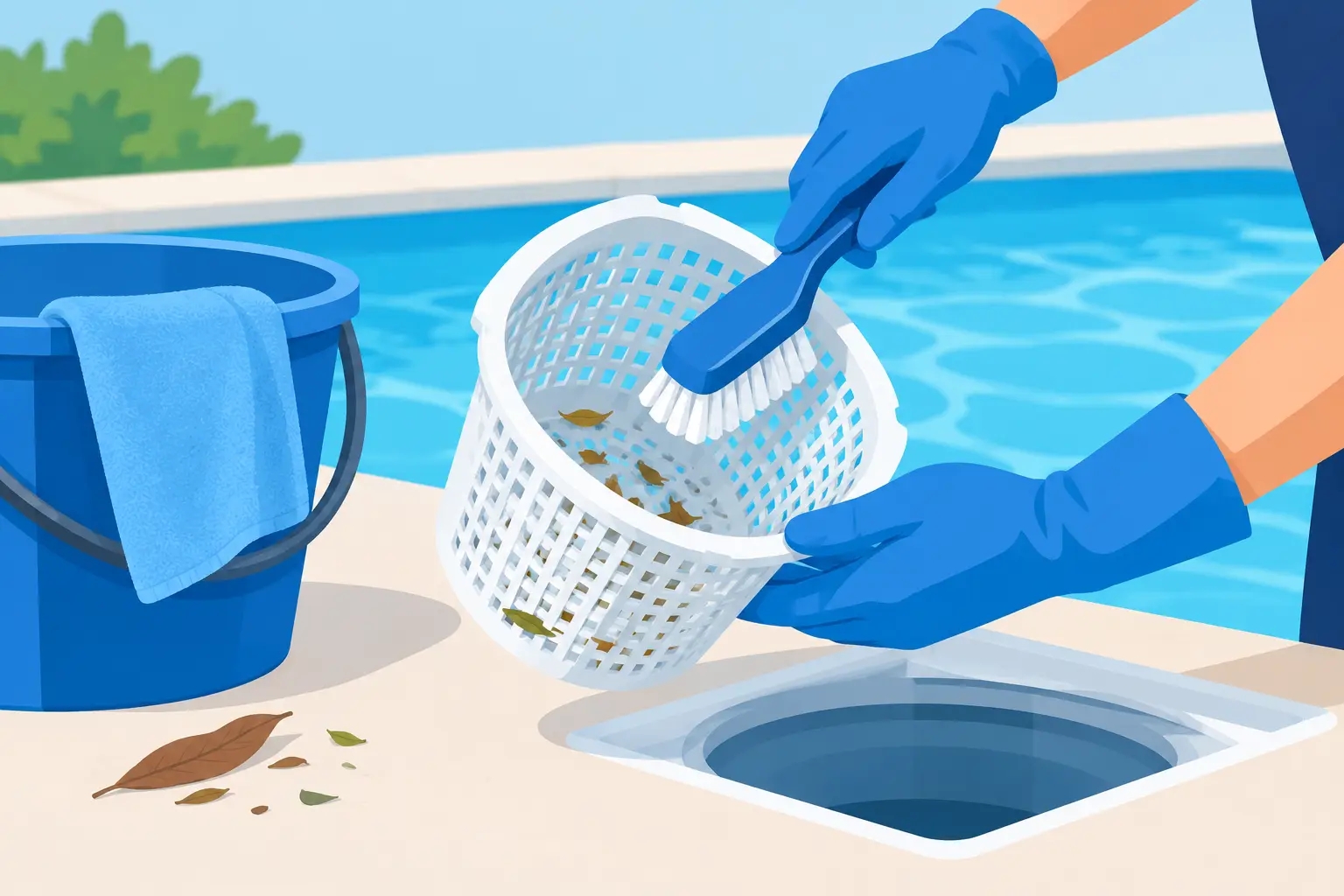
A pool can look spotless from the patio while leaves, seed pods, bugs, and bits of mulch quietly block the path to the equipment pad. Clean pool skimmer baskets are a small part of routine ownership, but they have an outsized effect on circulation, water clarity, and the workload placed on your pump.
For a backyard built around easy weekends and relaxed entertaining, this is one of the simplest habits to keep ahead of trouble. The job takes only a few minutes when done regularly. Waiting until the basket is packed, however, can leave the pump working harder for less flow and allow debris to break down in the water.
Why Clean Pool Skimmer Baskets Matter
The skimmer is the opening at the waterline that draws in floating debris before it sinks. Water moves through the skimmer basket, then travels to the pump, filter, and return lines. The basket is there to catch larger material before it reaches more sensitive equipment.
When the basket is full, water cannot move as freely. You may notice weaker return jets, slower surface movement, debris collecting along the waterline, or a skimmer that sounds as though it is pulling air. None of these signs should be ignored for long. Restricted flow can affect filtration, make water chemistry harder to manage, and add unnecessary strain to the circulation system.
There is also a practical difference between a basket that is merely untidy and one that is restricting flow. A few leaves may not require immediate attention. A basket matted with wet leaves, pine needles, grass clippings, or flower debris does. In coastal or heavily landscaped yards, wind can fill a basket far faster than many homeowners expect.
How Often Should You Empty a Skimmer Basket?
For most residential pools, check the skimmer basket at least once a week during swim season. In a yard with mature trees, frequent storms, lawn crews, or seasonal pollen, checking it every few days is often the better standard. After a windy afternoon or a heavy rain, a quick look can prevent a minor cleanup task from becoming an equipment issue.
Frequency depends on your setting. A screened pool enclosure may need less attention than an open pool beneath oaks or palms. A pool that sees frequent use can collect more sunscreen residue, hair, and small debris near the skimmer. If you are away from home, arrange for someone to monitor the pool rather than assuming the system can run unattended through a debris-heavy week.
The goal is not to maintain a perfectly empty basket every hour. It is to keep water moving freely and prevent debris from sitting long enough to decay, stain, or interfere with the system.
The Right Way to Clean Pool Skimmer Baskets
Start by turning the pump off at the control panel or breaker. This is the most important step. Removing a skimmer basket while the pump is running can pull air into the plumbing and, in some setups, make it difficult for the pump to maintain prime afterward.
Lift the skimmer lid and remove the basket by its handle. If debris has packed tightly into the basket, keep it level as you bring it out. That prevents leaves and grit from dropping back into the skimmer well, where they can be pulled farther into the line.
Empty the debris into a yard-waste container or trash receptacle. Rinse the basket with a hose if needed, especially when fine mulch, pollen, or slimy organic material is caught in the openings. A gentle rinse is usually enough. There is no need for harsh cleaners, and using a pressure washer too closely can crack older plastic baskets.
Before reinstalling it, take a moment to inspect the basket. Look for broken ribs, splits around the rim, or a damaged handle. A cracked basket can allow leaves and other debris to bypass it and reach the pump basket or impeller. Replacing a worn basket is inexpensive compared with correcting a blockage deeper in the equipment.
Set the basket back into place so it sits properly in the skimmer opening, replace the lid, and restart the pump. Check that the return jets resume normal flow. If the pump sounds unusually loud, shows bubbles in the pump lid, or does not regain steady circulation, turn it off and investigate before letting it run.
Do Not Confuse the Skimmer Basket With the Pump Basket
Most pools have more than one basket. The skimmer basket sits at the pool edge and catches debris before it enters the suction line. The pump basket sits inside the pump housing at the equipment pad and catches smaller material that makes it past the skimmer.
Both need attention, but the pump basket requires a little more care. Always turn the pump off before opening it, and make sure the lid O-ring is clean, lubricated when appropriate, and seated correctly before restarting. A poor seal can draw air into the system and reduce performance.
If your skimmer basket repeatedly fills with debris but the pump basket remains clean, that is generally a sign the skimmer basket is doing its job. If you find large leaves in the pump basket, inspect the skimmer basket for cracks, poor fit, or a missing part.
Signs Your Pool Needs Attention Beyond Basket Cleaning
Cleaning the basket will not solve every circulation problem. If the basket is clear but the skimmer has weak suction, the cause may be a clogged pump basket, a dirty filter, a partially closed valve, low water level, or an issue within the suction line. The water level should generally sit around the middle of the skimmer opening so the system can draw water without pulling in air.
A basket that fills unusually fast can also point to an outdoor maintenance issue. Overhanging branches, loose landscaping mulch, or grass clippings directed toward the pool will keep adding work. Trimming back heavy debris sources and asking lawn crews to keep clippings away from the water can make a visible difference.
Pay attention to what comes out of the basket. Large amounts of fine sand may indicate debris being tracked in from the deck or a filter-related concern, depending on where it appears. Repeated algae-like buildup may mean the pool needs closer attention to sanitizer levels, circulation time, or brushing. The basket is a useful early warning point because it shows what the pool is collecting before the water begins to look off.
Keep the Routine Simple
The easiest maintenance routines are the ones that fit naturally into how you use the pool. Check the skimmer basket before a weekend gathering, after storms, and before leaving town. Pair it with a quick look at the water level and a scan for floating debris. Those few minutes help protect the quiet, polished look that makes a backyard pool feel ready whenever you are.
Avoid forcing a basket into place, running the pump for long periods with low water, or treating reduced flow as a cosmetic issue. Pool equipment works best when water moves freely through a clean, properly maintained system. If you are seeing recurring flow problems, air in the lines, or debris that returns despite regular cleaning, a pool professional can identify the cause before it becomes a larger repair.
A clear pool is not just about what you see at the surface. It starts with small, steady care behind the scenes, so the water is ready for the people who enjoy it.